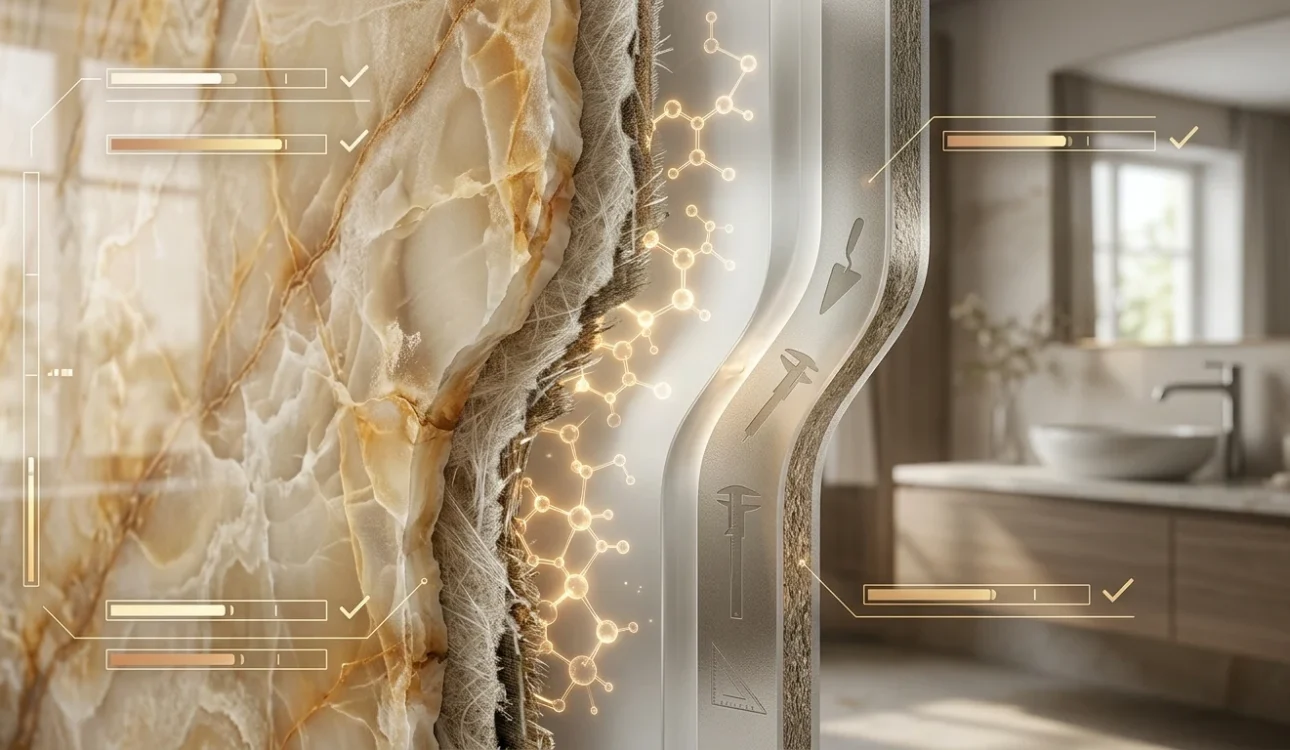
Onyx showers represent a premium choice for bathroom remodeling, combining natural stone elegance with engineered durability. Understanding what goes into these fixtures helps homeowners appreciate their longevity and make informed decisions during renovation planning. Whether you're drawn to their distinctive veining patterns or their reputation for strength, knowing the material composition reveals why onyx has become a preferred option for modern bathroom designs.
Quick Answer:
Onyx showers are primarily composed of engineered acrylic or solid surface materials combined with natural stone elements, designed to replicate the luxurious appearance of genuine onyx while providing superior durability and water resistance. Some premium options feature actual onyx stone integrated with protective sealants, though engineered versions offer more practical maintenance and longevity for daily bathroom use.
This guide walks you through the essential materials that make up onyx shower systems, from the base composition to protective finishes. You'll discover why manufacturers choose specific materials, how they impact durability, and what to expect during installation. We'll also explore how proper material selection connects directly to long-term performance—knowledge that becomes invaluable when choosing innovative bath designs for your remodel. By the end, you'll understand exactly what separates a quality onyx shower from lesser alternatives, empowering you to invest confidently in your bathroom transformation.
Table of Contents
- The Core Material: What Is Onyx in Shower Construction
- Key Components That Make Onyx Showers Durable and Waterproof
- Onyx Shower Material Performance: Strength, Maintenance, and Longevity
- Why Engineered Onyx Material Outperforms Alternatives in Modern Bathroom Remodels
- Selecting Onyx Shower Material for Your Next Bathroom Remodeling Project
The Core Material: What Is Onyx in Shower Construction
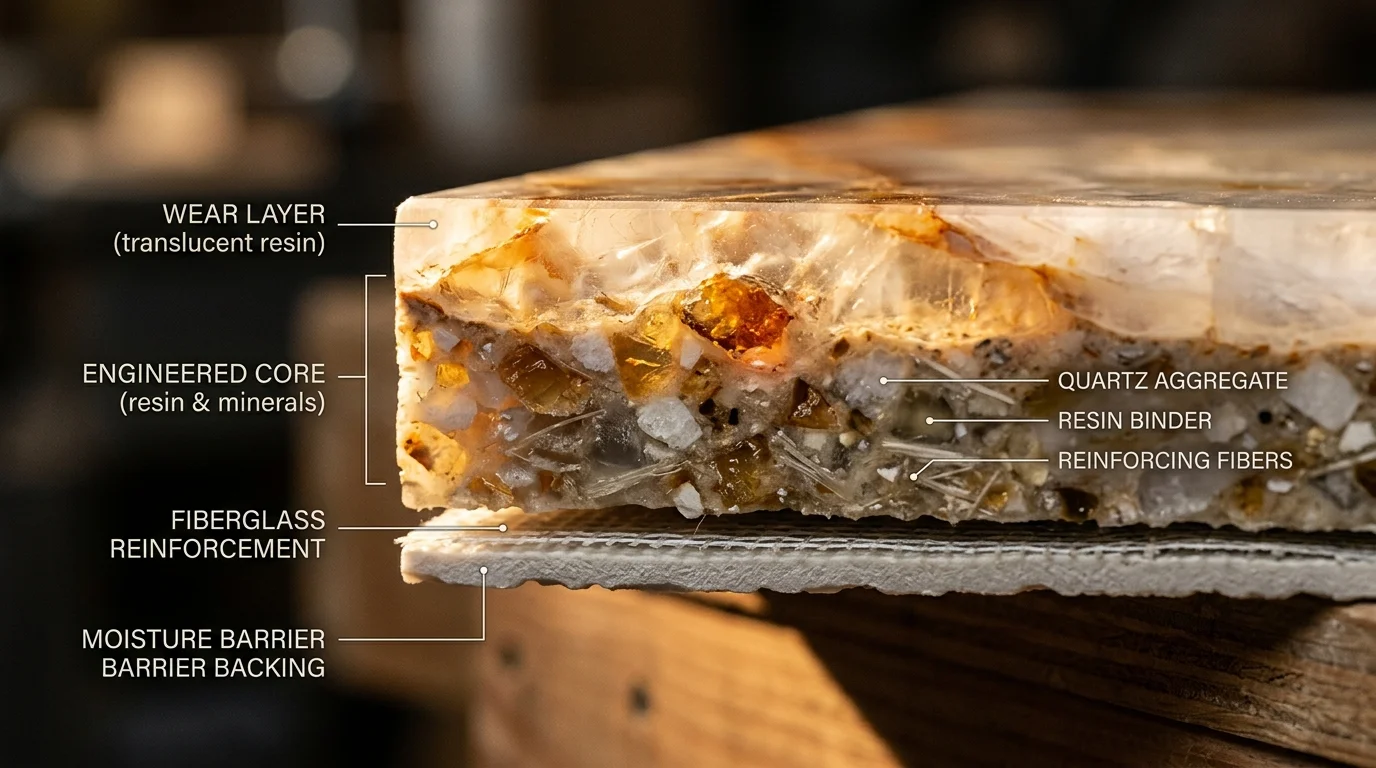
Onyx shower panels are not carved from natural stone quarries—they're engineered composites designed to deliver the aesthetic appeal of genuine onyx with practical durability for everyday bathroom use. The core composition consists of approximately 63% alumina trihydrate, a refined mineral derived from bauxite, combined with 37% specialized polyester resin. This precise formulation creates a material that mirrors the visual depth and translucency of natural onyx while eliminating the vulnerabilities that make real stone problematic in wet environments.
The manufacturing process begins with these base materials being mixed and poured into molds, then cured under controlled conditions to form solid panels. Manufacturers add pigments and color additives during this process to replicate onyx's characteristic veining, depth, and luminous quality. The result is a non-porous, homogeneous material throughout—not a thin veneer over a hollow substrate. According to The Onyx Collection FAQ, an ISO-NPG polymer gel-coat finish approximately 15 mils thick is applied to the surface, creating a tight molecular barrier that resists water penetration and maintains the material's integrity over decades.
Manufacturers selected this engineered approach over alternatives for compelling reasons. Natural stone requires constant sealing, cracks under temperature fluctuation, and absorbs water that leads to mold and structural failure. Fiberglass, another common shower material, yellows over time and develops stress fractures. The alumina trihydrate and polyester resin composition—the same primary ingredient used in premium solid surface products like Corian—offers superior longevity without sacrificing visual impact. Onyx panels typically measure 5/16 inch thick and weigh approximately 3.5 pounds per square foot, providing the substantial, solid feel of quality craftsmanship while remaining manageable during installation.
This engineered stone approach transforms bathroom remodeling by eliminating the trade-off between luxury appearance and practical maintenance. When planning innovative bath designs for your remodel, understanding this material foundation helps you appreciate why onyx has become the standard for contemporary shower systems across residential and commercial installations.
Key Components That Make Onyx Showers Durable and Waterproof
The durability of onyx shower systems rests on four interconnected material properties that work in concert to eliminate water infiltration and structural failure. Understanding how these components function together reveals why engineered stone has become the standard for waterproof shower material in modern bathroom remodeling.
Non-Porous Surface Finish
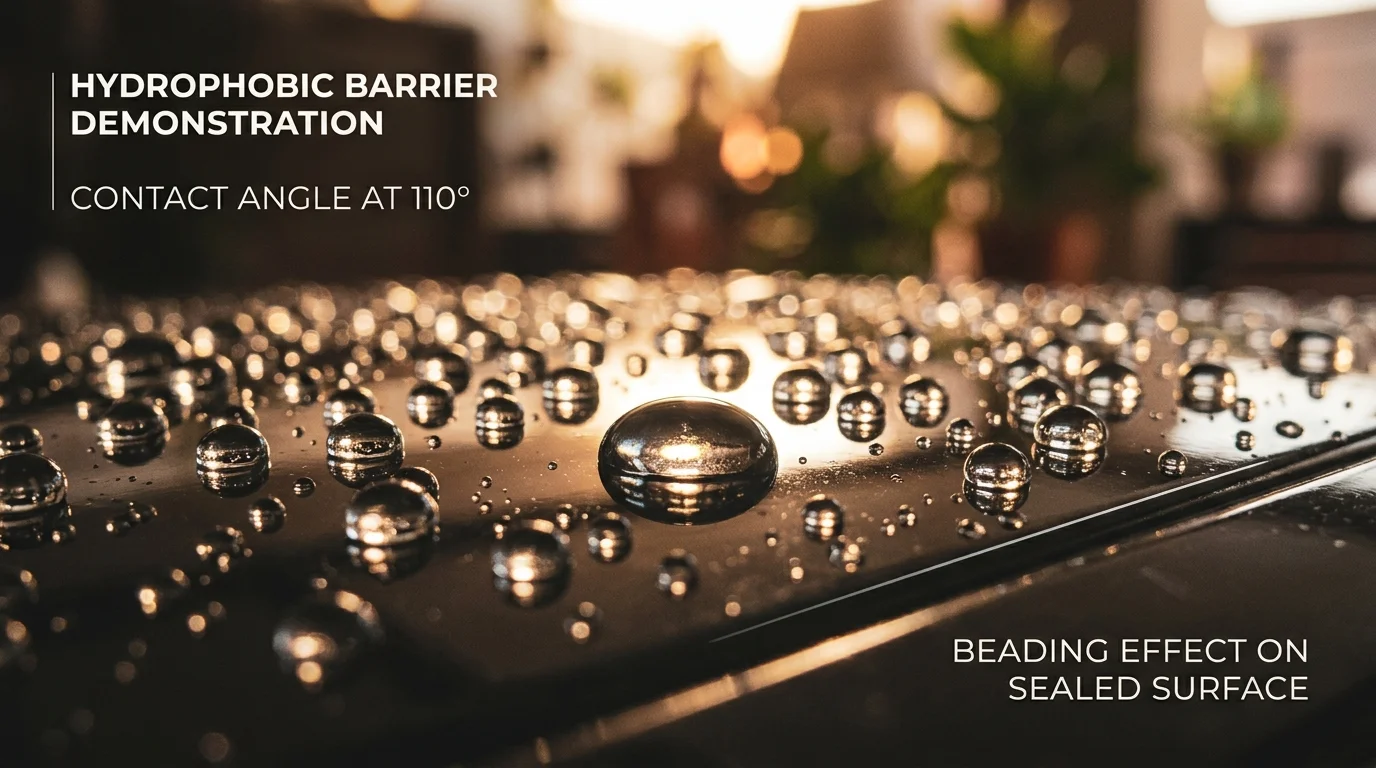
The gel-coat finish applied to onyx panels creates a sealed, non-absorbent surface that prevents water from penetrating the underlying composite. Unlike natural stone, which remains porous regardless of sealant application, this engineered approach eliminates the root cause of mold growth and water damage. Water simply beads and runs off rather than being absorbed into the material matrix, making maintenance straightforward and preventing the structural degradation that plagues traditional shower installations.
Seamless Construction Method
Seamless shower construction eliminates the joints and seams where water traditionally infiltrates. Rather than assembling multiple tiles or panels with grout lines, onyx systems are fabricated as unified wall sections that minimize connection points. This approach dramatically reduces the pathways for water to escape the shower envelope and reach framing, insulation, and substructure behind the walls.
Waterproof Membrane Backing
The rear surface of onyx panels incorporates a waterproof membrane that provides secondary protection. Even if water somehow breaches the front gel-coat finish, this backing layer prevents moisture from reaching the wall structure. This dual-barrier system ensures that water damage remains virtually impossible under normal use conditions.
Structural Integrity Through Thickness
At 5/16 inch thick, onyx panels maintain rigidity without flexing or developing stress cracks. This substantial construction prevents the micro-fractures that allow water penetration over time. The alumina trihydrate and polyester resin composition resists temperature fluctuations that cause expansion and contraction, eliminating the primary failure mechanism of alternative materials.
When planning innovative bath designs for your remodel, these material properties combine to deliver decades of water protection without the constant maintenance demands of natural stone or the degradation issues inherent in fiberglass systems.
Onyx Shower Material Performance: Strength, Maintenance, and Longevity
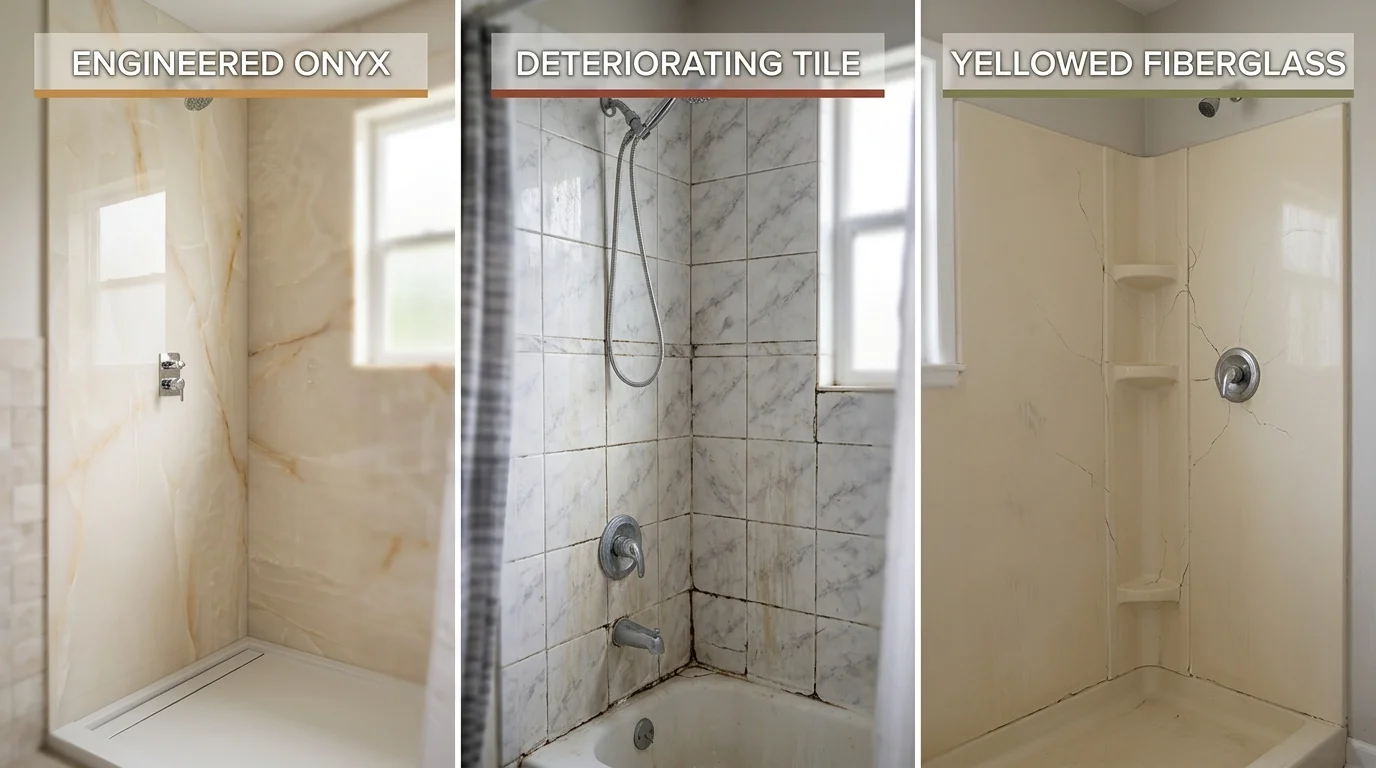
Onyx shower systems demonstrate exceptional durability when compared to traditional tile, fiberglass, and acrylic alternatives. The engineered composite structure—combining polyester resin with alumina trihydrate—creates a non-porous surface that resists impact far better than ceramic tile, which can crack under moderate stress. Unlike natural stone showers that require sealing every 1-3 years, onyx maintains its protective gel-coat finish without degradation, eliminating the maintenance burden that drives many homeowners toward less elegant solutions.
Impact resistance stands as one of the material's defining strengths. The 5/16-inch thickness and rigid resin matrix absorb localized impacts without developing stress fractures or hairline cracks that invite water infiltration. Tile systems, by contrast, fail at the grout joints—the weakest point in any tiled shower. Once grout deteriorates or cracks, water penetrates behind the tile, causing structural damage that remains invisible until mold and rot become evident. Onyx's monolithic construction eliminates this failure pathway entirely.
Thermal properties matter more than most homeowners realize. Onyx panels remain stable across temperature fluctuations without expanding or contracting excessively, preventing the micro-gaps that plague tile installations. This thermal stability directly extends the lifespan of the entire assembly, as stress from temperature cycling is the primary cause of seal failure in traditional showers.
Chemical sensitivity requires attention during maintenance. While onyx resists most household cleaners, harsh acidic or abrasive products can dull the gel-coat finish. Vinegar-based cleaners, bleach, and scouring powders should be avoided; instead, use pH-neutral soap and soft cloths. This represents minimal effort compared to tile grout maintenance, which demands specialized cleaners and periodic resealing.
Longevity comparisons favor onyx decisively. According to research from Bathtub Made New, onyx shower systems easily last 20 years or more while maintaining their luster without discoloration or delamination. Solid surface panels can exceed 30 years with regular cleaning only, requiring silicone reapplication around edges perhaps once during the shower's lifetime. Tile systems typically demand grout repair or replacement within 10-15 years, while fiberglass degrades visibly within 8-12 years.
When planning innovative bath designs for your remodel, material choice directly determines long-term satisfaction and total cost of ownership. Onyx eliminates the hidden expenses of ongoing maintenance, repair, and eventual replacement that plague inferior alternatives.
Why Engineered Onyx Material Outperforms Alternatives in Modern Bathroom Remodels
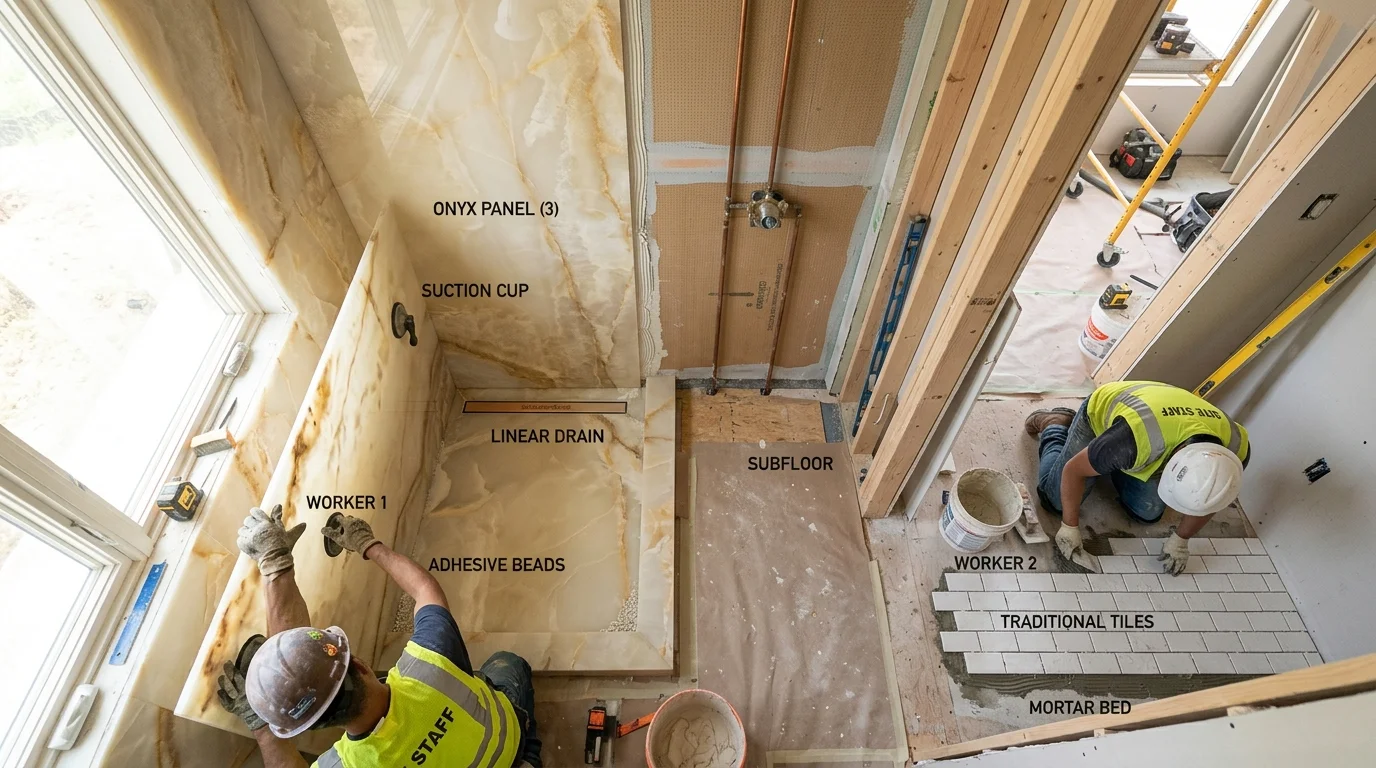
The material composition of your shower directly determines its performance, maintenance demands, and lifespan. Engineered onyx represents a fundamental shift away from the outdated approaches that plague traditional bathrooms. Unlike tile systems, which rely on porous grout lines that trap moisture and mildew, onyx delivers a seamless, non-porous surface that eliminates water infiltration at its source. This single advantage eliminates the recurring expense and labor of grout cleaning, sealing, and replacement that homeowners face every 10-15 years with tile installations.
Natural stone showers present their own set of complications. Marble, granite, and genuine onyx are inherently porous materials that absorb water and require constant sealing to prevent staining and degradation. The mineral composition that creates their visual appeal also creates vulnerability to acidic cleaners, hard water deposits, and thermal stress. Engineered onyx avoids these pitfalls entirely through its acrylic-based gel-coat finish, which resists both chemical damage and water absorption while maintaining the aesthetic sophistication of natural stone.
When compared to fiberglass and basic acrylic systems, engineered onyx's superior composition delivers measurable advantages. Fiberglass degrades visibly within 8-12 years, developing cracks and chalky surfaces that compromise both appearance and water resistance. Standard acrylic lacks the reinforced structure that prevents flexing and eventual delamination. Onyx shower systems, by contrast, combine rigid composite backing with UV-resistant gel coating, creating panels that maintain their luster and structural integrity for 20-30 years with minimal intervention. According to research from JSB Home Solutions, solid-surface installation labor costs run 3-5 times lower than tile work, and projects complete in 1-2 days rather than weeks.
When planning innovative bath designs for your remodel, material selection directly impacts both immediate installation costs and long-term ownership expenses. Onyx eliminates the hidden burden of maintenance cycles, repair calls, and eventual replacement that inferior alternatives demand. This is the material foundation of genuinely functional bathroom spaces.
Selecting Onyx Shower Material for Your Next Bathroom Remodeling Project
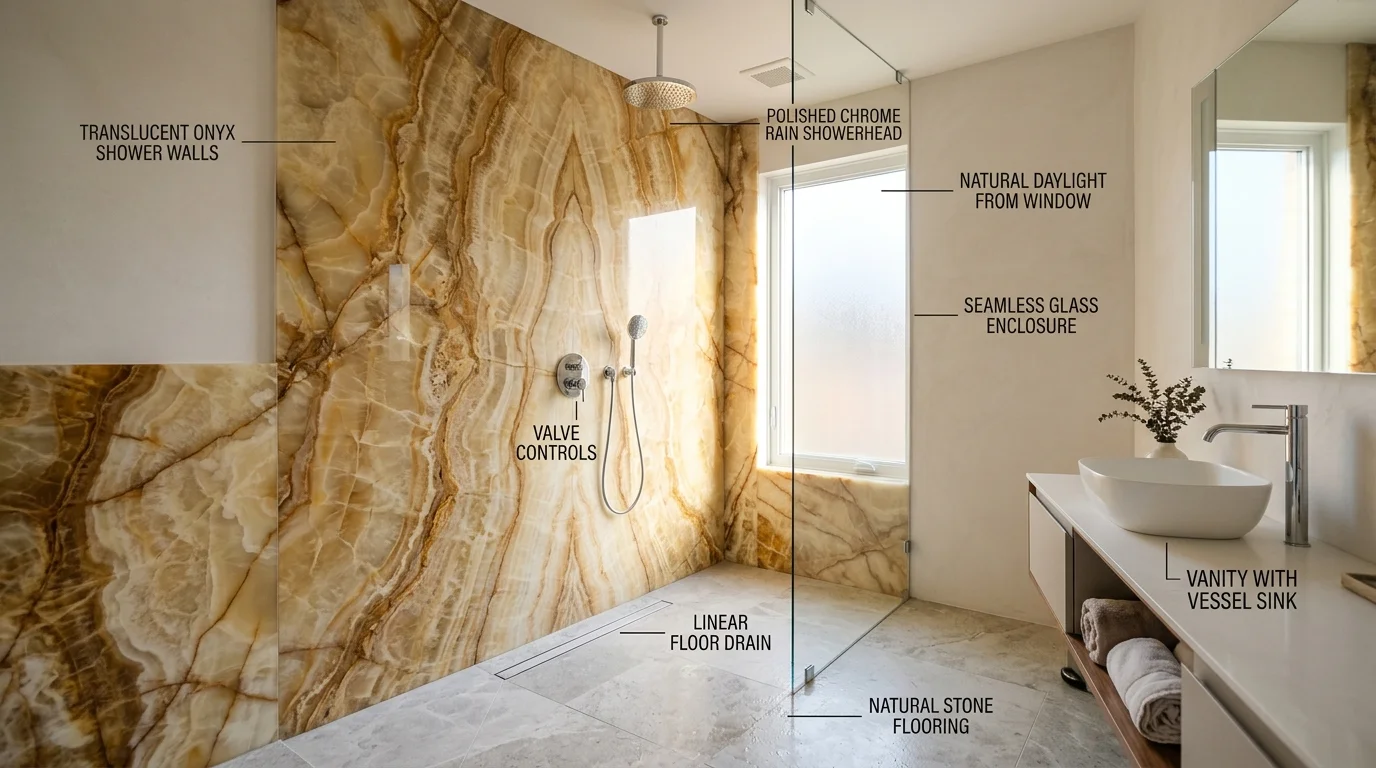
Choosing shower materials represents one of the most consequential decisions in bathroom remodeling. The composition you select determines not only the immediate aesthetic impact but also maintenance demands, longevity, and total cost of ownership over the next two decades. Onyx engineered stone delivers measurable advantages across all three dimensions—and understanding why requires clarity about what you're actually purchasing.
When you select an onyx shower system, you're investing in a non-porous engineered composite that combines a resin base with mineral aggregates and a protective gel-coat finish. This material architecture eliminates the water infiltration pathways that plague traditional tile installations. Unlike fiberglass panels that flex and crack under thermal stress, or acrylic surfaces prone to delamination, onyx maintains structural rigidity while remaining completely waterproof. The non-porous surface resists mold and mildew colonization at the microscopic level—a biological advantage that reduces cleaning frequency and eliminates the need for harsh chemical treatments.
The practical benefit translates directly: onyx shower panels install in 1–2 days with minimal labor complexity, compared to weeks of tile work. Once installed, these systems require only occasional wiping with mild soap and water. No grout maintenance. No caulk replacement cycles. No hidden moisture damage developing behind the walls.
For homeowners planning innovative bath designs for your remodel, onyx represents the material foundation that allows bathroom spaces to function as genuinely low-maintenance sanctuaries rather than constant maintenance projects. The engineered composition works—reliably, predictably, and for decades. When you're ready to evaluate materials for your specific project, our team at WAREMODEL can help you assess whether onyx aligns with your design vision and remodeling timeline.