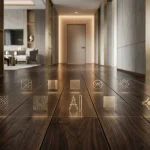
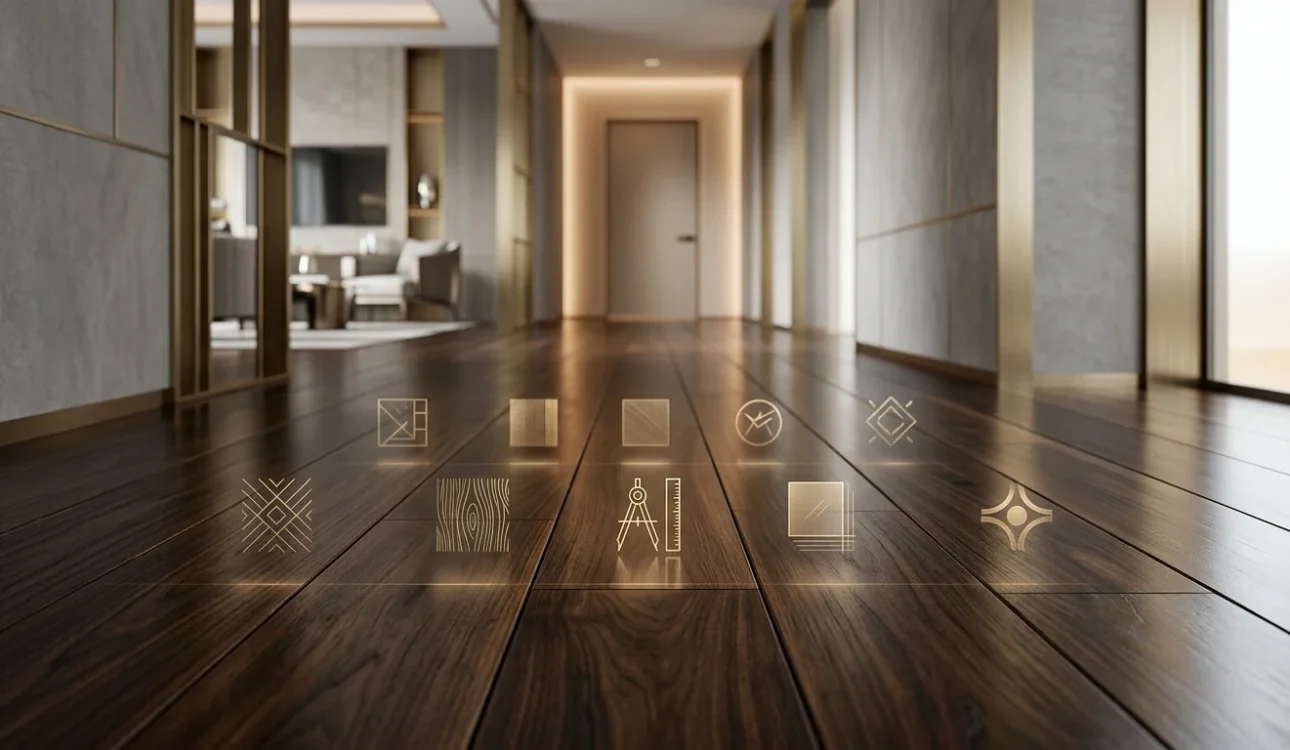
Dark hardwood floors have become a cornerstone of contemporary interior design, offering homeowners a sophisticated foundation that anchors modern spaces with warmth and elegance. Unlike their lighter counterparts, these rich, deep tones create immediate visual impact while serving as a versatile backdrop for minimalist furniture, bold artwork, and innovative design choices. The appeal extends beyond aesthetics—modern dark hardwood floors deliver practical durability and timeless style that adapts to evolving design trends without requiring replacement.
Quick Answer: Modern dark hardwood floors are hardwood surfaces stained or naturally dark (espresso, chocolate, walnut tones) that define contemporary design. Homeowners choose them because they create sophisticated contrast, hide wear patterns better than light woods, and complement both minimalist and eclectic interiors while adding perceived value to homes.
What makes contemporary flooring design with dark hardwoods particularly compelling is their ability to ground a space. They establish visual hierarchy, making lighter walls and furnishings appear more open and airy—a paradox that makes rooms feel both intimate and spacious. This section explores why dark hardwood flooring transforms homes, examining the design psychology, wood species options, installation methods, and practical considerations for achieving a polished, modern aesthetic. Whether you're designing a kitchen, living room, or bedroom, understanding how to leverage these floors strategically ensures your remodel creates more space for what matters most.
Table of Contents
- Top Modern Dark Hardwood Floor Types for Contemporary Spaces
- Modern Design Styles That Pair Perfectly with Dark Hardwood Flooring
- Installation, Maintenance, and Staining Your Dark Hardwood Floors
- Installation Process for Dark Hardwood Floors
- Staining Existing Floors Dark
- Maintenance Routines
- Common Installation Mistakes to Avoid
- Cost Considerations and ROI for Modern Dark Hardwood Flooring
- Material and Installation Cost Breakdown
- Resale Value and ROI
- Longevity and Cost-Per-Year Analysis
- Creating Your Modern Home with Dark Hardwood Floors
Top Modern Dark Hardwood Floor Types for Contemporary Spaces
Selecting the right wood species transforms a floor from functional to foundational—it's the anchor that defines your entire design direction. Modern dark hardwood flooring options range from naturally rich species to engineered solutions, each offering distinct durability profiles and aesthetic qualities. Understanding these choices ensures you invest in a floor that performs as beautifully as it looks.
American Black Walnut delivers sophisticated chocolate-brown tones with natural grain variation that photographs exceptionally well in contemporary settings. According to Carlisle Wide Plank Floors, American Black Walnut has a Janka hardness rating of 1,010, making it softer than oak species but highly prized for its rich color and workability. Best for: living rooms and bedrooms where traffic is moderate and the focus is on visual warmth.
Brazilian Cherry (Jatoba) represents the durability extreme. With a Janka hardness rating of 2,350—approximately 81% harder than Red Oak—this species according to Arizona Hardwood Floor Supply handles high-traffic kitchens and family rooms without flinching. Its deep reddish-brown character adds drama to open-concept spaces. Best for: kitchens, entryways, and homes with active households.
Wenge offers near-black tones with subtle grain patterns that create visual depth without appearing flat. Its 1,630 Janka rating provides excellent durability while maintaining the sleek aesthetic modern design demands. Best for: minimalist interiors and spaces where you want maximum contrast with light furnishings.
Strand Woven Bamboo (dark finish) provides an eco-conscious alternative with exceptional hardness—around 4,000 on the Janka scale, making it more than three times harder than Red Oak. This engineered option delivers the dark aesthetic with superior sustainability credentials. Best for: environmentally conscious homeowners and high-traffic commercial-residential hybrid spaces.
Hickory (dark stain) brings rustic character with modern refinement. Its natural color variation and 1,820 Janka rating make it practical for active homes while maintaining contemporary appeal through proper finishing. Best for: transitional designs blending modern and farmhouse elements.
Engineered Dark Oak combines solid oak veneer with plywood backing, offering dimensional stability superior to solid hardwood in fluctuating climates. The engineered construction allows wider planks and longer lengths that define contemporary aesthetics. Best for: basements, kitchens with radiant heating, and homes in humid regions.
Cumaru (Brazilian Teak) delivers deep golden-brown tones with exceptional durability—1,860 Janka hardness—and natural resistance to moisture and insects. Its tropical origin and rich color create sophisticated, grounded spaces. Best for: premium installations where longevity and exotic character justify higher investment.
Smoked Oak undergoes thermal treatment that darkens the wood naturally while enhancing grain visibility. This process creates unique character without stains, appealing to design-forward homeowners seeking authenticity. Best for: Scandinavian and contemporary minimalist interiors.
When planning your remodel, consider how foot traffic patterns, climate conditions, and maintenance commitment align with each species' performance profile. At WAREMODEL, we help homeowners evaluate these options within the context of their complete space transformation—ensuring your flooring choice works harmoniously with cabinetry, wall colors, and lighting to maximize both functionality and perceived spaciousness. Dark hardwood flooring becomes most effective when integrated into a cohesive design strategy rather than selected in isolation.
Modern Design Styles That Pair Perfectly with Dark Hardwood Flooring
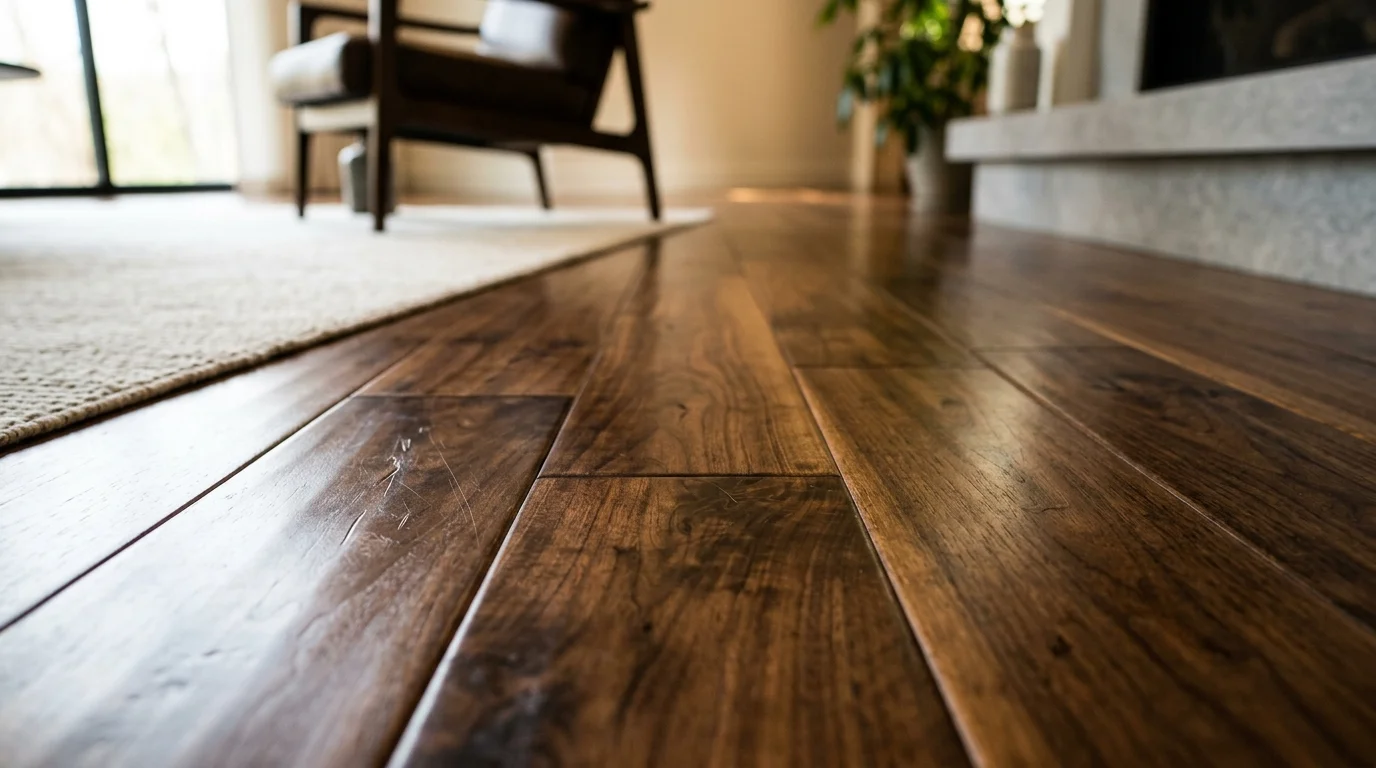
Dark hardwood floors function as a design anchor—a foundational element that defines the aesthetic direction of an entire space. The right contemporary design style amplifies their visual impact while creating cohesive, intentional interiors that feel both grounded and sophisticated.
Industrial Modern embraces the raw, utilitarian aesthetic where dark floors become the visual counterbalance to exposed brick, steel beams, and concrete elements. The deep tones ground heavy materials and create visual continuity across open floor plans. Pair with metal fixtures, minimal cabinetry, and monochromatic walls to let the floor's natural grain become a textural focal point. This style works exceptionally well in loft conversions and urban renovations where maximizing perceived spaciousness is essential.
Scandinavian Minimalism creates a striking contrast by pairing dark floors with light, airy furnishings and whitewashed walls. The flooring provides visual weight and warmth that prevents minimalist spaces from feeling cold or sterile. Natural light becomes critical—large windows and strategic lighting ensure the dark floor reads as grounding rather than heavy. This approach appeals to homeowners seeking calm, uncluttered environments without sacrificing sophistication.
Mid-Century Modern celebrates the marriage of form and function, where dark hardwood floors complement tapered wooden furniture legs, geometric patterns, and warm accent colors like mustard or teal. The flooring anchors the period aesthetic while modern lighting fixtures and clean-lined cabinetry prevent the look from feeling dated. This style particularly suits kitchens and living areas where you want personality without visual chaos.
Contemporary Luxury leverages dark floors as the foundation for high-end materials—marble countertops, brass hardware, and statement lighting. The flooring creates visual richness that allows other elements to shine without competing. At WAREMODEL, we've found that this approach works best when dark flooring is integrated into a complete design strategy that considers how cabinetry finishes, wall colors, and lighting work together to enhance perceived spaciousness and elegance.
Loft-Style Open Plan uses dark hardwood to define zones within expansive, undivided spaces. The flooring's visual weight helps separate kitchen from living areas without walls, creating psychological boundaries while maintaining flow. This style maximizes the functional potential of open layouts—a key principle when remodeling to create more space for the important things in life.
Installation, Maintenance, and Staining Your Dark Hardwood Floors
Proper installation and maintenance are the difference between dark hardwood floors that age beautifully and those that deteriorate within years. Whether you're installing new dark hardwood or transforming existing light floors through staining, understanding the process ensures your investment delivers lasting sophistication and durability.
Installation Process for Dark Hardwood Floors
1. Subfloor Preparation
Inspect and repair the subfloor for moisture, unevenness, and structural integrity. Dark hardwood is unforgiving—any imperfections telegraph through the finished surface. Sand high spots and fill low areas with self-leveling compounds.
2. Moisture Testing
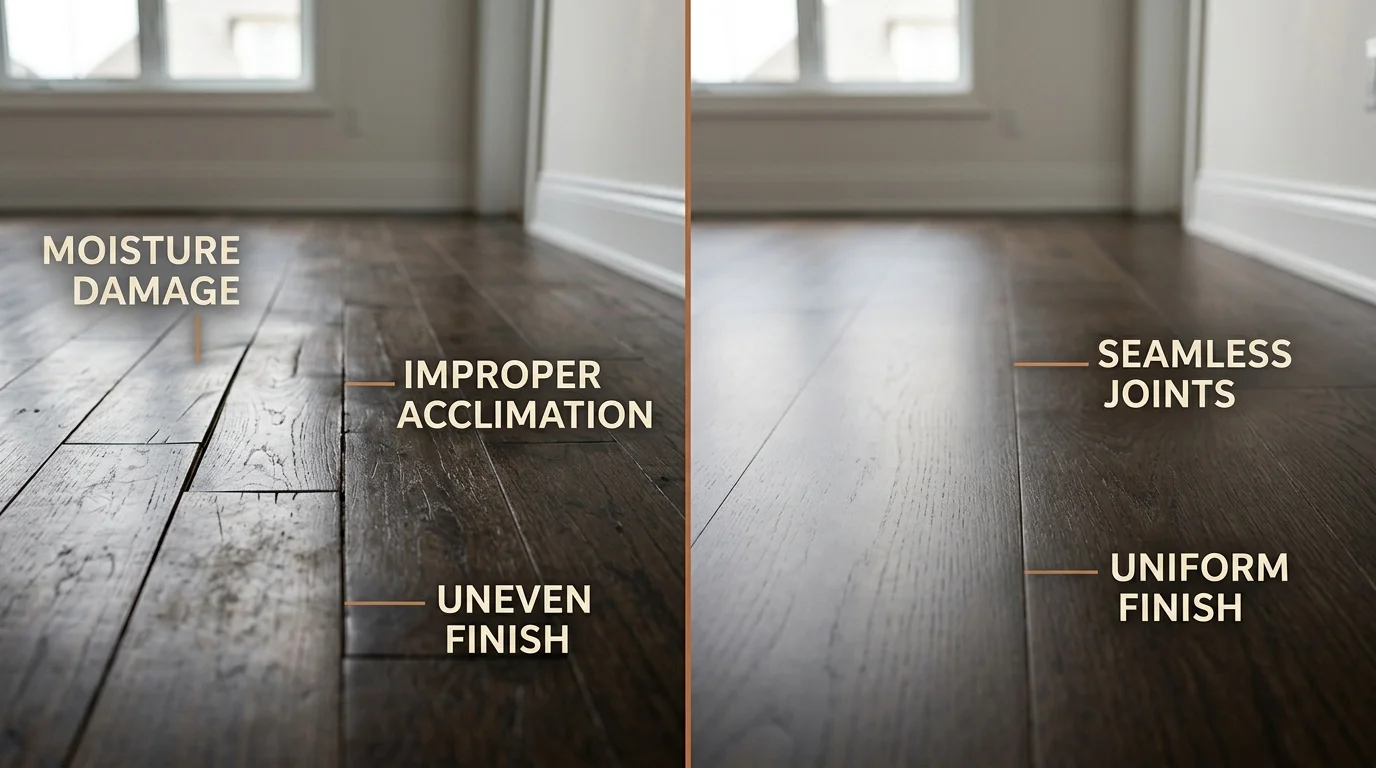
Test subfloor moisture levels before installation. Hardwood requires stable humidity (30–50% relative humidity). Excess moisture causes cupping and warping; insufficient moisture causes shrinkage and gaps.
3. Acclimation
Allow hardwood planks to sit in the installation space for 7–14 days. This allows the wood to adjust to the home's temperature and humidity, preventing movement after installation.
4. Layout and Installation
Begin installation perpendicular to the longest wall. Stagger end joints across rows for visual interest and structural strength. Use pneumatic nailers or staples—hand-nailing risks splitting dark hardwood species.
5. Finishing
Apply sealant and polyurethane in thin, even coats. Dark floors require multiple coats (typically 3–4) to achieve depth and protection.
Staining Existing Floors Dark
If you're transforming existing hardwood, staining offers cost-effective renewal. According to Hallmark Floors, dark stains add $1 to $3 per square foot to refinishing costs, with labor-intensive application required for even color. Sand the floor to bare wood (80–120 grit), apply stain in thin, overlapping strokes, and allow proper drying between coats. Dark stains hide imperfections better than light finishes, but inconsistent application shows dramatically.
Maintenance Routines
Vacuum weekly and wipe spills immediately—dark floors show water marks prominently. Use pH-neutral hardwood cleaner monthly; avoid vinegar or excessive moisture. Recoat high-traffic areas every 3–5 years to maintain protection. Place felt pads under furniture legs and use area rugs in entryways to minimize scratching.
Common Installation Mistakes to Avoid
Never skip moisture testing or acclimation—this causes the majority of hardwood failures. Avoid installing dark hardwood in bathrooms or kitchens without vapor barriers; dark wood shows water damage visibly. Don't use standard polyurethane on dark floors; specify products formulated for stained wood to prevent yellowing that dulls rich tones. At WAREMODEL, we emphasize that professional installation during a complete remodel ensures dark hardwood integrates seamlessly with cabinetry, lighting, and layout—creating cohesive spaces that feel intentionally designed rather than pieced together.
Cost Considerations and ROI for Modern Dark Hardwood Flooring
Dark hardwood flooring represents a significant investment, but understanding the cost structure and long-term value helps homeowners make informed decisions during remodeling projects. The financial picture extends beyond the initial purchase—it encompasses material selection, installation complexity, and measurable returns when selling.
Material and Installation Cost Breakdown
According to Angi's 2026 pricing data, hardwood flooring installation ranges from $6 to $25 per square foot, including both materials and labor. Solid hardwood typically costs $8 to $15 per square foot for materials alone, while engineered dark hardwood offers a more budget-conscious alternative at $4 to $7 per square foot. Installation labor varies based on subfloor preparation, room complexity, and local market rates—expect $3 to $12 per square foot for professional installation.
For a 1,500-square-foot main floor, solid dark hardwood installation could range from $18,000 to $37,500, while engineered options might cost $13,500 to $30,000. These figures account for acclimation, moisture testing, and finishing—steps that prevent costly failures later.
| Flooring Type | Material Cost/sq ft | Installation Cost/sq ft | Total Cost/sq ft | Lifespan |
|---|---|---|---|---|
| Solid Dark Hardwood | $8–$15 | $5–$12 | $13–$27 | Up to 100 years |
| Engineered Dark Hardwood | $4–$7 | $4–$10 | $8–$17 | 20–40 years |
Resale Value and ROI
Dark hardwood floors deliver exceptional return on investment. Homebuyers consistently demonstrate willingness to pay premium prices for quality hardwood—54% of buyers specifically seek homes with hardwood floors, adding approximately $6,500 in average value. More impressively, the National Association of Realtors reports a 118% cost recovery rate, meaning homeowners recoup their entire investment plus gain additional equity when selling.
At WAREMODEL, we emphasize that dark hardwood floors integrated into a complete home remodel create cohesive, intentionally designed spaces that command higher resale premiums than piecemeal upgrades. When dark flooring coordinates with cabinetry, lighting, and layout during a comprehensive renovation, the perceived value multiplies beyond the flooring investment alone.
Longevity and Cost-Per-Year Analysis
Solid hardwood floors can last up to 100 years with proper maintenance and refinishing 4 to 6 times throughout their lifetime. This longevity dramatically reduces cost-per-year compared to engineered alternatives, which typically last 20 to 40 years. A $25,000 solid hardwood installation amortized over 100 years costs $250 annually—far less than the replacement costs of lower-quality flooring options.
Maintenance costs remain modest: weekly vacuuming, monthly pH-neutral cleaning, and recoating high-traffic areas every 3 to 5 years. Budget $200 to $400 annually for professional maintenance, significantly less than the replacement costs of lower-quality flooring options.
Creating Your Modern Home with Dark Hardwood Floors
Dark hardwood flooring has evolved from a bold design choice into a foundational element of contemporary interiors—one that anchors entire homes with sophistication and intentionality. When you select the right wood species and pair it with cohesive design elements, modern dark flooring transforms spaces into galleries of refined taste. The durability advantage is substantial: solid hardwood installations last a century with proper care, amortizing to modest annual costs compared to engineered alternatives that require replacement every few decades.
The key to success lies in three interconnected decisions: choosing authentic wood species like walnut or hickory rather than relying solely on staining, aligning your flooring with a clear design aesthetic—whether minimalist, industrial, or transitional—and committing to professional installation and maintenance protocols. These floors demand respect; they reward it with patina that deepens over time, becoming more beautiful as they age.
At WAREMODEL, we recognize that dark hardwood floors achieve their full potential within comprehensive home renovations. When flooring coordinates with cabinetry, lighting design, and spatial layout during a complete remodel, the investment multiplies in perceived value and resale premium. A thoughtfully integrated dark floor doesn't compete with other elements—it orchestrates them.
Ready to explore how dark hardwood flooring can anchor your home's transformation? Consult with a remodeling specialist who can assess your space, lifestyle, and design vision. The right professional guidance ensures your investment becomes a centerpiece of contemporary design for generations to come.