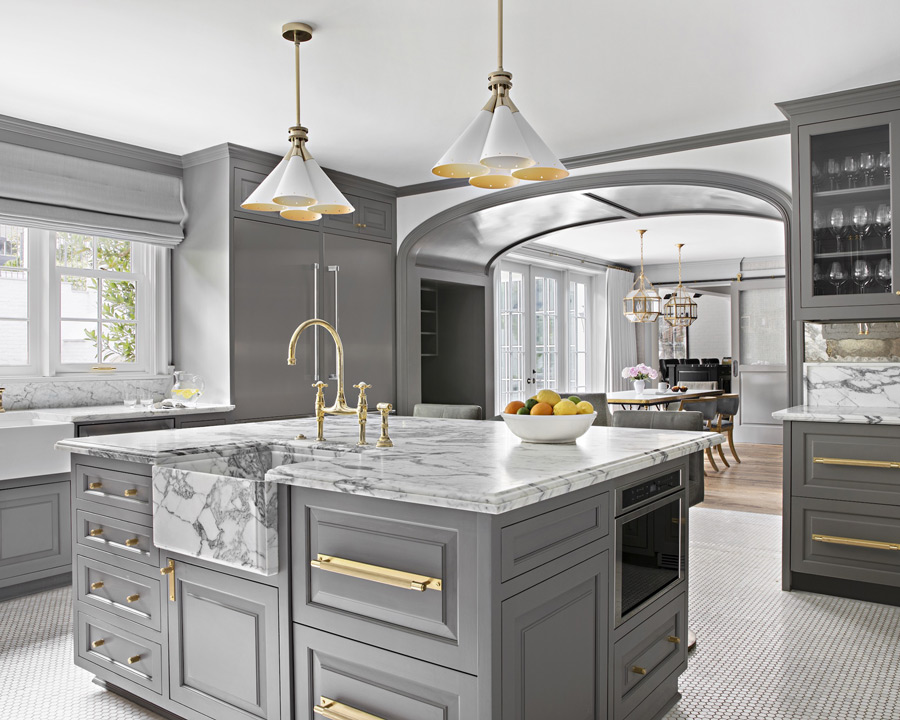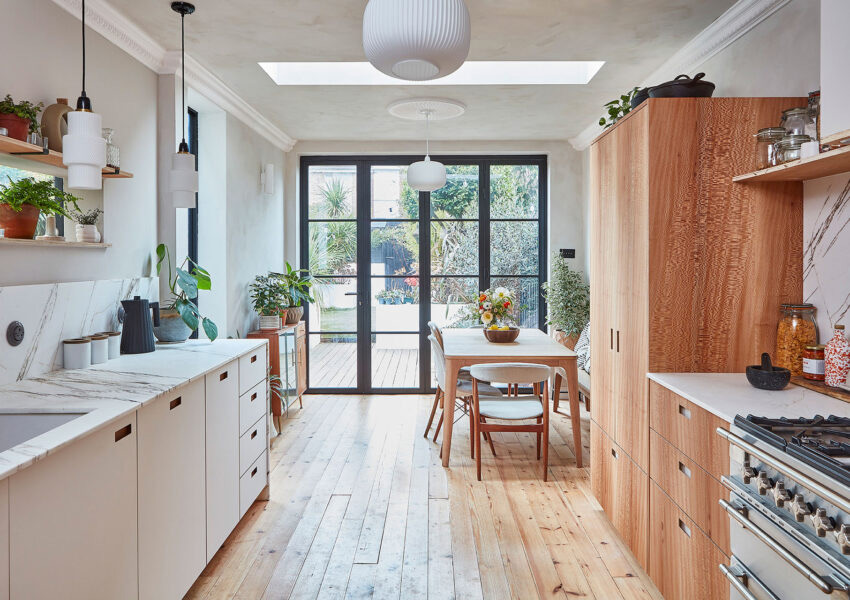
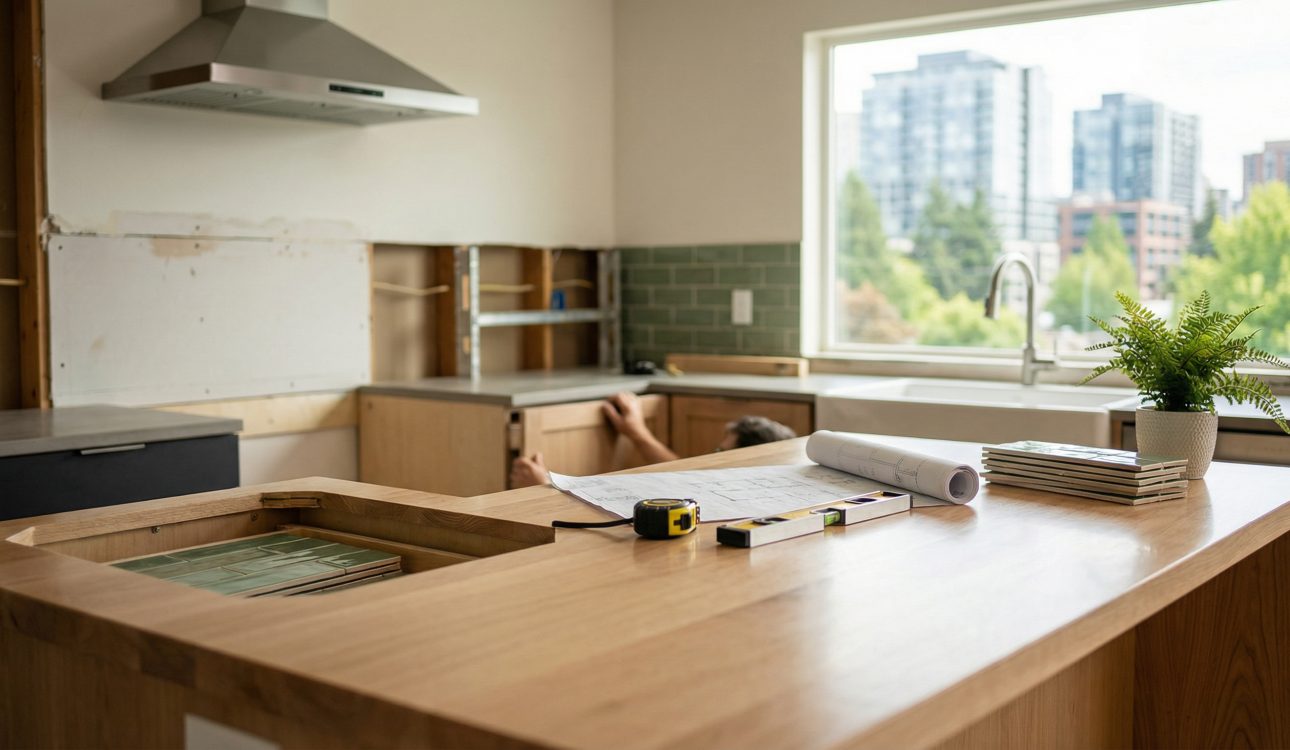
Your kitchen is the heart of your home—and in Bellevue, it's also one of the biggest investments you'll make. Whether you're staring at outdated cabinets from the 1990s or struggling with inefficient layouts that slow down meal prep, a kitchen remodel can transform both how your home functions and how much it's worth. According to Manta's cost analysis, kitchen remodeling in King County ranges from $8,933 to $44,666, though Bellevue-specific projects often run higher due to the area's premium finishes and high-end expectations. The good news? You don't need to be blindsided by costs or timelines. This guide walks you through exactly what to expect, how to plan strategically, and how to avoid the expensive mistakes most homeowners make when remodeling their kitchens.
Quick Answer:
Start by assessing your budget (Bellevue kitchens typically cost $100,000-$150,000+), define your priorities (layout, appliances, finishes), select a qualified contractor, create detailed 3D designs, obtain permits, and manage the construction phase carefully. The entire process typically takes 8-12 weeks for most remodels, though complexity and material selections can extend this timeline.Key Takeaways:
- Budget Reality: According to Houzz, median minor kitchen remodels cost $18,000, while major remodels reach $55,000+ nationally—Bellevue projects typically exceed these averages significantly.
- ROI Matters: Remodeling's 2024 Cost vs. Value Report shows minor remodels return 96% of investment, while major remodels average 50% ROI.
- Home Value Impact: Bellevue properties are appreciating rapidly, with homes averaging $1,540,000 and selling in just 11 days—a modern kitchen is crucial for competitive positioning.
Table of Contents
- Understanding Kitchen Remodel Costs in Bellevue
- Step 1: Define Your Budget and Goals
- Step 2: Assess Your Current Kitchen Layout
- Step 3: Choose Your Remodel Type
- Step 4: Select Materials and Finishes
- Step 5: Choose Your Contractor
- Step 6: Manage the 3D Design Phase
- Step 7: Navigate Permits and Timeline
- Real-World Example: Bellevue Kitchen Transformation
- Common Mistakes to Avoid
- Pro Tips for Success
- FAQ
Understanding Kitchen Remodel Costs in Bellevue
Before you pour a single dollar into your kitchen remodel, you need to understand what you're actually paying for. Bellevue isn't a one-size-fits-all market. The costs for kitchen remodeling vary dramatically based on what you're actually trying to achieve.
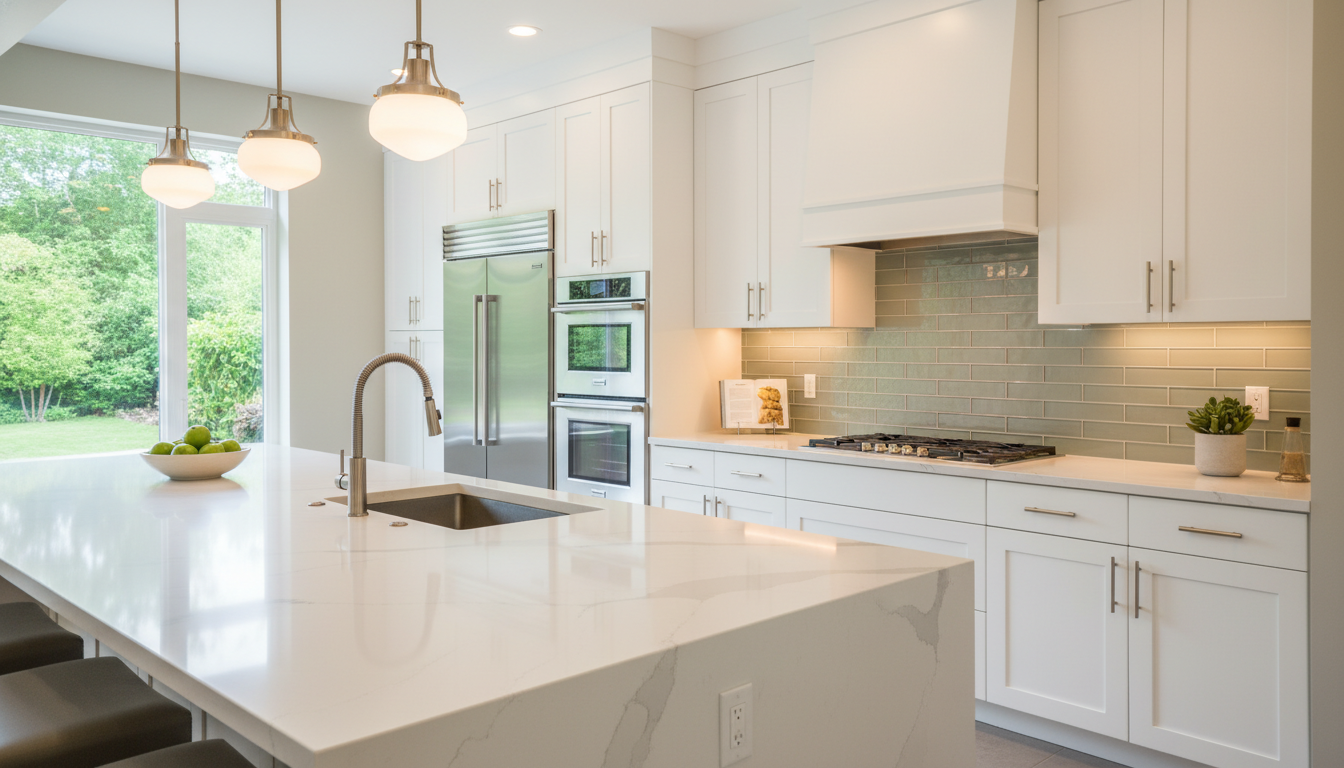
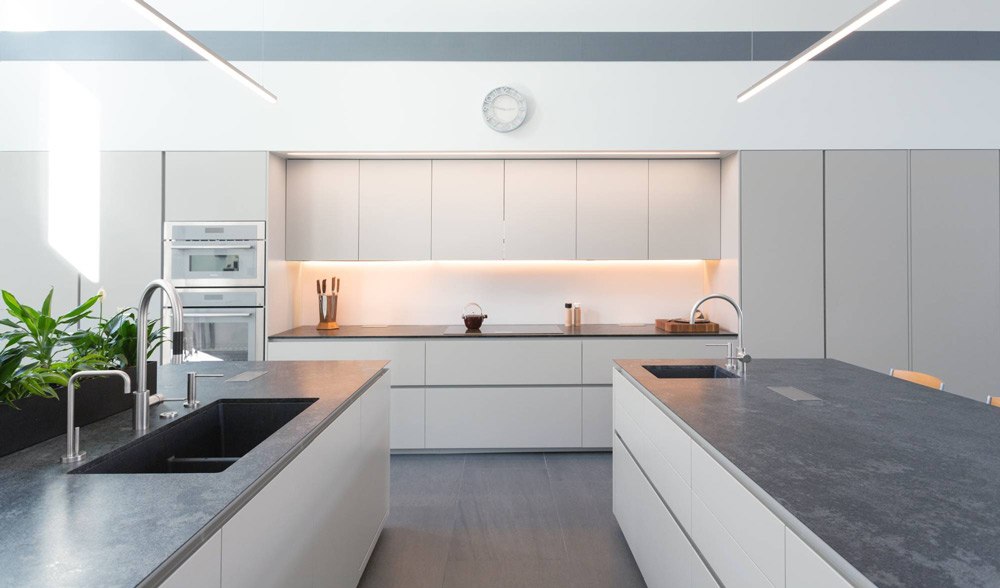
High-end kitchen finishes are standard in Bellevue properties, where buyers expect quality materials and smart layouts.
Nationally, according to the 2024 U.S. Houzz Kitchen Trends Study, the median cost for a minor kitchen remodel sits at $18,000, while a major remodel averages $55,000. But Bellevue? Here's the reality: most kitchen remodels in the area fall between $100,000 and $150,000 or more, depending on your selections and scope. A-Z Construction Solutions reports that high-end finishes and state-of-the-art appliances—which are common in Bellevue properties—push budgets to $70,000 to $150,000 and beyond.
Why such a range? Several factors influence your final cost. Structural changes (moving walls, expanding layouts) cost significantly more than cosmetic refreshes. Premium appliances from brands like Sub-Zero or Wolf run $3,000-$10,000 per unit, compared to builder-grade options at $500-$1,500. Custom cabinetry costs 50-100% more than semi-custom or stock options. And Bellevue's design standards mean most homeowners opt for higher-end materials to remain competitive in the local real estate market.
Here's what matters most: understanding where your project sits on the remodeling spectrum. Is this a quick cosmetic refresh, a functional upgrade, or a complete gut renovation? That answer determines everything else.
Step 1: Define Your Budget and Goals
This is where most homeowners stumble. They look at a magazine photo, fall in love with it, and only later realize their budget can't support the design. Start differently. Start with numbers.
Determine your realistic budget. Be honest about what you can invest. Set a hard number, then add a 10-15% contingency buffer for surprises (and in remodeling, surprises are guaranteed). If you're financing with a home equity line of credit or loan, talk to your lender first to understand what you can actually qualify for.
Separate your "must-haves" from your "nice-to-haves." Must-haves are the functional necessities: adequate storage, updated electrical, reliable appliances. Nice-to-haves are the premium finishes: high-end hardware, custom islands, under-cabinet lighting. When costs creep—and they will—you'll trim the nice-to-haves first, not the critical elements.
Consider your lifestyle. Do you cook daily? Are you entertaining frequently? Do you have young kids who need accessible storage and durable surfaces? A serious home chef needs different priorities than someone who mostly orders takeout. A busy family with toddlers needs wipeable, stain-resistant materials. These lifestyle factors directly impact which components deserve your investment.
Think about timeline. Are you remodeling because you need to within six months before selling? Or is this a long-term upgrade you can do on your schedule? Timeline affects contractor availability and pricing. Rush jobs cost more.

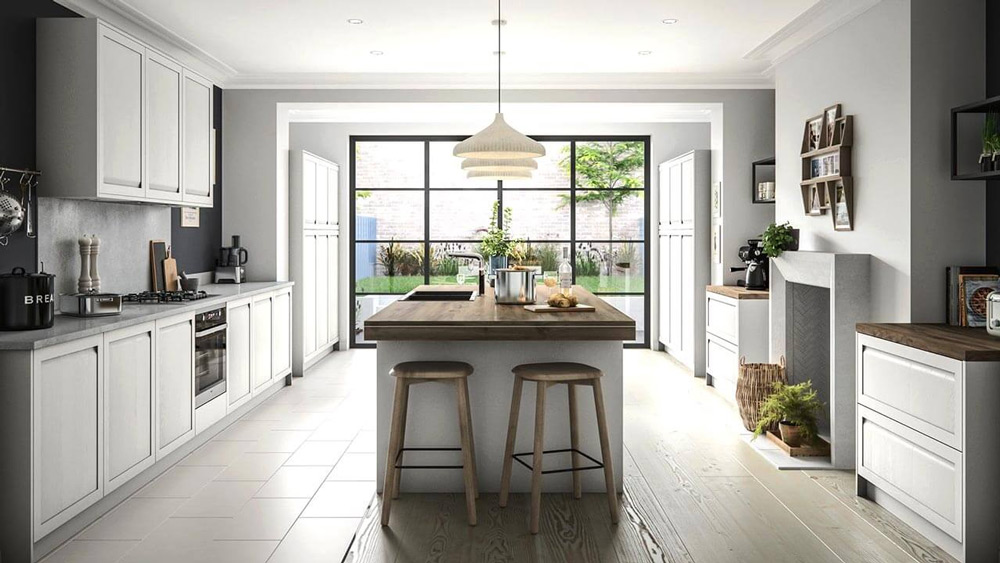
Planning your kitchen budget requires careful consideration of priorities and realistic cost expectations before design begins.
Step 2: Assess Your Current Kitchen Layout
Before dreaming about new kitchens, understand the kitchen you have. Walk through your space with fresh eyes. What frustrates you daily? Is it the lack of counter space? The inefficient flow between sink, stove, and refrigerator? Poor lighting? Inadequate storage? Outdated appliances that break down constantly?
Document the flow of your kitchen. Professionals call this the "work triangle"—the path between your refrigerator, stove, and sink. An efficient work triangle means you're not walking excessive distances during meal prep. If your refrigerator is 15 feet from your sink, you're inefficient. That's worth addressing in a remodel.
Measure everything. Counter depth, cabinet heights, ceiling height, window placement, electrical outlet locations, gas line location. These measurements dictate what's actually possible in your new design. A contractor or designer will take professional measurements, but knowing your space helps you have informed conversations.
Take photos from multiple angles. These become reference materials for your designer. Show them the problem areas—the dark corner, the awkward gap, the cabinet that never closes properly.
Step 3: Choose Your Remodel Type
Kitchen remodels generally fall into three categories, each with different cost implications and outcomes.
Minor Remodels (Cosmetic Updates): Budget $15,000-$25,000. You're keeping the existing layout, replacing cabinets or refinishing them, updating hardware, new countertops, fresh paint, and new lighting fixtures. No major structural changes. This works when your layout is already efficient but everything looks dated. The advantage? Quick timeline—usually 4-6 weeks. The limitation? You can't fix workflow problems if the layout is fundamentally flawed.
Mid-Range Remodels (Functional Upgrades): Budget $40,000-$75,000. You're likely reconfiguring the layout somewhat, replacing cabinets completely, upgrading appliances to mid-to-upper-tier brands, installing new countertops and backsplash, updating flooring, and improving lighting and electrical. This might include removing a wall to open the kitchen to a dining area, or relocating the island. Timeline extends to 8-10 weeks. This is where most Bellevue homeowners find value—you're solving real problems while upgrading finishes.
Major/Luxury Remodels (Complete Transformations): Budget $100,000-$200,000+. You're completely gutting the kitchen, potentially moving walls, relocating plumbing and electrical, installing high-end appliances (Wolf, Sub-Zero, La Cornue), custom cabinetry, premium countertops (marble, engineered stone), professional-grade hardware, custom lighting design, and possibly adding square footage to the kitchen itself. Timeline stretches to 12-16 weeks or longer. This is common in Bellevue, where buyers expect premium finishes and high-end functionality.
The ROI for your investment matters. According to Remodeling's 2024 Cost vs. Value Report, minor kitchen remodels average a 96% return on investment, meaning you recoup nearly all your spending when you sell. Major remodels average about 50% ROI—you'll spend $150,000 and see about $75,000 back in home value. That sounds bad until you remember: you're also living with your beautiful new kitchen for years before selling. The enjoyment factor matters.
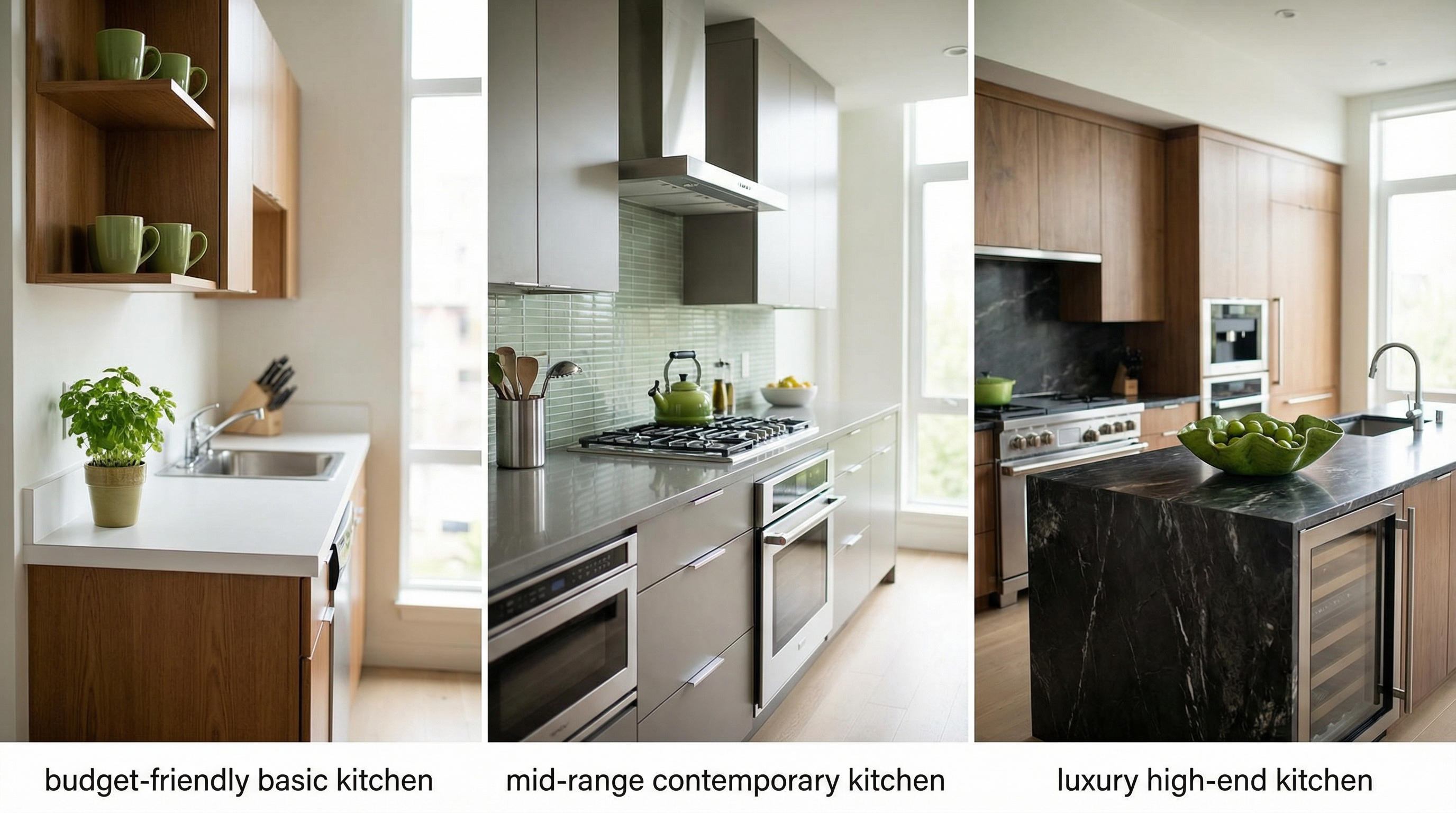
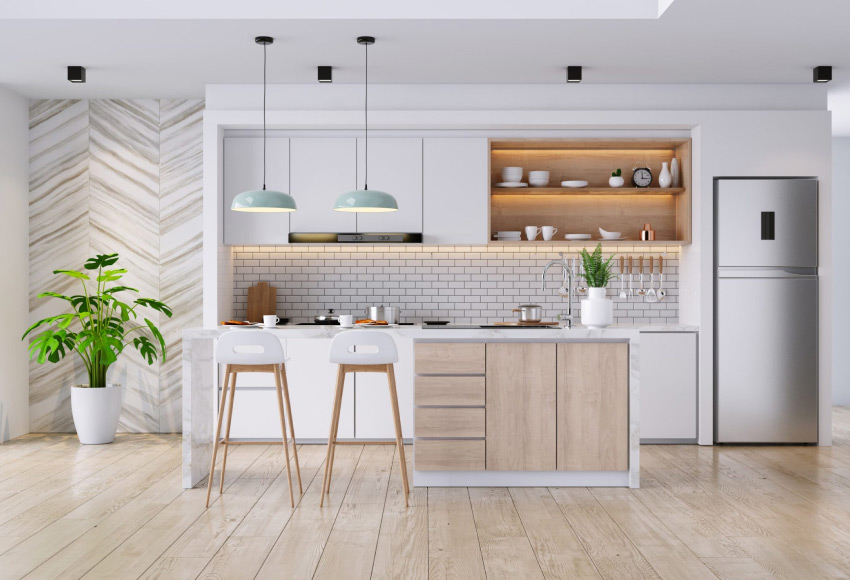
Different budget levels allow for different design approaches, from cosmetic updates to complete luxury transformations.
Step 4: Select Materials and Finishes
This is where your budget gets spent—one decision at a time. And yes, decisions here can absolutely derail your budget if you're not careful.
Cabinetry is typically your biggest expense. Stock cabinets (Lowe's, Home Depot standard lines) run $50-$100 per linear foot. Semi-custom cabinets (Kraftmaid, Merillat) run $150-$300 per linear foot. Full custom cabinetry (local craftspeople, high-end brands) runs $300-$800+ per linear foot. A typical 15-linear-foot kitchen might cost $750 for stock, $3,000-$4,500 for semi-custom, or $5,000-$12,000 for custom. In Bellevue, most homeowners choose semi-custom to custom because stock cabinets don't match neighborhood standards.
Countertops matter visually and functionally. Laminate costs $10-$20 per square foot installed. Quartz (engineered stone) costs $50-$150 per square foot. Natural marble costs $40-$100+ per square foot but stains easily. Butcher block costs $30-$50 but needs regular maintenance. For Bellevue properties, quartz is the default choice—it's durable, looks premium, and holds up to real-world use.
Appliances have huge price ranges. A basic electric range: $500-$800. A mid-tier stainless steel range: $1,200-$2,500. A professional-grade Wolf or La Cornue range: $4,000-$10,000+. Similarly, refrigerators range from $800 (basic) to $3,000-$8,000 (high-end). The appliance category easily accounts for $5,000-$20,000 of your budget depending on your choices.
Flooring gets heavy foot traffic. Laminate runs $3-$8 per square foot installed. Vinyl plank runs $5-$12. Ceramic tile runs $5-$15. Hardwood runs $8-$20. For kitchens, durability matters more than bedroom aesthetics. Most Bellevue kitchens use mid-to-high-end tile or luxury vinyl planks that mimic wood.
Backsplash is visible and becomes a design focal point. Basic ceramic subway tile runs $100-$300 for a standard backsplash. Custom tile, glass, or stone runs $300-$1,000+. In Bellevue, the backsplash often reflects the kitchen's sophistication level.
The strategic approach: prioritize the elements you see and touch most. Spend more on cabinets and countertops. Be reasonable on appliances (mid-tier is smart—you get quality without premium pricing). Choose durable, attractive flooring but don't overspend. Make the backsplash a visual highlight if your budget allows.
Step 5: Choose Your Contractor
Your contractor can make or break your entire project. Choosing wrong results in budget overruns, timeline delays, poor craftsmanship, and significant stress. Choosing right means a smooth process and a beautiful kitchen.
Start with credentials and verification. Ask for licensing and insurance information. In Washington State, contractors should be licensed. Verify directly with the Washington Department of Labor & Industries, not just by their word. Ask about bonding—this protects you financially if the contractor doesn't finish or perform the work.
Request and check references. Not just "they gave me three names to call." Ask specifically: "Can you provide contact information for kitchen remodels completed in the past two years?" Call at least three of these people. Ask specific questions: Did the contractor stay on budget? On timeline? How was communication? Would you hire them again? This conversation reveals far more than a five-star Google review.
Get multiple detailed quotes. Contact at least three contractors. Provide each with the exact same specifications (same cabinets, same countertops, same appliances, same scope). Compare apples to apples. If one quote is dramatically lower, ask why. Sometimes it's efficiency. Sometimes it's cutting corners you don't want cut.
Interview for communication style. You'll be working closely with this person for 10+ weeks. Do they explain things clearly? Do they respond to emails and calls promptly? Do they seem to listen to what you want, or are they pushing their vision onto you? A good contractor collaborates. A bad one dictates.
Look for a design-build approach. Some contractors are pure builders—they follow designs others create. Better contractors like WAREMODEL handle design and build under one roof. This means the designer understands construction realities, and the builder understands the design intent. It's more seamless, prevents misinterpretations, and typically costs less than hiring a separate designer and contractor.

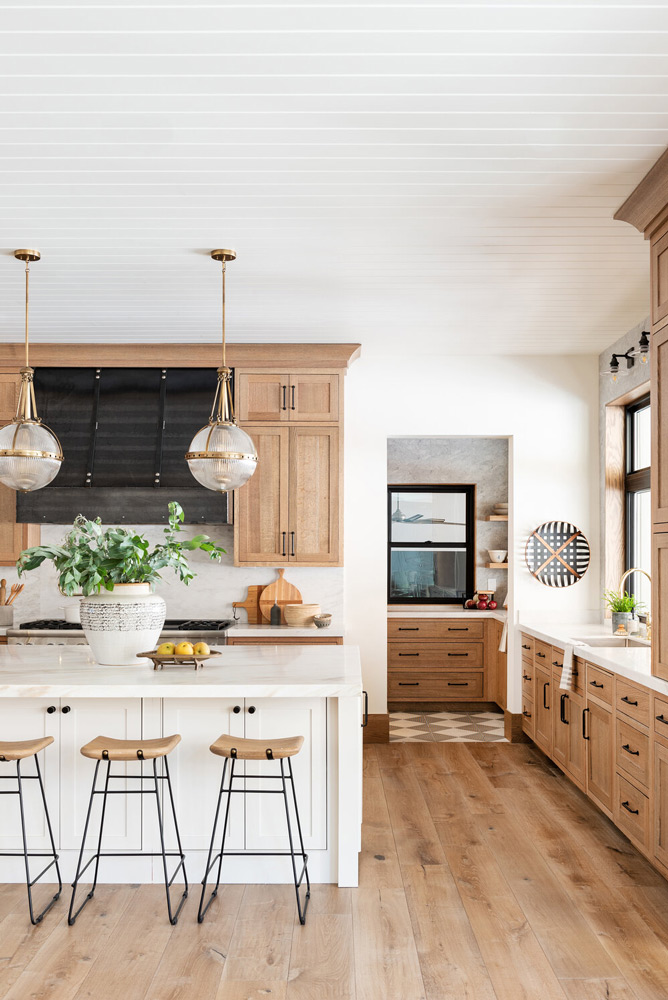
Working with a trusted contractor who communicates clearly prevents costly mistakes and ensures your vision becomes reality.
Step 6: Manage the 3D Design Phase
Before a single nail gets hammered, your kitchen should exist in digital form. A 3D design serves multiple purposes: it shows you exactly what you're getting, it catches design problems before construction, and it communicates specifications clearly to your team.
Request 3D renderings from multiple angles. You should see front views, side views, and perspectives showing how the kitchen feels in person. A 2D floor plan is helpful for layout, but 3D renderings let you actually visualize your kitchen.
Test your layouts virtually. In the 3D design, walk through your kitchen in your mind. Does the island placement make sense? Can you open the refrigerator without hitting the oven? Do you have adequate counter space on both sides of the sink? Can two people work in the kitchen simultaneously without constantly bumping into each other? These are questions answered in good 3D design, not during construction when it's too late to fix.
Finalize all material selections during design. Don't wait until the kitchen is being built to choose your cabinet stain or countertop color. Finalize everything during design. This prevents delays and change orders. "While we're here, can we upgrade to the marble?" sounds nice but costs $8,000 more and delays the project by three weeks.
Get written specifications. Every single item should be specified in writing: cabinet brand and model, countertop material and color, appliance models, tile specification, paint colors (with code numbers, not just "eggshell white"). This protects everyone and prevents misunderstandings.
Plan storage thoroughly. More kitchens fail on storage than aesthetics. Walk through your current kitchen and list everything you store there. Now, in your 3D design, does everything have a home? Pull-out drawers for pans, vertical dividers for baking sheets, drawer organizers for utensils, lazy susans in corner cabinets, deep drawers under the cooktop for pots. Specificity matters.
Step 7: Navigate Permits and Timeline
This is where the rubber meets the road. Your kitchen remodel becomes real when permits are filed.
Understand permit requirements. In Bellevue, permits are required for any kitchen remodel exceeding $7,500 in value or involving changes to electrical, plumbing, or structure. Most remodels require permits. Yes, some contractors offer to skip permits "to save money." Don't let them. Permits exist to ensure work meets building codes and keeps you safe. They also protect your home's value at resale—buyers want to know electrical work was done to code.
Budget 2-4 weeks for the permitting process. Even with experienced contractors who understand local requirements, permitting takes time. Your contractor (or a hired permit expediter) submits plans to the city, the city reviews them, issues requests for clarification or modifications, you adjust and resubmit, and eventually you receive a permit. During this time, you can't start construction.
Plan for inspections. Permits require inspections at key stages: rough electrical, rough plumbing, framing/structure, final inspection. Each inspection takes 1-2 days. Plan your timeline expecting these pauses.
Expect a 10-14 week total timeline. The breakdown typically looks like this: Design phase (2-3 weeks), Permitting (2-4 weeks), Construction (6-8 weeks), Inspections throughout (included in construction time). Weather affects some timelines—if your kitchen remodel involves exterior work, winter can be challenging.
Establish a contingency fund. Even detailed planning reveals surprises. During demolition, you discover the subfloor is rotted. The electrical layout doesn't match current code requirements. Plumbing runs through where your new island needs to go. These aren't contractor errors—they're remodeling realities in older homes. Contractors should estimate these contingencies, but having 10-15% of your budget reserved prevents panic when they occur.
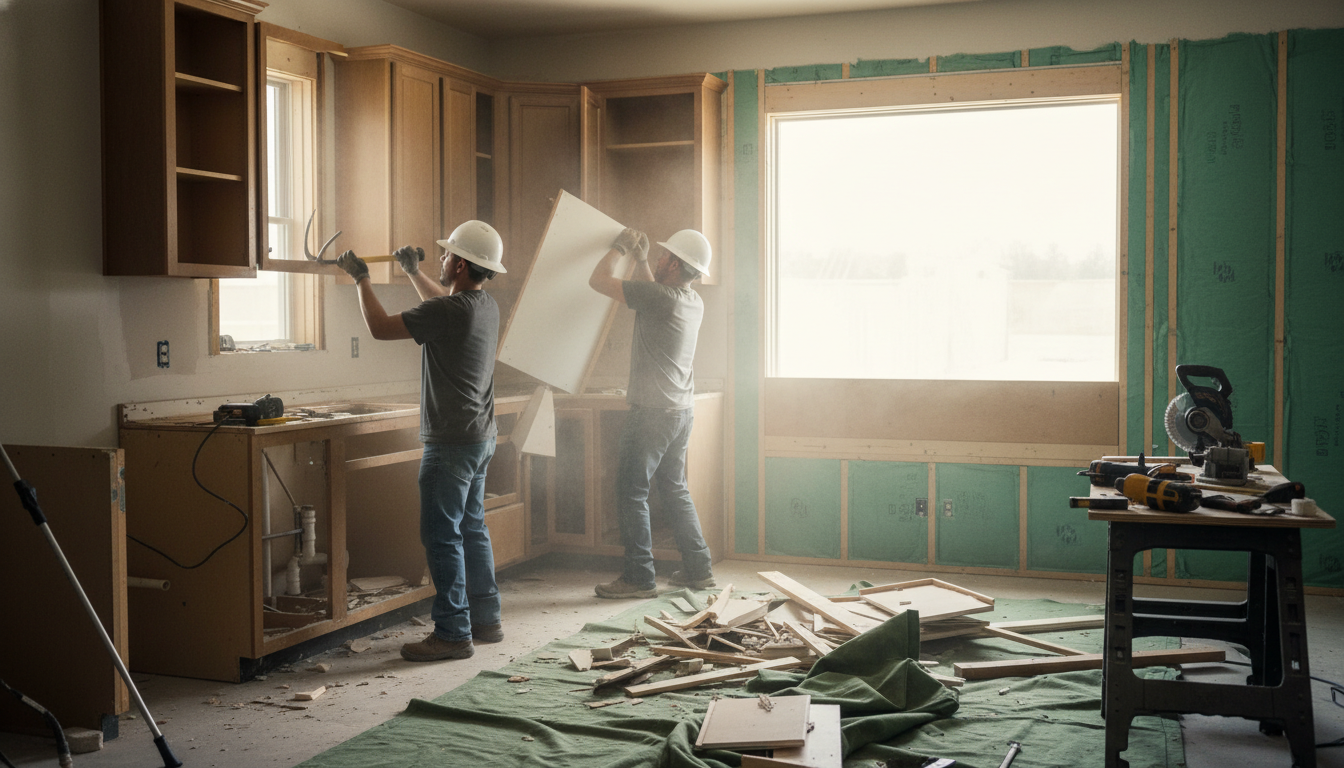
The construction phase requires careful planning, inspections, and coordination between multiple trades to stay on timeline.
Real-World Example: Bellevue Kitchen Transformation
Let's walk through an actual scenario that many Bellevue homeowners face: you have a 1980s kitchen in a home otherwise updated. The kitchen is dated but the layout is decent. Your budget is $120,000.
Starting point: Almond-colored cabinets, harvest gold appliances, builder-grade laminate countertops, inadequate lighting, no island, cramped work space.
Goal: Modern kitchen that feels premium but isn't ultra-luxury.
Your approach:
- Keep the existing layout (this saves money on electrical/plumbing rework)
- Replace all cabinetry with semi-custom white cabinets
- Install quartz countertops in a subtle gray tone
- Upgrade to stainless steel mid-range appliances
- Install recessed LED lighting plus a statement pendant over the (new) island
- Add a subway tile backsplash with contrasting grout
- Refinish the existing hardwood flooring
- Paint walls in a soft warm white
Budget allocation:
- Cabinetry (semi-custom): $35,000
- Countertops (quartz): $12,000
- Appliances (mid-range stainless): $8,000
- Lighting: $4,000
- Tile backsplash: $2,500
- Island (cabinetry): $8,000
- Labor and installation: $30,000
- Permits and miscellaneous: $5,000
- Contingency (5%): $6,000
- Total: $110,000
Timeline: 12 weeks total (3 weeks design, 3 weeks permitting, 6 weeks construction)
Result: You have a kitchen that feels premium and modern, with better functionality through the new island, improved lighting, and contemporary finishes. Your home's value increases by approximately $55,000-$60,000 (based on 50% ROI on a major remodel), and you've enjoyed living with the beautiful kitchen throughout the project.
This is a realistic scenario for Bellevue homeowners. The kitchen isn't ultra-luxury, but it's thoughtful, well-designed, and delivers genuine improvements.
Common Mistakes to Avoid
Mistake 1: Underestimating the Timeline
You think your kitchen will take 8 weeks. Plan for 12. Why? Because inspections pause work. Materials get delayed. Decisions take longer than expected. If you're rushing to sell before Christmas or entertain for Thanksgiving, you're likely to be disappointed. Build buffer time into your plans.
Mistake 2: Changing Your Mind During Construction
Your kitchen is partially demolished. You suddenly decide you want a different cabinet color, or you want the island moved three feet. These mid-project changes are expensive and cause delays. Change orders can cost $1,000-$10,000 each. Finalize everything during design.
Mistake 3: Cutting Corners on Contractor Selection
"He quoted $15,000 less than the other two contractors." Pause. Why? Is it because he's more efficient, or because he's cutting quality? Sometimes you get what you pay for. The difference between a $35,000 remodel and a $50,000 remodel might be $200/month over 15 years. The difference between a bad remodel and a good one is quality of life, daily satisfaction, and long-term regret. Don't choose solely on price.
Mistake 4: Forgetting About Functionality
Your kitchen looks gorgeous in photos but is dysfunctional in real life. The island blocks traffic flow. You have no counter space near the stove. Cabinets are hard to access. Beauty without function creates frustration every single day. During design, prioritize function first, then make it beautiful.
Mistake 5: Neglecting Ventilation
A beautiful kitchen with poor ventilation smells like last night's salmon for three days. Invest in proper ventilation—a quality range hood, or a high-end hidden ventilation system that pulls smells directly outside. Cheap ventilation is one of the most regretted cost-cutting measures in kitchen remodels.
Mistake 6: Ignoring Trends That Will Age Poorly
That dark gray cabinet color is trendy in 2025. Will it still feel fresh in 2030? Probably not. Choose timeless finishes (whites, natural woods, soft grays) and use trendy colors through accessories you can swap out. Your cabinet color should stand the test of time.
Pro Tips for Success
Tip 1: Invest in a Quality Designer
If you don't go with a design-build firm, hire a kitchen designer. Not an architect (too expensive), but a professional kitchen designer who understands ergonomics, traffic flow, and material selection. This costs $2,000-$5,000 but prevents $20,000 in mistakes. It's the best money you'll spend.
Tip 2: Choose Timeless Finishes Over Trendy Ones
White, cream, soft gray, natural wood—these are your foundation. Trends express themselves through hardware, tile, and accessories that you can update later without reconstructing your kitchen.
Tip 3: Over-Invest in Storage
You will accumulate kitchen stuff. Pots, pans, serving dishes, small appliances. Design storage for what you actually own, plus 30% for what you'll acquire. Vertical dividers, pull-out drawers, deep storage—these make your kitchen function daily.
Tip 4: Make a Mood Board
Collect photos of kitchens you love. Not single photos—entire kitchens. When you present these to your designer or contractor, they understand your aesthetic direction. It's easier than explaining "I like modern but warm."
Tip 5: Plan Your Kitchen Peninsula or Island Thoughtfully
Islands and peninsulas are popular in Bellevue kitchens because they create gathering spaces and additional work surface. But get the dimensions right. Too small and they're useless. Too large and they block traffic flow. Thirty-six inches to the island from counter is walkable. Less and you're squeezing. More and you're wasting space.
Tip 6: Document Everything
Take photos of the design renderings. Keep emails about decisions. Store photos of materials you selected. When six weeks into construction someone asks "what color did we choose for the backsplash?" you have documentation.
FAQ
Q: How long does a kitchen remodel typically take in Bellevue?
A: For most projects, plan 10-14 weeks from design start to final walkthrough. This includes 2-3 weeks design, 2-4 weeks permitting, and 6-8 weeks construction. Larger projects or structural changes may extend to 16+ weeks.
Q: What's the average cost for a kitchen remodel in Bellevue?
A: According to current market data, most Bellevue kitchen remodels range from $100,000 to $150,000 or more, depending on size, materials, and scope. Budget varies significantly based on whether you're doing cosmetic updates or a complete transformation.
Q: Do I need permits for my kitchen remodel?
A: Yes, in Bellevue any kitchen remodel exceeding $7,500 or involving electrical, plumbing, or structural changes requires permits. Permits add 2-4 weeks to your timeline but ensure work meets building codes and protects your home's value.
Q: Can I use my kitchen during the remodel?
A: Not really, no. A full kitchen remodel means your space is partially or fully non-functional. Some contractors can work in phases allowing limited use, but expect significant disruption. Plan to eat out, use a temporary kitchen space, or plan around the project timeline. Most people arrange their remodel to coincide with when they can most easily work around disruption.
Q: What's included in a design-build approach?
A: A design-build firm like WAREMODEL handles design and construction under one roof. They create detailed 3D renderings, finalize all specifications, obtain permits, and manage the full build. The advantage is seamless communication—the designer understands construction realities, and the builder understands the design intent. It typically costs less and moves faster than hiring separate designers and contractors.
Q: How much will my kitchen remodel increase my home's value?
A: According to Remodeling's 2024 Cost vs. Value Report, minor kitchen remodels average 96% ROI, while major remodels average 50% ROI. A $150,000 major remodel might add $75,000 in appraised value. However, you also enjoy the kitchen for years before selling, and Bellevue's competitive real estate market rewards updated kitchens significantly.
Q: What materials should I choose for durability?
A: Quartz countertops (extremely durable, low-maintenance), quality cabinetry with soft-close hinges and drawer slides, stainless steel or high-end appliances, ceramic or porcelain tile flooring, and painted or stained wood trim all offer durability. Avoid marble in kitchens unless you're committed to regular sealing and maintenance. Choose function and durability over pure aesthetics.
Q: Should I hire a local contractor or someone outside the area?
A: Local contractors understand Bellevue building codes, permit processes, and material suppliers. They have established relationships with inspectors, which can smooth the permitting process. They're also easier to reach if issues arise post-completion. For a kitchen remodel, local expertise matters. Check local options before considering contractors from other regions.
Conclusion
Your kitchen remodel is one of the most significant home investments you'll make. In Bellevue, where home values are strong and buyer expectations are high, the kitchen's condition directly impacts your home's market appeal. But beyond resale value, your kitchen affects your daily life. You cook, gather, and live in this space daily.
The steps we've covered—defining budget, understanding costs, planning layout, selecting materials, choosing contractors, managing design, and navigating permits—form a roadmap to success. The difference between a stressful remodel nightmare and a smooth, satisfying transformation lies in preparation.
If you're starting your kitchen remodel journey, take time to plan. Get detailed quotes from multiple contractors. Request 3D design renderings that let you visualize your kitchen before construction. Ask questions. Choose a contractor who communicates clearly and understands both your vision and practical realities.
At WAREMODEL, we specialize in exactly this process. Our design-build approach—3D design consultation, comprehensive installation across all trades, family-centered design philosophy—takes the complexity out of kitchen remodeling. We handle everything from initial design to final walkthrough, ensuring your Bellevue kitchen becomes the heart of your home you've always wanted.
Ready to transform your kitchen? Start with a consultation to discuss your vision, budget, and timeline. Your dream kitchen is more achievable than you think.