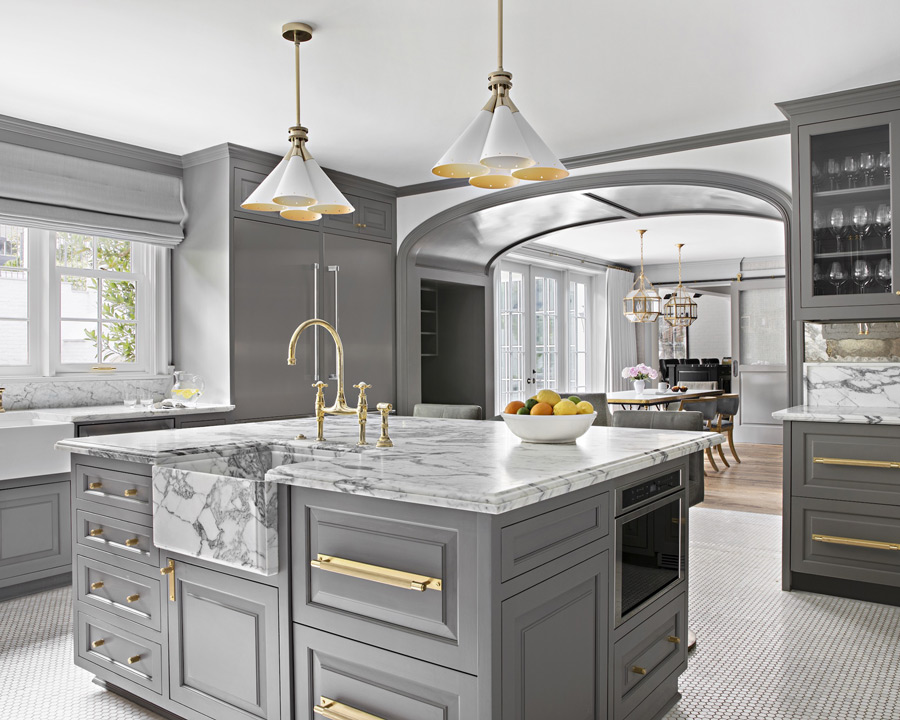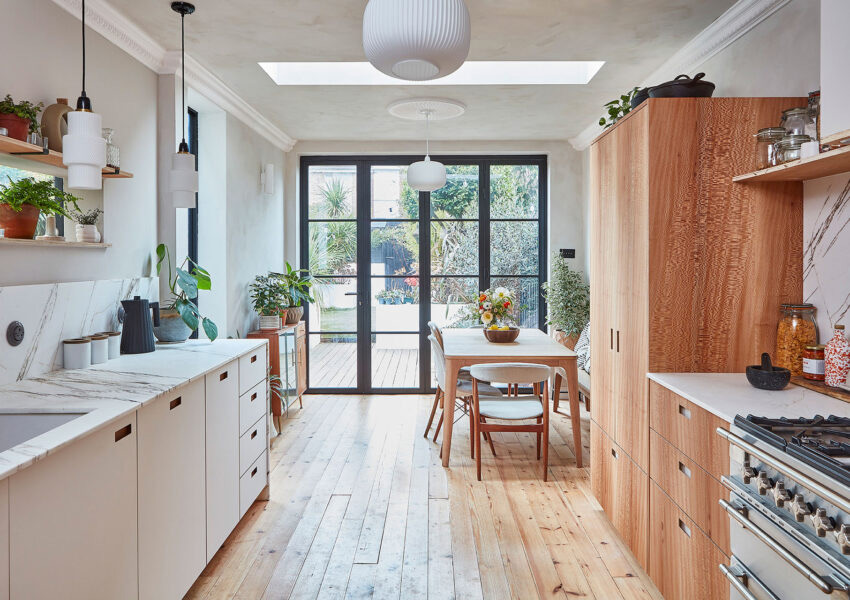
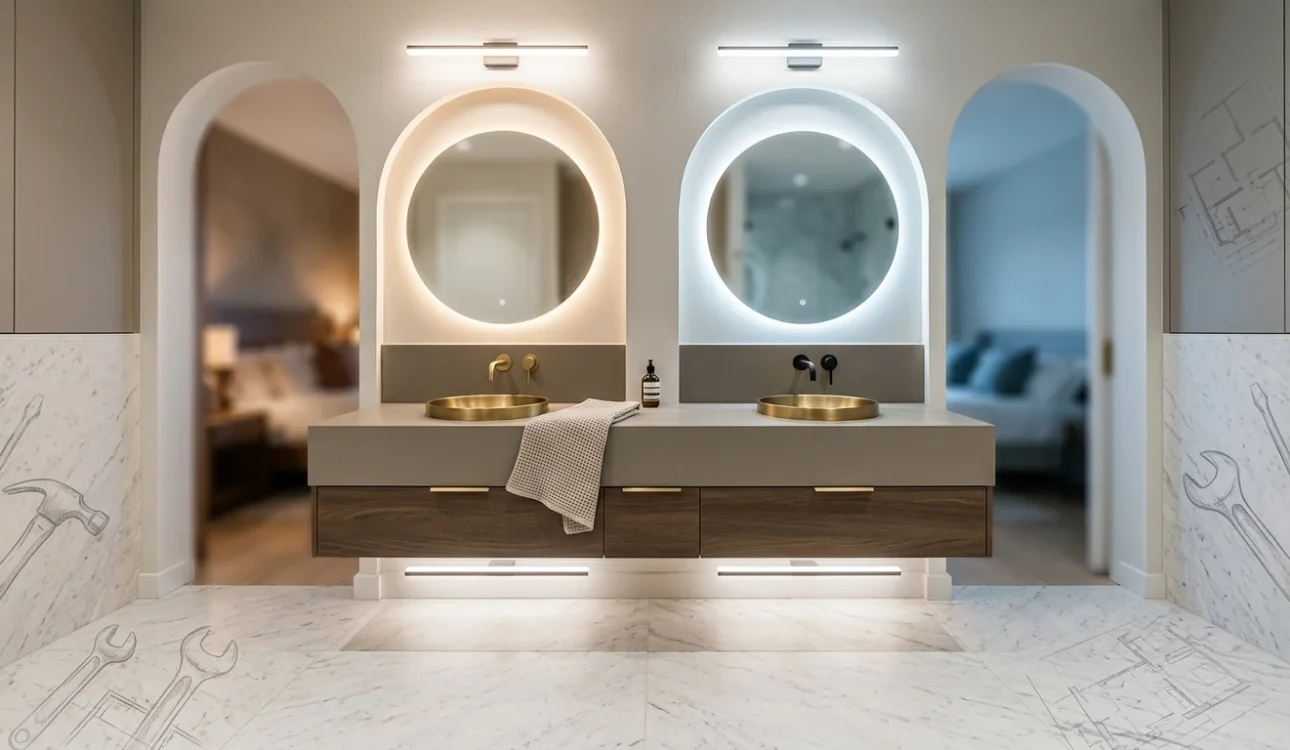
A jack and jill bathroom vanity represents one of the most practical solutions for shared spaces, particularly in homes where multiple occupants need simultaneous access to grooming facilities. This dual-access configuration positions two separate sink stations on opposite sides of a single vanity unit, allowing two people to prepare for their day without the frustration of waiting in line. Whether you're designing a master bath for couples, a family bathroom for siblings, or a guest suite requiring flexible functionality, understanding the fundamentals of jack and jill bathroom layouts is essential to creating a space that balances style, efficiency, and comfort.
Quick Answer: A jack and jill vanity features two separate sink stations positioned back-to-back or side-by-side, enabling simultaneous use by two people from different sides of the bathroom. This shared bathroom vanity design maximizes functionality in compact spaces while maintaining individual grooming stations, making it ideal for couples and families seeking to reduce morning congestion and improve daily routines.
This article explores comprehensive design ideas and practical layout solutions for jack and jill bathroom vanities. We'll examine spatial configurations that work in various room dimensions, discuss how to optimize storage and counter space for dual users, and reveal design strategies that create visual harmony despite the dual-access vanity's inherent complexity. From fixture selection and plumbing considerations to lighting and aesthetic cohesion, you'll discover how thoughtful planning transforms a functional necessity into a sophisticated design feature. Additionally, we'll explore how innovative remodeling concepts—such as those championed by WAREMODEL—can help you maximize your bathroom's potential by creating more usable space for the important elements of your daily life.
Table of Contents
- The History and Naming of Jack and Jill Bathroom Layouts
- Best Vanity Layouts for Jack and Jill Bathrooms
- Side-by-Side Dual Sink Vanity
- Back-to-Back Vanities
- Corner-Positioned Vanities
- Single Vanity with Extended Counter
- Vanities with Separate Toilet Compartment
- Comparison Table: Layout Selection Guide
- Maximizing Storage in Shared Bathroom Vanities
- Privacy and Functionality Considerations for Dual-Access Bathrooms
- Design Styles and Finishes for Jack and Jill Vanities
- Traffic Flow and Spatial Planning in Jack and Jill Bathrooms
- Creative Vanity Ideas for Unique Jack and Jill Bathroom Scenarios
- Remodeling Your Bathroom with a Jack and Jill Vanity Setup
- Common Questions About Jack and Jill Vanities Answered
- Creating Your Perfect Jack and Jill Vanity: Next Steps
The History and Naming of Jack and Jill Bathroom Layouts
The term "jack and jill bathroom" draws its whimsical name from the classic English nursery rhyme about two children who shared a journey up a hill—a fitting metaphor for a shared bathroom space. This naming convention became commonplace in residential design during the mid-20th century, particularly as suburban home construction boomed and architects sought efficient solutions for multi-bedroom homes. The dual-access vanity layout itself wasn't entirely new, but the catchy nursery rhyme reference provided an instantly memorable way to describe what might otherwise be called a "shared bathroom" or "dual-access vanity configuration."
The popularity of jack and jill bathroom designs accelerated through the 1960s and 1970s, when families increasingly valued efficient floor plans and morning routines that didn't involve bottlenecks. Builders recognized that positioning two sinks back-to-back or side-by-side allowed siblings, spouses, or roommates to prepare simultaneously without competing for mirror space or counter real estate. This practical innovation aligned perfectly with the era's emphasis on maximizing square footage—a principle that remains central to modern remodeling philosophy, much like the space-optimization concepts championed by WAREMODEL today. Over time, the name stuck not because of any formal designation, but simply because it was intuitive, approachable, and captured the essence of a bathroom designed for two independent users sharing one thoughtfully planned space.
Best Vanity Layouts for Jack and Jill Bathrooms
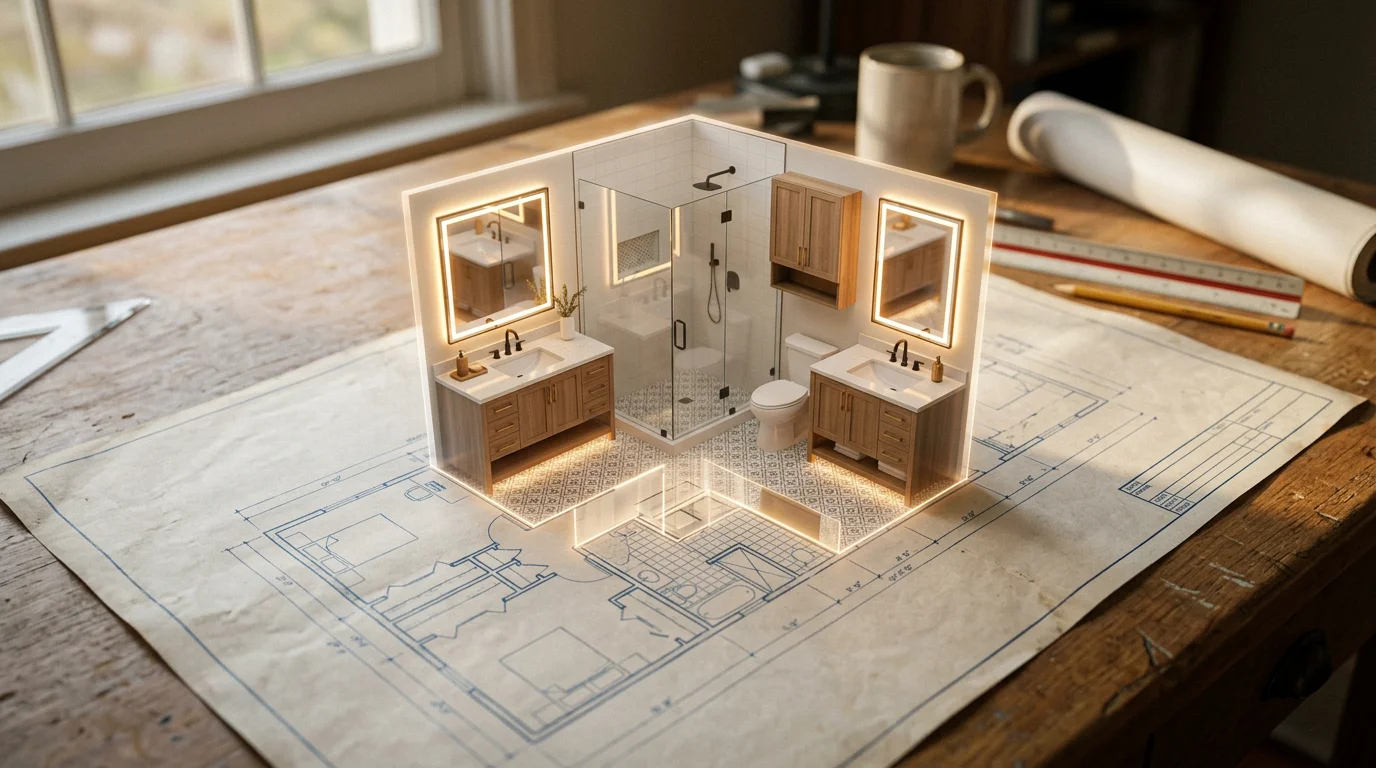
Selecting the right vanity layout is perhaps the most critical decision when planning a shared bathroom. The configuration you choose determines not only daily functionality but also the overall aesthetic and spatial flow of the entire room. Each layout offers distinct advantages and trade-offs, and understanding these differences helps you align your choice with your household's specific needs and your home's architectural constraints.
Side-by-Side Dual Sink Vanity
The side-by-side configuration remains the most popular choice for jack and jill bathrooms, and for good reason. Two sinks are positioned next to each other along a single wall, allowing occupants to stand shoulder-to-shoulder while preparing for the day. This layout works exceptionally well in households where morning routines overlap significantly—think parents and children, or roommates with similar schedules.
According to industry standards on double vanity sizing, the most popular dual sink vanity widths are 48", 60", and 72", with 60 inches representing the industry-accepted minimum to comfortably fit two sinks while maintaining adequate counter space between them. This layout requires wall space of at least 5 feet, though 6 feet provides a more spacious feel. The trade-off is that you're limited to a single mirror (or two smaller mirrors side-by-side), which can feel cramped if mirror real estate becomes a morning bottleneck.
Back-to-Back Vanities
For households prioritizing independence over togetherness, back-to-back vanities positioned on opposite walls offer a compelling alternative. Each person has their own dedicated sink, mirror, and counter space, creating psychological separation that can reduce morning friction. This layout works particularly well in larger bathrooms where you have the square footage to support it—typically requiring at least 80-100 square feet of total bathroom space.
The primary advantage is autonomy: one person can be applying makeup while another brushes teeth without any spatial compromise. The disadvantage is efficiency; this configuration demands more wall space and plumbing infrastructure, which increases both construction complexity and cost. It's ideal for en-suite bathrooms shared between spouses or older siblings with independent routines.
Corner-Positioned Vanities
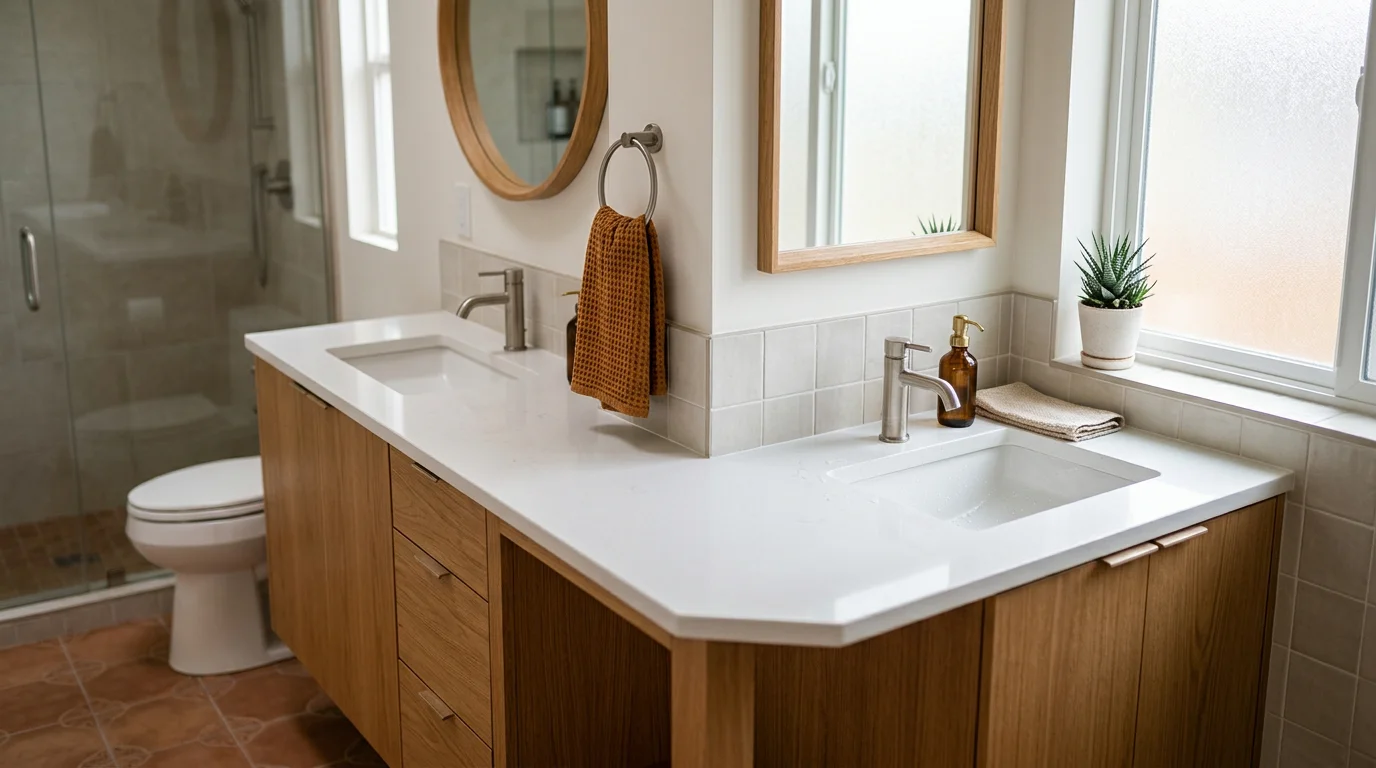
When floor plan constraints make traditional layouts impractical, positioning vanities on perpendicular walls (one along the primary wall, one along an adjacent wall) offers a space-efficient compromise. This L-shaped arrangement maintains some separation while reducing the total linear wall footage required. It works particularly well in smaller jack and jill bathrooms ranging from 60-100 square feet, where maximizing usable floor space matters more than creating distinct zones.
The visual advantage is that neither vanity feels like an afterthought; the L-configuration creates balanced proportions and prevents the bathroom from feeling lopsided. However, the corner position can make one vanity slightly less accessible if the bathroom has limited entry/exit pathways, so traffic flow should be considered during the planning phase.
Single Vanity with Extended Counter
Some homeowners opt for a single, oversized vanity with two sinks spaced generously apart along an extended counter. This approach resembles a side-by-side configuration but emphasizes continuous counter real estate over separate sink stations. It's particularly effective in bathrooms where users have different needs—one person might need ample space for skincare products while the other prefers a minimalist setup.
The trade-off is that this layout doesn't scale down well for smaller bathrooms. You need at least 6-7 feet of linear wall space to make it feel balanced. It also works best when paired with a generously sized mirror or a continuous mirror spanning the entire counter, which can be a significant design investment.
Vanities with Separate Toilet Compartment
In larger jack and jill bathrooms (typically 100-120+ square feet), dedicating an enclosed space to the toilet creates privacy and reduces morning competition for the primary bathroom area. One or both vanities can remain in the shared space while the toilet occupies its own compartment with a pocket door or swing door.
This layout maximizes functionality by allowing simultaneous use without visual or acoustic overlap. It's the most luxurious configuration but requires sufficient square footage and thoughtful architectural planning. When you're considering a comprehensive bathroom remodel, working with design professionals who understand spatial optimization—much like the approach WAREMODEL takes to creating efficient home layouts—ensures every square foot serves a purpose.
Comparison Table: Layout Selection Guide
| Layout | Best For | Minimum Space | Wall Space Needed | Installation Complexity |
|---|---|---|---|---|
| Side-by-Side Dual Sink | Shared morning routines, families | 60–80 sq ft | 5–6 ft | Low to moderate |
| Back-to-Back Vanities | Independent users, couples | 80–100 sq ft | 8–10 ft combined | Moderate to high |
| Corner-Positioned | Smaller bathrooms, space constraints | 60–80 sq ft | 5–7 ft combined | Moderate |
| Extended Single Vanity | Varied user needs, generous counter lovers | 70–90 sq ft | 6–7 ft | Low to moderate |
| Toilet Compartment Layout | Luxury, privacy-focused households | 100–164 sq ft | 8–12 ft combined | High |
The right vanity layout aligns your bathroom's physical constraints with your household's daily rhythms. Before finalizing your choice, map out your morning sequence—who uses the bathroom simultaneously, what activities require the most counter space, and whether privacy matters more than convenience. This honest assessment prevents costly redesigns and ensures your jack and jill bathroom truly serves everyone who uses it.
Maximizing Storage in Shared Bathroom Vanities
Shared bathroom vanities face a unique paradox: they must accommodate the belongings of multiple users without descending into chaos. Unlike a single-user vanity where one person's organizational system can reign supreme, jack and jill bathrooms demand thoughtful storage architecture that respects both privacy and accessibility. The difference between a functional shared vanity and a cluttered nightmare often comes down to how intelligently you use the available space.
The foundation of effective bathroom storage solutions begins with understanding your users' actual needs rather than assuming what they should need. One occupant might require extensive counter space for skincare routines, while another needs deep drawers for hair tools and supplies. Before selecting any cabinet design, audit what each user stores daily—medications, cosmetics, grooming tools, cleaning supplies—and categorize by frequency of use. Items accessed multiple times daily should occupy prime real estate; seasonal or occasional products belong in harder-to-reach spots.
Cabinet design directly impacts how much usable storage you actually gain. Deep, full-depth cabinets waste significant interior space because items pushed to the back become invisible and inaccessible. Instead, consider modular cabinetry with adjustable shelving, pull-out organizers, and tiered storage systems. Pull-out drawers transform corner cabinets from black holes into functional zones. According to Homewyse and Angi data on bathroom cabinet installation, bathroom cabinet installations average $450 to $1,652 in 2024, with basic installations running $458–$695 per cabinet. This investment yields returns through durability and optimized space utilization that simple shelving cannot match.
Vertical storage deserves equal attention to horizontal solutions. Wall-mounted cabinets above the vanity, floating shelves, and tall tower units draw the eye upward and create the illusion of more space. Medicine cabinets with mirrored fronts serve double duty—they store essentials while reflecting light and maintaining the bathroom's visual openness. For shared vanities, consider installing separate medicine cabinets or divided shelving so each user claims defined territory. This psychological boundary reduces territorial disputes and keeps personal items organized.
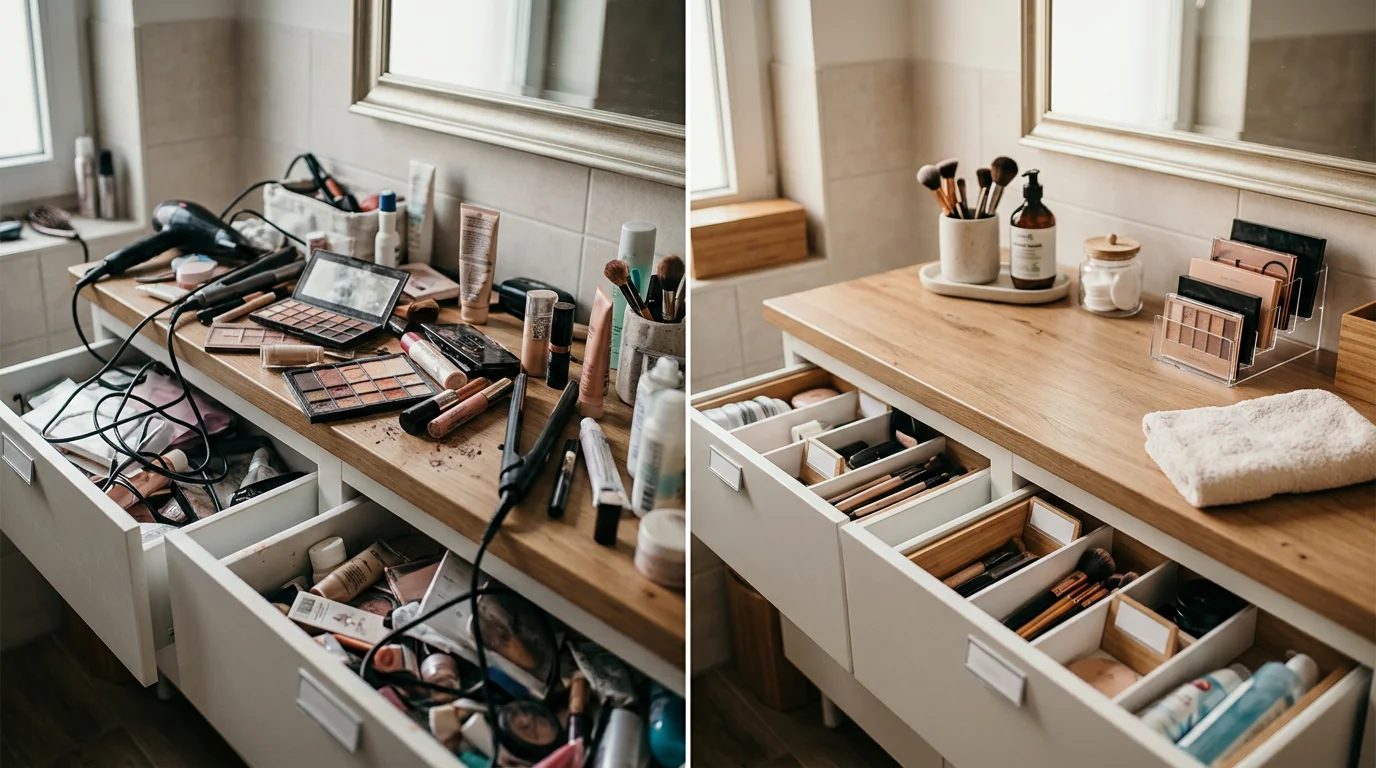
Drawer dividers and internal organization systems prevent the universal problem of shared vanity drawers becoming dumping grounds. Tiered drawer organizers, custom inserts, and labeled compartments work best when each user understands the system. Designate specific drawers by user or by item category—one drawer for hair care, another for skincare, a third for first-aid supplies. Clear acrylic organizers allow quick visual scanning, eliminating the frustration of searching through cluttered spaces during morning routines.
Counter space management determines whether your vanity feels spacious or cramped. Limit counter clutter to daily essentials: toothbrushes, soap dispensers, perhaps one or two frequently used products. Everything else belongs in drawers or cabinets. Vertical toothbrush holders, wall-mounted soap dispensers, and under-sink organizers keep surfaces clear while maintaining accessibility. This approach also simplifies cleaning and prevents water damage to stored items.
When planning your jack and jill bathroom remodel, work with designers who understand how innovative remodeling concepts create more usable space. Storage solutions should be built into the initial design rather than retrofitted later—custom cabinetry, integrated shelving, and strategic drawer placement maximize every inch. The result is a shared vanity that serves everyone efficiently, maintains its aesthetic appeal, and actually stays organized because the system matches how your household truly operates.
Privacy and Functionality Considerations for Dual-Access Bathrooms
The defining challenge of any jack and jill bathroom lies in reconciling two competing demands: ensuring adequate privacy for each occupant while maintaining the functionality that makes a shared space efficient. Unlike a traditional single-access bathroom, dual-access layouts create sight lines and sound transmission issues that demand thoughtful architectural solutions. The door choice you make—pocket doors, barn doors, or conventional swing doors—fundamentally shapes how your household experiences the space during peak morning and evening routines.
Pocket doors represent the gold standard for privacy in shared bathrooms, sliding smoothly into wall cavities to eliminate the swing radius that traditional hinged doors require. This design choice saves precious floor space and prevents the awkward moment when one person opens the door to find another at the vanity. The downside is installation complexity and cost; pocket door frames must be built into walls during initial construction, making them impractical for retrofits. Barn doors offer a middle ground, sliding along exterior wall tracks with a distinctly modern aesthetic. They provide excellent privacy without requiring in-wall framing, though they do consume wall space where the door travels when open. Traditional swing doors remain viable if your layout permits adequate clearance, but they work best when positioned to minimize direct sightlines into the vanity area from the hallway or adjoining bedroom.
Sight line management extends beyond door selection. Strategic placement of vanities, mirrors, and cabinetry can shield occupants from view even when doors stand open. Angled vanities, partial-height privacy screens, or positioned mirrors that reflect rather than reveal create psychological privacy—the sense that you're not directly exposed to passersby. This matters psychologically even when actual exposure is minimal. Sound insulation deserves equal attention; adding acoustic insulation within walls between the bathroom and adjoining spaces reduces the intrusive sounds of running water, ventilation fans, and bathroom activities that can disturb sleepers or those on work calls.
Zoning strategies divide the shared space into distinct territories, each with its own storage, lighting, and sometimes even a secondary door. When possible, separate vanity sinks—rather than a shared double sink—allow simultaneous use without crowding or territory disputes. Dual exhaust fans, separate light switches, and individual medicine cabinets reinforce the sense that each occupant has a dedicated zone. This approach aligns with the innovative remodeling concept of creating more functional space for everyone's needs, ensuring that shared doesn't mean compromised.
The interplay between privacy features and daily workflow determines whether your jack and jill bathroom becomes a source of harmony or friction. Design choices that honor both occupants' need for privacy and access result in a space that actually gets used as intended—efficiently, peacefully, and without the constant negotiation that poorly planned shared bathrooms demand.

Design Styles and Finishes for Jack and Jill Vanities
The aesthetic success of a jack and jill bathroom hinges on selecting finishes and design approaches that satisfy multiple users without feeling like a design compromise. Unlike a master bath serving a single household, shared vanities must balance personal style preferences while maintaining visual cohesion. The key is choosing a foundational design language that remains flexible enough to accommodate each occupant's individual touches.
Neutral bathroom design forms the safest foundation for shared spaces. Soft whites, warm grays, and pale taupe create an expansive, calming backdrop that appeals across different aesthetic preferences. These finishes reflect light effectively, making even smaller jack and jill bathrooms feel airier and more open. Rather than feeling bland, neutral vanity finishes become a canvas—allowing hardware, lighting, and accessories to provide visual interest without overwhelming the space. Marble-look quartz countertops in soft gray or white offer durability while maintaining that sophisticated, timeless appeal that works whether your housemate prefers minimalist or traditional aesthetics.
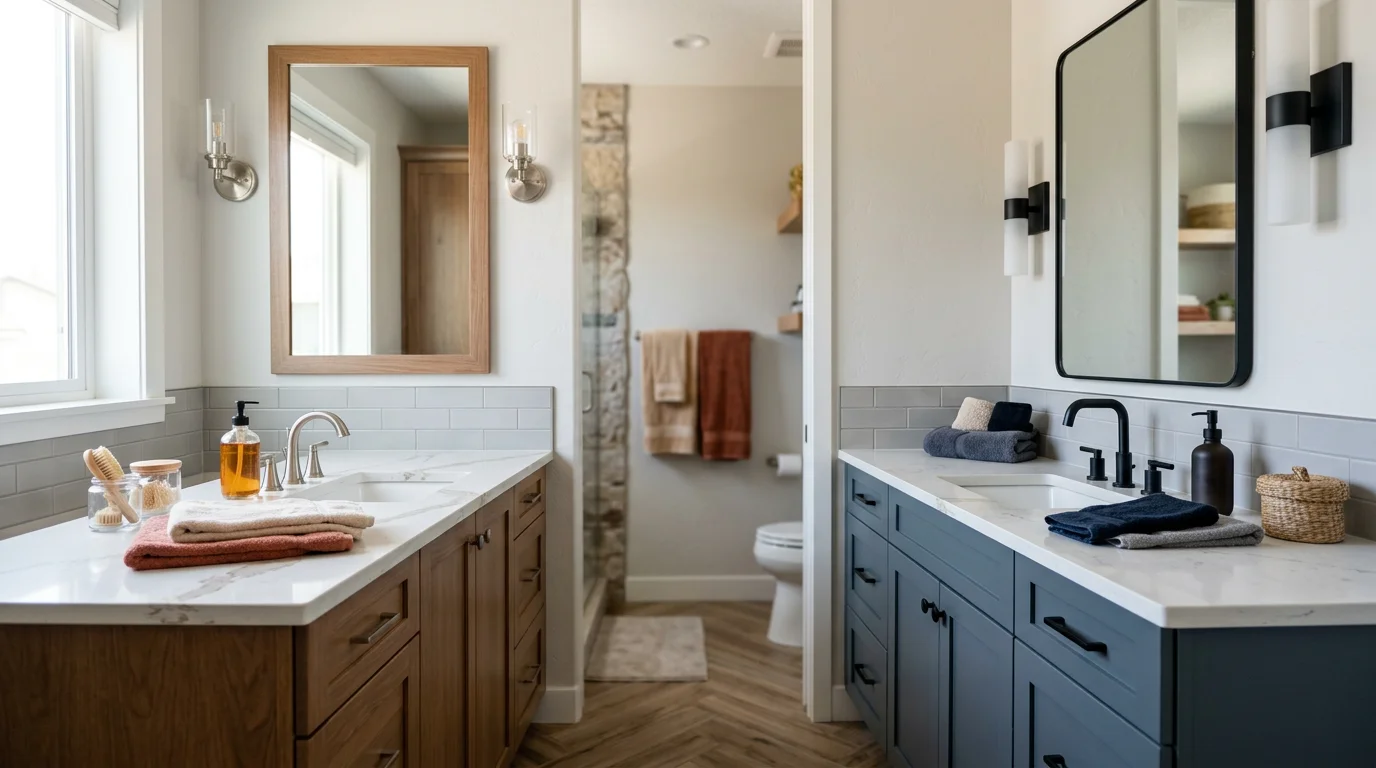
Transitional design represents an underrated choice for shared bathrooms. This style bridges modern clean lines with classic proportions, creating vanities that feel neither trendy nor dated. Shaker-style cabinetry in soft white or greige, paired with brushed nickel hardware and understated tile backsplashes, gives everyone a sense of stability. Transitional vanities age gracefully, meaning your design investment won't feel outdated in three years when design trends shift.
Color choices deserve careful consideration. While all-white vanities are safe, introducing soft, muted color through cabinetry—pale blue-gray, soft sage, or warm taupe—can add personality without alienating the other user. These colors work particularly well when paired with natural wood accents or warm metal finishes that enhance the sense of shared comfort. If one occupant gravitates toward cooler tones and another toward warmer hues, selecting a neutral that sits between them (like greige or soft greige-blue) ensures neither feels the space belongs solely to the other person.
Material selection directly impacts longevity and maintenance ease in high-traffic shared bathrooms. Quartz vanity countertops outperform solid surface materials in terms of durability and stain resistance—critical when two people are using the same space daily. Cabinet construction matters equally; plywood or solid wood cores resist moisture better than particleboard, particularly in humid bathroom environments. Ceramic or porcelain tile backsplashes are far more forgiving than natural stone when shared bathroom use inevitably leads to splashing and moisture exposure.
Fixture finishes should coordinate without matching identically. Using the same metal finish (brushed nickel, matte black, or oil-rubbed bronze) across faucets, lighting, and hardware creates visual unity that feels intentional rather than accidental. This consistency helps the space read as a cohesive design rather than a collection of compromises. When planning a remodel with innovative space-creating solutions, selecting complementary finishes ensures both occupants feel ownership of the final result.
Lighting design heavily influences how vanity finishes appear and how comfortable each user feels during their routine. Warm white LED fixtures (2700K color temperature) paired with sconces flanking the mirror create flattering, even illumination that showcases neutral finishes without creating shadows or harsh contrasts. This approach works across all style preferences—whether your bathroom leans modern, traditional, or transitional.
The goal is creating a vanity design that feels intentionally collaborative rather than hastily compromised. Thoughtful selection of neutral finishes, cohesive hardware choices, and durable materials ensures your shared bathroom remains attractive and functional for years, regardless of how individual users evolve their personal style preferences.
Traffic Flow and Spatial Planning in Jack and Jill Bathrooms
Effective spatial planning separates a functional jack and jill bathroom from one that devolves into daily bottlenecks and frustration. The challenge lies not simply in fitting two vanities into a shared space, but in orchestrating the movement patterns of multiple occupants so each person can complete their routine without constant negotiation. This requires deliberate thinking about doorway placement, clear zones of movement, and how traffic naturally flows through the room.
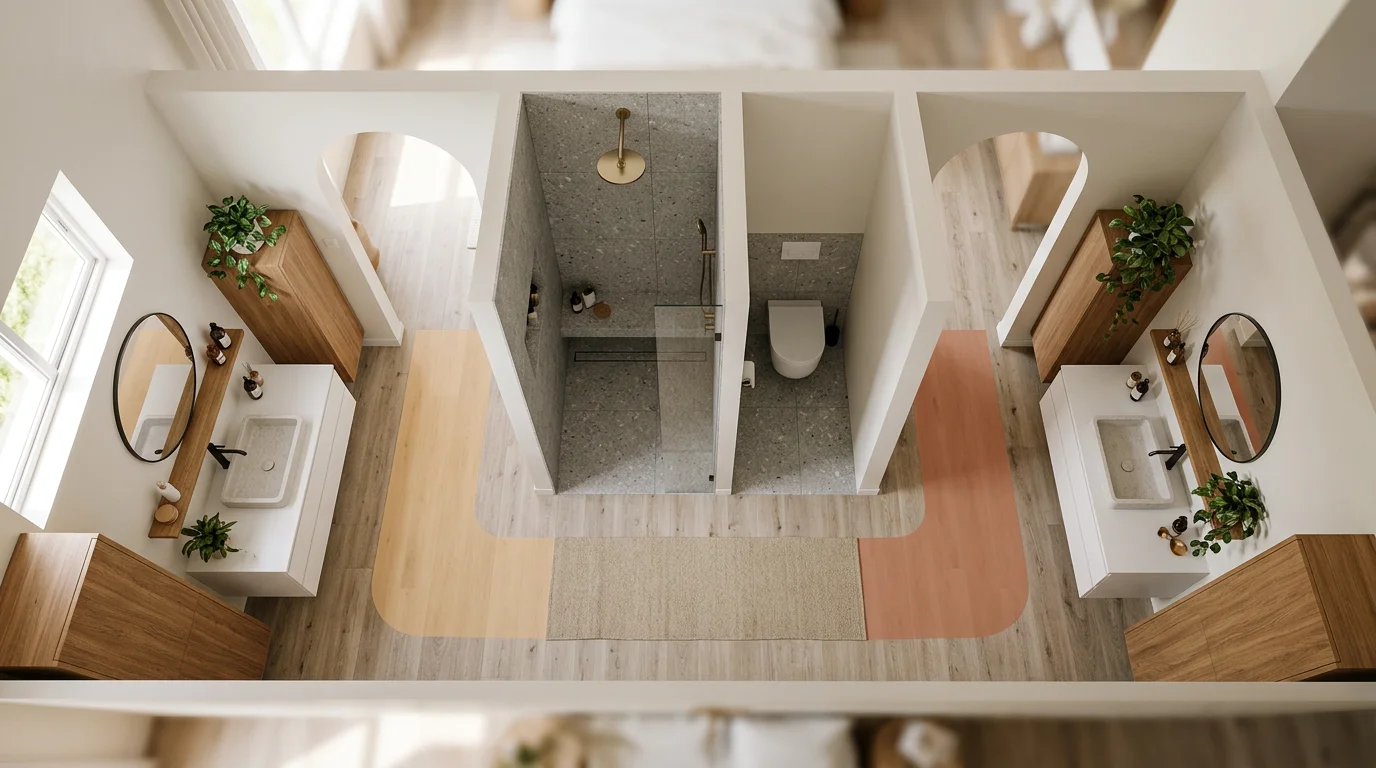
The foundation of good spatial planning begins with understanding your bathroom's entry points. In many homes, jack and jill bathrooms connect to two separate bedrooms, meaning users enter from opposite sides. This dual-entry configuration actually works in your favor—it allows each occupant a dedicated approach to their vanity without crossing the other's path. However, if both doors open into the same general area, or if the bathroom also serves a hallway, the dynamics shift dramatically. You'll need to position vanities and fixtures to create distinct circulation zones, where one person can access the sink while another moves toward the toilet or shower without interference. When planning these layouts with innovative space-creating solutions, consider how natural foot traffic patterns will evolve throughout the day.
For small bathrooms under 40 square feet, back-to-back vanities along opposite walls remain the most practical approach. This arrangement maximizes usable floor space in the center while keeping each user's work zone clearly defined. The critical measurement is maintaining at least 21 inches of clearance between the vanity and any opposing fixture—this prevents users from bumping elbows or feeling cramped when standing side by side. In medium-sized bathrooms (40–60 square feet), you gain flexibility to position vanities at an angle or create an L-shaped configuration, which naturally separates traffic patterns and reduces collision points. Larger bathrooms (over 60 square feet) can accommodate parallel vanities with a generous walkway between them, or even individual alcove vanities that feel like private dressing areas.
Door swing represents an often-overlooked consideration. If a bedroom door swings inward and directly into the vanity area, it will collide with anyone standing at the sink. Similarly, the bathroom's main entry should never block access to the toilet or shower. Pocket doors or sliding doors eliminate this problem entirely, as they don't consume floor space when opened. If you're working with existing door frames, repositioning them during a remodel—even slightly—can dramatically improve how the space functions during peak-use periods.
The psychological effect of clear sightlines cannot be understated. When both occupants can see the full bathroom layout from their entry point, they unconsciously adjust their movement to avoid congestion. A vanity positioned perpendicular to the main entry, rather than directly facing it, creates visual separation and encourages traffic to flow around rather than through the core work area. Lighting that illuminates pathways and distinguishes zones further reinforces these invisible traffic corridors, making the space feel larger and more navigable even when both sinks are in use simultaneously.
Creative Vanity Ideas for Unique Jack and Jill Bathroom Scenarios
Beyond the standard dual-sink configuration, jack and jill bathrooms present opportunities for innovative custom vanity design that addresses specific household dynamics. When a bathroom serves more than two people—teenagers sharing a space with parents, or multi-generational homes—the conventional side-by-side arrangement becomes inadequate. An asymmetrical design offers a practical solution: position one full-width vanity along the primary wall with a secondary compact sink positioned perpendicular or in an adjacent nook. This tiered approach prevents bottlenecks during peak morning hours while maintaining visual balance through consistent finishes and hardware.
Integrated storage islands represent another forward-thinking approach that transforms the vanity from a purely functional element into an organizational hub. Rather than relying solely on undersink cabinetry, a freestanding or semi-integrated island positioned between two entry doors creates a natural traffic divider while providing accessible storage from multiple sides. Open shelving on the lower tiers encourages quick access to daily essentials, while upper drawers contain less-frequently used items. This configuration works particularly well in luxury bathrooms where the vanity becomes a design statement rather than background infrastructure.
Multi-functional countertops blur the line between bathroom and dressing room, especially relevant for master bath jack and jill layouts. Extending the vanity surface beyond sink areas provides space for skincare routines, makeup application, or grooming tasks without requiring users to jostle for position. Waterproof materials like quartz or porcelain-topped surfaces withstand daily moisture while maintaining the aesthetic sophistication expected in high-end remodeling projects. When designing these expansive work surfaces, consider incorporating task lighting at strategic intervals—not just above the mirrors, but along the full countertop length.
For compact spaces where square footage limits traditional solutions, corner vanities with diagonal mirror installations maximize unused wall space while creating an unexpectedly elegant focal point. A wraparound counter at 45 degrees allows two users to work simultaneously without direct confrontation, and the angled geometry makes even tight bathrooms feel more intentional and designed rather than cramped.
The key to creative vanity design lies in understanding your household's specific rhythm. Consulting with remodeling experts—like those at WAREMODEL who specialize in maximizing functionality in shared spaces—ensures your custom solution addresses actual usage patterns rather than generic layouts. Successful renovation ideas emerge from this intersection of creative thinking and practical constraint-solving.
Remodeling Your Bathroom with a Jack and Jill Vanity Setup
Embarking on a bathroom remodel that incorporates a jack and jill vanity requires thoughtful planning and realistic expectations about timeline, budget, and contractor selection. Unlike a simple vanity swap, this renovation involves structural decisions, plumbing coordination, and design choices that affect how two users will interact with the space daily. Understanding what lies ahead—and what questions to ask before breaking ground—separates successful projects from ones that exceed budgets or fail to meet household needs.
Budget considerations form the foundation of any bathroom renovation plan. According to USA Cabinet Store's 2026 data, the national average bathroom remodel costs $16,500, with most homeowners spending between $8,000 and $45,000 depending on bathroom size, quality level, and regional location. For a mid-range installation featuring dual vanities, expect plumbing costs ranging $3,000–$8,000, tile installation running $2,500–$6,000, and electrical work between $800–$2,500. Vanity installation itself averages $576–$871 per unit, though total vanity costs typically fall between $1,600 and $4,000 nationally when labor is included. These figures shift based on your region and contractor rates—licensed plumbers now command $85–$175 per hour, while electricians charge $60–$145 per hour.
Hiring the right contractor demands more than comparing quotes. Look for professionals with documented experience designing jack and jill bathrooms, not merely general bathroom remodelers. Ask for references from previous dual-vanity projects, request detailed scope documents that specify materials and labor phases, and verify licensing and insurance credentials. A qualified contractor will ask detailed questions about your household's morning routines, storage needs, and privacy preferences—these insights shape the final layout far more than generic design templates.
Timing your bathroom renovation requires realistic scheduling. Most jack and jill vanity installations take 4–8 weeks from start to finish, accounting for permit approval, material lead times, and construction phases. Plumbing and electrical work often represent bottlenecks, particularly if your home requires code upgrades or if supply chain delays affect fixture delivery. Before committing to a start date, clarify your contractor's timeline in writing and build in contingency weeks for unexpected structural issues.
Critical decisions must happen during the planning phase. Determine whether you'll modify the existing bathroom layout or reconfigure access points entirely. Discuss mirror placement, lighting installation, and countertop materials that withstand dual-user moisture exposure. Consider consulting with remodeling specialists—like those at WAREMODEL who focus on maximizing functionality in shared spaces—to ensure your vanity design addresses actual usage patterns rather than aesthetic ideals alone. When these foundational choices align with your household's real needs and budget realities, your bathroom renovation transforms from a construction project into a lasting improvement that serves its users seamlessly.
Common Questions About Jack and Jill Vanities Answered
Q: How much does a jack and jill bathroom vanity cost compared to building two separate bathrooms?
A shared bathroom vanity setup typically costs 30–40% less than constructing two independent bathrooms because occupants share plumbing infrastructure, ventilation systems, and fixtures between both bedrooms. This efficiency makes the initial investment significantly more manageable while still delivering the functionality of dual-access convenience.
Q: Will a jack and jill bathroom add value to my home at resale?
Yes. Midrange bathroom remodels provide strong returns, according to Zillow's research on home improvement ROI, which shows an 80% average return on investment—meaning a $25,000 remodel could recoup approximately $20,000 in resale value. This makes shared bathroom vanities an attractive upgrade for families planning to sell within five to ten years.
Q: How do I prevent moisture and mildew buildup in a shared vanity?
Proper ventilation is essential. Install a quality exhaust fan rated for your bathroom's square footage and ensure it vents outside, not into the attic. Wipe down countertops and mirrors daily, leave cabinet doors open periodically to allow air circulation, and consider moisture-resistant materials like quartz or porcelain for countertops. Maintaining consistent humidity levels—ideally 30–50%—protects both the vanity structure and finishes.
Q: Can I customize a jack and jill vanity to suit different design preferences?
Absolutely. Modern shared vanities offer flexibility through tiered storage, personalized organizers, and modular components that allow each user to maintain distinct spaces. Consult with specialists like WAREMODEL, who focus on maximizing functionality in shared spaces, to design a vanity that balances unified aesthetics with individual storage zones.
Q: What materials work best for high-traffic shared bathroom vanities?
Durable materials withstand dual-user wear: solid surface countertops, engineered quartz, and porcelain resist moisture and staining. For cabinetry, lacquered plywood or marine-grade veneer outperforms particle board in humid environments. Hardware should be corrosion-resistant stainless steel or coated finishes that resist fingerprints and water spots.
Q: How do I maintain privacy in a jack and jill bathroom without compromising functionality?
Install pocket doors or sliding doors that close independently from each entry point, reducing noise transfer and visual overlap. Position mirrors and lighting to avoid sightlines into the adjacent bedroom. Consider a central divider wall or frosted glass panels between sink stations if your layout permits, creating psychological separation while maintaining the space-saving advantage.
Q: Is it difficult to upgrade plumbing or electrical in an existing jack and jill bathroom?
Upgrades require careful planning. Existing plumbing may limit sink repositioning without significant rework—a factor that can increase costs substantially. Consult your contractor about supply line routing and whether modifications require permit approval. Electrical work for new lighting or heated mirrors typically proves less invasive than plumbing changes but still demands professional assessment.
Q: What's the typical lifespan of a quality shared bathroom vanity?
Well-maintained vanities last 15–20 years before requiring cosmetic updates or component replacement. Proper ventilation, daily moisture management, and using appropriate cleaning products extend longevity significantly. Hardware and faucets may need replacement after 10–15 years, while solid countertops often outlast cabinetry finishes.
Creating Your Perfect Jack and Jill Vanity: Next Steps
The journey toward an expertly designed shared bathroom vanity begins with honest assessment. Throughout this guide, we've explored how layout decisions, storage solutions, privacy considerations, and aesthetic choices work together to transform a functional necessity into a space that genuinely serves everyone who uses it. The real challenge now is translating these principles into your specific home environment—where square footage, plumbing constraints, family dynamics, and personal style converge.
Start by measuring your actual space with precision. Note existing plumbing locations, electrical outlets, natural light sources, and traffic patterns during peak morning hours. Understanding these physical realities prevents costly mid-project discoveries. Next, identify the primary pain points in your current setup. Are morning bottlenecks the core issue, or is storage chaos the daily frustration? Does privacy feel compromised, or does the aesthetic feel dated? Different problems demand different solutions, and prioritizing them ensures your remodel addresses what matters most to your household.
Consider consulting with a professional designer or contractor who specializes in bathroom remodeling. They can evaluate your space's potential, identify hidden structural challenges, and propose creative solutions you might not have considered. A thoughtful bathroom design transcends surface-level aesthetics—it's about creating an environment where multiple people can coexist comfortably, maintain their personal routines without friction, and enjoy a space that reflects their values. When you're ready to move forward with your project, whether you're tackling a complete overhaul or strategic upgrades, our innovative remodeling approach at WAREMODEL focuses on maximizing functionality and style within your existing footprint, creating more space for the important things in life.