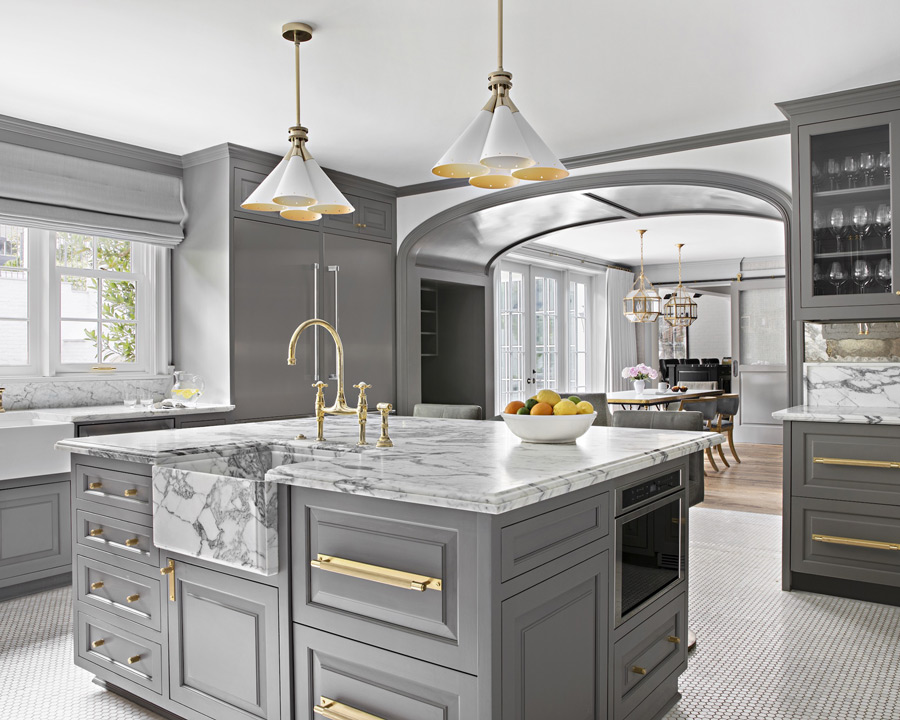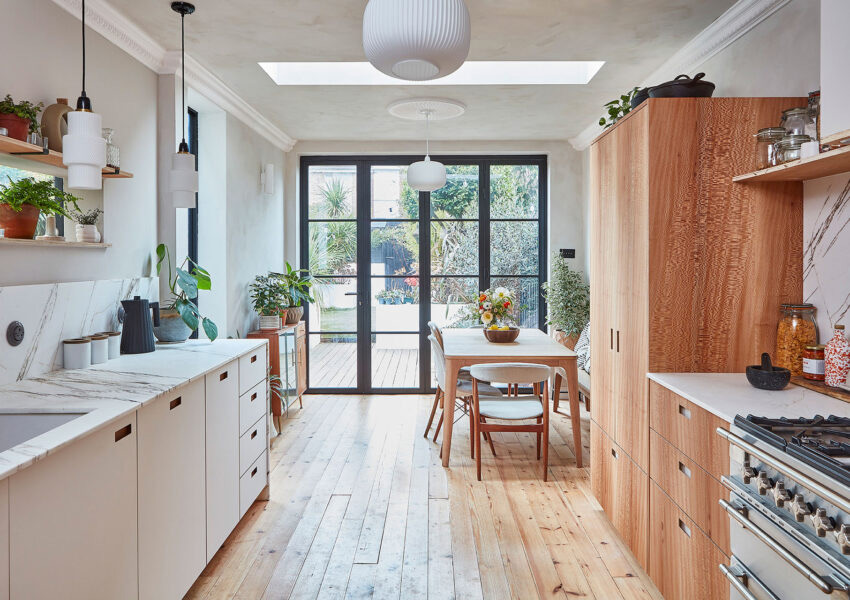
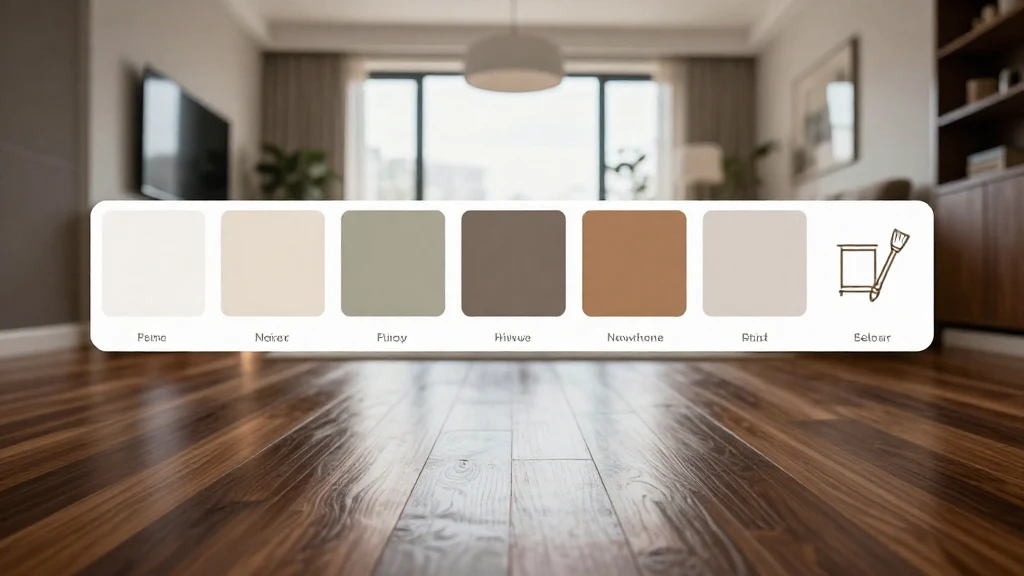
The moment you walk into a living room with dark hardwood floors, something shifts. The space feels grounded, sophisticated, maybe even a bit dramatic. But here's the truth that catches most homeowners off guard: dark hardwood floors in a living room aren't just about the flooring—they're about orchestrating an entire design ecosystem that works together.
Whether you're installing new dark hardwood floors or trying to figure out how to make existing ones shine, this guide breaks down exactly how to create a living space that feels both timeless and current. We'll walk through the design principles, color combinations, lighting strategies, and the mistakes people make when they rush into dark flooring decisions.
Quick Answer:
Dark hardwood floors in a living room create a luxurious focal point that works across modern, traditional, and eclectic styles. To style them effectively, pair them with light or neutral walls (60-70% of wall space), add strategic lighting to prevent darkness, incorporate contrasting furniture in cream, light gray, or white tones, and balance the weight with natural elements like plants and light-colored accessories. The key is contrast—dark floors need visual breathing room through lighter elements in the rest of the room.Key Takeaways:
Design principle: Dark hardwood floors anchor a room, so everything else must provide visual contrast
Lighting is non-negotiable: Multiple light sources (overhead, task, accent) prevent dark floors from creating a cave-like atmosphere
Furniture matters more than you think: Light wood, cream, or neutral upholstery creates the balance dark floors need
2025-2026 trend: Dark hardwood remains stylish, though lighter tones are gaining popularity in coastal areas
Table of Contents
Why Dark Hardwood Floors Work in Living Rooms
Dark hardwood floors in living rooms are having a moment—or more accurately, they've been having a sustained moment across nearly a decade. According to Wood Floor Group design analysis, dark hardwood floors are particularly striking in larger rooms like living rooms, where they create a luxurious focal point. The reason is structural: living rooms are where you spend the most visual time. Unlike hallways or bedrooms, your eyes have room to move, and a well-executed dark floor design commands presence without overwhelming the space.
Here's what the market data shows. The global hardwood flooring market reached USD 51.38 billion in 2024 and is projected to reach USD 69.78 billion by 2033, growing at a CAGR of 3.42% from 2025-2033, according to IMARC Group. Within that market, while the 2025 Houzz Summer Trends Report noted a 400% surge in interest for light wood flooring in living rooms, indicating a shift away from dark floors in some regions, dark hardwood remains a popular alternative—especially in northern states.
The appeal of dark hardwood floors is multifaceted. They hide wear patterns better than light wood. They feel formal without requiring formal spaces. They work with nearly every design aesthetic, from Scandinavian minimalism to mid-century modern to industrial. And when you get the styling right, they make a room feel intentional in a way light wood can't quite achieve.
But—and this is important—the styling has to be right. Dark hardwood floors in living rooms demand attention to contrast, lighting, and spatial balance. Get these three elements wrong, and your beautiful dark flooring becomes a visual liability that makes the room feel smaller, darker, and less inviting.
Design Principles for Dark Floors
The fundamental principle for styling dark hardwood floors in a living room is simple: everything else must provide visual relief. Think of dark flooring as a strong base note in a fragrance composition. You can't build an entire scent around it—you need brighter, lighter notes that make the base note shine.
This translates to a practical rule of thumb: aim for a 60-40 contrast ratio in your living room with dark hardwood floors. Sixty percent of your visual space (walls, upholstery, large decor items) should be in lighter, neutral tones. The remaining 40 percent can include your dark flooring, accents, and deeper tones in artwork or accessories.
The reason this works goes beyond aesthetics. Psychologically, light colors make spaces feel larger and more open. When you place dark flooring in a room with light walls and furniture, the dark floors become a design statement rather than a visual burden. The eye travels across the light surfaces and lands intentionally on the dark floor as an accent feature.

This principle doesn't mean you need a white living room. Warm beiges, soft grays, pale creams, and even muted greens work beautifully. The key is lightness relative to your flooring. If your dark hardwood is nearly black walnut, you have more flexibility than if it's a medium-dark cherry. This is where professional consultation matters—which is exactly what WAREMODEL provides in our free expert consultations when you're planning a complete living room transformation.
Color Schemes That Balance Dark Hardwood
There are five color scheme strategies that work reliably with dark hardwood floors in living rooms, and each creates a different mood.
The Classic Neutral Approach pairs dark hardwood with warm whites, creams, and soft grays. This is the safest route and the one that works across every design style. Your walls become near-white or cream. Your major furniture pieces—sofa, armchairs, media console—use neutral upholstery. Warm wood tones in lighter finishes (oak, ash, or light walnut) complement the darker floor without competing with it. This approach makes the dark floor the intentional focal point while maintaining a calm, sophisticated atmosphere.
The Warm Contrast Method uses warm beiges, taupes, and soft warm grays alongside dark hardwood floors. This approach acknowledges that dark wood has warm undertones, so the surrounding colors should echo those warmths. Your walls might be a warm taupe. Your sofa could be a warm gray-beige. The overall effect is cohesive without feeling monotonous. According to the Wood Floor Group style analysis, dark hardwood floors remain stylish in 2024, offering timeless elegance and versatility across design styles from modern to traditional.
The Light Jewel Tone Strategy introduces one jewel-tone accent—think emerald green, sapphire blue, or deep burgundy—while keeping the rest of the room neutral and light. A single jewel-tone accent chair or area rug provides visual drama without overwhelming the dark floor. This approach works beautifully in traditionally styled living rooms.
The Monochromatic Light Approach uses varying shades of the same light color family throughout the room. Everything from walls to furniture to trim uses different values of, say, gray or beige. The dark floor becomes the dramatic contrast element in an otherwise light, cohesive palette. This creates sophisticated understated elegance.
The Natural Elements Route incorporates warm light wood tones—from tables to shelving to fireplace mantels—alongside lighter wall colors and neutral upholstery. This approach bridges the gap between the dark floor and lighter surfaces using the warm wood family as a transition element.
The choice between these approaches depends on your existing architecture, lighting situation, and personal preference. If you have generous natural light, any of these work. If you have limited natural light, you'll want to lean toward the warmer, lighter approaches (strategies 2-4) to combat the potential cave-like feeling dark floors can create.
Lighting Solutions for Dark Hardwood Living Rooms
If I had to identify the single biggest mistake homeowners make with dark hardwood floors in living rooms, it's underestimating the importance of lighting. Dark floors absorb light. Without intentional, layered lighting design, your beautiful dark hardwood becomes visually heavy and space-constricting.
Start with ambient lighting. This is your baseline—the general illumination that makes the room functional. For a living room with dark hardwood floors, you want brighter ambient lighting than you'd typically use. Recessed ceiling lights (if structurally possible) spaced 6-8 feet apart work well. If recessed lighting isn't an option, a combination of pendant lights or a slightly larger central chandelier compensates. The goal is even distribution across the floor to reveal the beauty of the dark wood grain and prevent shadows.
Task lighting comes next. This includes table lamps on side tables, a reading lamp in a corner, and possibly a floor lamp next to seating areas. Task lighting should provide focused illumination that makes activities like reading or working comfortable, but it also serves a secondary purpose: it breaks up the visual weight of dark floors by adding pools of light throughout the room.
Accent lighting is often overlooked but creates tremendous impact. Consider uplighting behind a sofa, picture lights above artwork, or LED strips hidden in shelving units. These subtle lighting elements create visual interest and draw the eye upward and around the room rather than straight down to the dark floor.
Natural light deserves special mention. If your living room with dark hardwood floors has windows, maximize them. Keep window treatments simple and light-filtering. During daylight hours, this natural light will make your dark floors shine and showcase their grain pattern beautifully. During evening hours, the layered artificial lighting system compensates.
A practical rule: in a living room with dark hardwood floors, you should have roughly 30-40% more installed lighting capacity than you would in a room with light wood flooring. This isn't excessive—it's balancing the floor's light absorption.
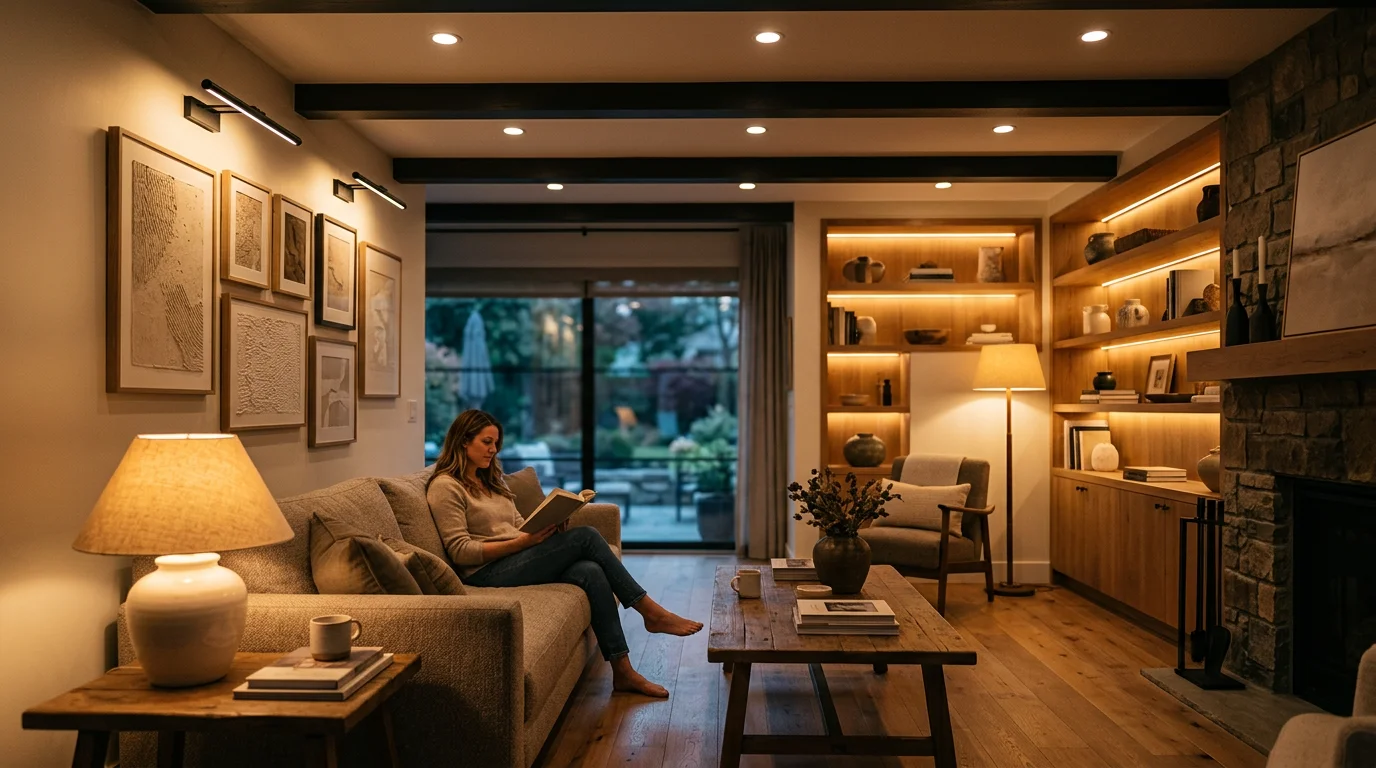
Furniture and Decor Pairings
The furniture you choose for a living room with dark hardwood floors should prioritize contrast and visual lightness. This doesn't mean your sofa must be white—it means choosing pieces that provide visual relief from the dark floor.
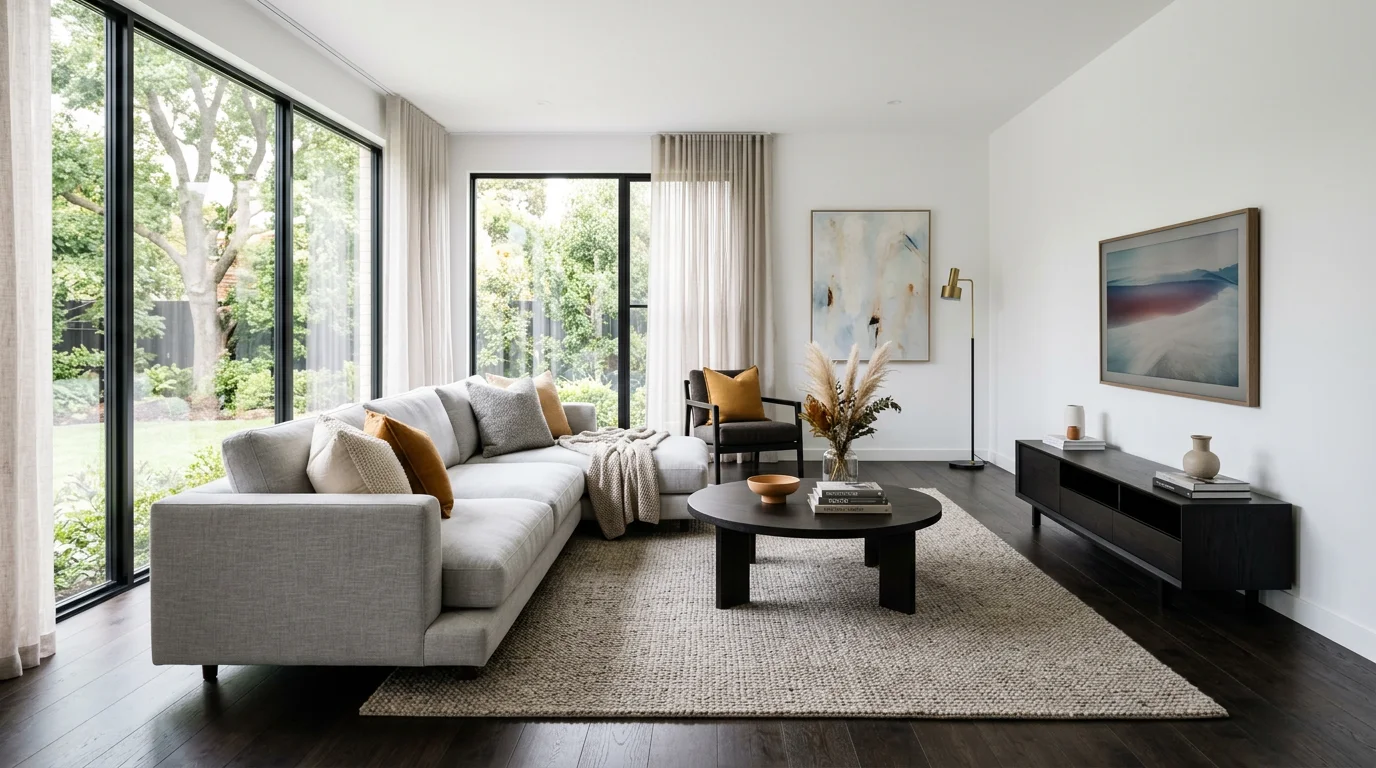
For your primary seating (typically a sofa), consider light gray, cream, warm taupe, or even soft white upholstery. Alternatively, light wood frames with medium-tone cushions create visual interest while still providing contrast to dark floors. If you want darker upholstery—say, a charcoal or navy sofa—pair it with very light walls (near white) and light wood accent pieces to maintain the contrast principle.
Coffee tables and side tables have significant visual impact in a living room. Light wood finishes (oak, ash, light walnut, or whitewashed finishes) create natural contrast. Glass tables are another excellent choice—they provide visual lightness and allow the dark floor to show through, creating layered visual interest. Metal frames (brass, chrome, or matte black) also work well depending on your design aesthetic.
Rugs deserve their own mention because they're one of the most powerful tools for styling dark hardwood floors. A light-colored area rug (cream, pale gray, or even off-white) anchors a seating area and provides visual relief from the dark floor. Rugs with geometric patterns, texture, or subtle color variation add interest without visual heaviness. Many design professionals recommend a rug size of at least 8×10 feet in a living room to create proper visual grounding, though the exact size depends on your room dimensions.
Accessories and decor should lean light and airy. White or cream throw pillows, light wood shelving, pale wall art, and natural plants create a balanced aesthetic. Consider how lighting and decor work together—a design we explore in detail in our guide to decorating dark wood floors with light wood furniture. This layered approach ensures your living room feels intentional and designed rather than haphazardly decorated.
One more practical element: baseboards and trim matter. White or cream baseboards provide a visual transition between dark flooring and light walls. Dark baseboards that match the flooring tend to make the floor feel heavier and the walls feel disconnected. This is a subtle but important detail that professional installers understand.
Installation and Maintenance Considerations
If you're planning to install dark hardwood floors in your living room, understanding the installation process and maintenance requirements is essential. The installation method affects both the longevity of your floors and the final aesthetic.
Most hardwood floor installations in living rooms use either nail-down or floating methods. Nail-down installation (securing planks to the subfloor with specialized nails) is traditional and preferred by many professionals because it creates maximum stability and allows for refinishing later. Floating installations (where planks lock together without fastening to the subfloor) are faster and more forgiving with subfloor imperfections, but they offer slightly less stability over time.
The dark color of hardwood floors creates one installation challenge: visibility of dust and debris. During the installation process, dust from cutting, sanding, and finishing creates visible mess on dark surfaces. Professional installers manage this through controlled dust containment and frequent cleanup, which is why hiring experienced floor installers matters for both aesthetic and practical reasons.
Maintenance of dark hardwood floors is straightforward but consistent. Regular sweeping (2-3 times weekly) removes dust and prevents scratching. Damp mopping with pH-neutral hardwood cleaner maintains the finish without water damage. The dark color is actually forgiving because it hides dust and footprints better than light wood—a practical advantage many homeowners appreciate.

One maintenance note specific to dark hardwood: visible water rings and mineral deposits stand out more than on light wood. Use coasters under beverage glasses and immediately wipe up spills. The upside? Minor dust, pet hair, and regular wear is less visible on dark floors than light wood, making them more practical for busy living spaces.
Common Mistakes and How to Avoid Them
Years of design consultation work reveals predictable patterns in what goes wrong with dark hardwood floors in living rooms. Understanding these mistakes helps you avoid them.
Mistake 1: Creating a Cave Effect with Dark Everything
The most common error is pairing dark hardwood floors with dark walls, dark furniture, and minimal lighting. The result feels like a cave—heavy, enclosed, and depressing. This happens because homeowners focus on the floor and forget that the room's overall brightness comes from the walls and total light distribution. The fix is straightforward: if you choose dark hardwood, commit to light walls and adequate lighting.
Mistake 2: Neglecting Lighting from the Start
Dark floors absorb light. Adding lighting as an afterthought (a lamp here, a fixture there) never compensates fully. Instead, plan lighting before installation. Consider your window placement, architectural constraints, and how you use the room. This is the kind of integrated thinking that happens during professional kitchen and flooring design consultations at WAREMODEL, where flooring choices are made alongside architectural and lighting decisions rather than in isolation.
Mistake 3: Choosing Dark Furniture to "Match" the Floor
The logic seems sound—dark floor, dark furniture, cohesive look. In reality, this creates a visually heavy, cramped-feeling space. The principle of contrast is more important than color matching. Dark floors need light furniture to shine.
Mistake 4: Ignoring Floor Grain and Undertone
All dark hardwood isn't the same. Some dark stains have warm (golden, reddish) undertones, while others are cool (gray, bluish) undertones. Many installation mistakes happen because homeowners choose dark stain without considering undertone, then pick wall colors and furniture that fight against those undertones. If your dark hardwood has warm undertones, warm wall colors work better. Cool-toned dark floors work better with cool grays and whites.
Mistake 5: Oversizing Area Rugs
An area rug that's too small under dark hardwood can make a living room feel choppy and disconnect seating areas from the floor. Conversely, a rug that's too large (covering more than 60% of the floor) can overwhelm a light-colored room. For dark hardwood living rooms specifically, a medium-large rug (8×10 or 9×12 feet) usually works best, but the exact size depends on room dimensions and furniture layout. Test sizing with painter's tape before purchasing.
Mistake 6: Forgetting About Reflectance
Dark flooring has low light reflectance value. This is especially noticeable in north-facing rooms or rooms with limited natural light. The solution is high-reflectance paint on walls (glossy or semi-gloss finishes reflect light better than matte). This isn't about creating a shiny room—it's about understanding light physics and using them to your advantage.
Real-World Living Room Examples
Consider how these principles come together in actual living rooms.
A modern dark hardwood living room in a northern climate might feature dark walnut flooring paired with near-white walls, a light gray linen sofa, glass side tables with metal frames, and a combination of pendant lights over the seating area plus recessed lighting throughout. Large windows bring in natural light during the day, and the layered artificial lighting compensates at night. The result is sophisticated and bright despite the dark flooring.
Alternatively, a traditional living room might use dark hardwood floors with warm cream walls, a cream sectional with rolled arms, wooden tables in lighter finishes (oak or light walnut), and warm brass or bronze light fixtures. The room feels elegant and grounded without feeling dark or heavy.
An industrial-style living room could pair dark hardwood with light gray walls, dark metal shelving, a concrete accent wall, light upholstered seating, and industrial-style metal pendant lights. The dark floor becomes a design statement rather than a burden because the surrounding elements are intentionally light and the lighting emphasizes the floor's texture.
What ties these diverse examples together? Light walls, strategic lighting, contrasting furniture, and intentional design thinking. As noted in our regional flooring data, brownish to darker stained hardwood products are selling quite well in northern states as of December 2025, while lighter tones dominate coastal areas—a regional preference that reflects both climate (northern homes benefit from the light absorption) and lifestyle differences.
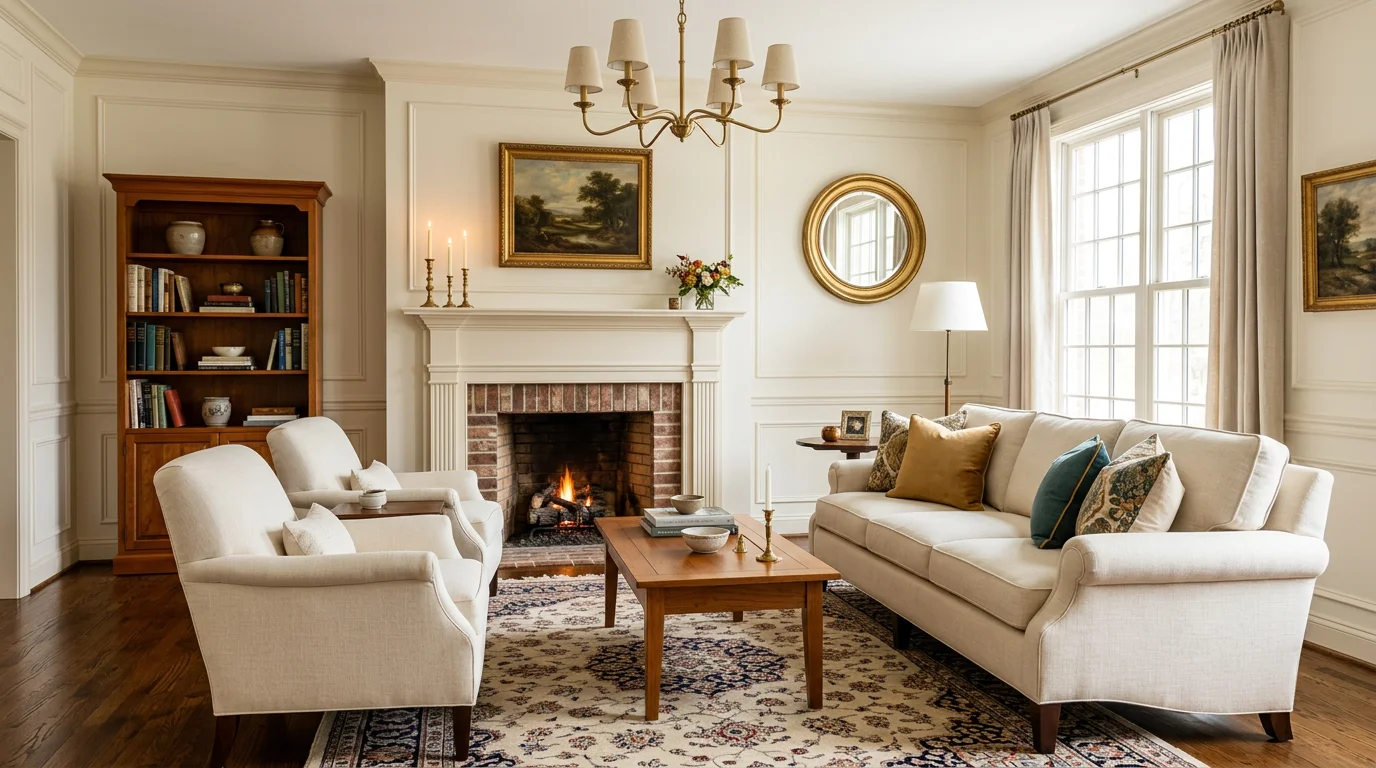
Conclusion: Making Dark Hardwood Floors Work in Your Living Room
Dark hardwood floors in a living room are an investment in both aesthetics and longevity. When styled correctly, they create a sophisticated, grounded space that feels intentional and designed. The principles are straightforward: contrast (light walls and furniture), lighting (abundant and layered), and balance (avoiding visual heaviness through strategic placement of light elements).
If you're installing new dark hardwood floors or redesigning around existing dark flooring, the key is thinking systemically about how the floor interacts with every other element in the room. This is where professional guidance becomes valuable. At WAREMODEL, we've completed hundreds of living room projects where flooring choices integrate with overall space design. Our free expert consultations help you think through color schemes, lighting, furniture pairing, and the installation process itself.
The dark hardwood floor trend isn't temporary. According to industry data, the hardwood flooring market continues strong growth projections through 2033, and dark hardwood remains a design staple across regions. The question isn't whether dark hardwood works in living rooms—it absolutely does. The question is whether you're styling it correctly to let it shine.
FAQ
Q: Are dark hardwood floors hard to keep clean?
A: No, actually the opposite. Dark hardwood floors hide dust, dirt, and minor marks better than light wood. You'll notice footprints less and dust less. The trade-off is that water spots and spills show more clearly. Regular sweeping and prompt cleanup of spills keeps dark hardwood looking excellent with minimal maintenance.
Q: Can I use dark hardwood floors in small living rooms?
A: Yes, but with intentional design choices. Keep walls very light (near white or pale cream), use light furniture, and ensure adequate lighting. The key is contrast and visual lightness in surrounding elements. A small dark living room with light everything else feels intentionally sophisticated rather than cramped.
Q: What color furniture works best with dark hardwood floors?
A: Light colors provide the most visual relief—whites, creams, warm taupes, and soft grays. Alternatively, natural light wood furniture (oak, ash, or whitewashed finishes) creates beautiful contrast. Avoid very dark furniture that matches the floor, as this creates a heavy, cramped feeling.
Q: Do dark hardwood floors work with coastal or minimalist design?
A: Absolutely. Dark hardwood pairs beautifully with coastal design through white walls, light upholstery, and natural woven textures. For minimalist design, dark floors ground the space while clean lines, light walls, and sparse furnishing create visual simplicity. Both styles benefit from layered lighting to prevent darkness.
Q: How often should I refinish dark hardwood floors?
A: Dark hardwood flooring typically needs refinishing every 7-10 years depending on traffic and maintenance. The dark color actually masks scratches better than light wood, so you may not feel the need to refinish as frequently. Professional inspection reveals when the finish is genuinely wearing thin versus just looking worn from surface dust.
Q: Will dark hardwood floors make my living room feel smaller?
A: Only if you're not intentional about design. Dark floors with dark walls, limited lighting, and dark furniture create a small-feeling space. Dark floors with light walls, adequate lighting, and light furniture actually make living rooms feel more intentional and sophisticated without feeling smaller. Professional design thinking makes the difference.
Q: What's the cost difference between light and dark hardwood installation?
A: Hardwood flooring costs are primarily determined by wood species, grade, and finish—not whether the stain is light or dark. Dark stains don't cost more to apply than light stains. Your total investment depends on square footage, wood species, and installation labor. According to the U.S. hardwood flooring industry data, the industry employs 45,000 people and generates $8.5 billion in U.S. economic output, reflecting the scale and professionalization of quality installation.
Q: Can I transition from dark hardwood floors in the living room to lighter wood in adjacent spaces?
A: Yes, transitions are essential in open-plan living. Use a metal transition strip or threshold to create a clean visual break between flooring types. This prevents tripping hazards and creates intentional design separation. It also allows you to use different color palettes in adjoining spaces without visual chaos.