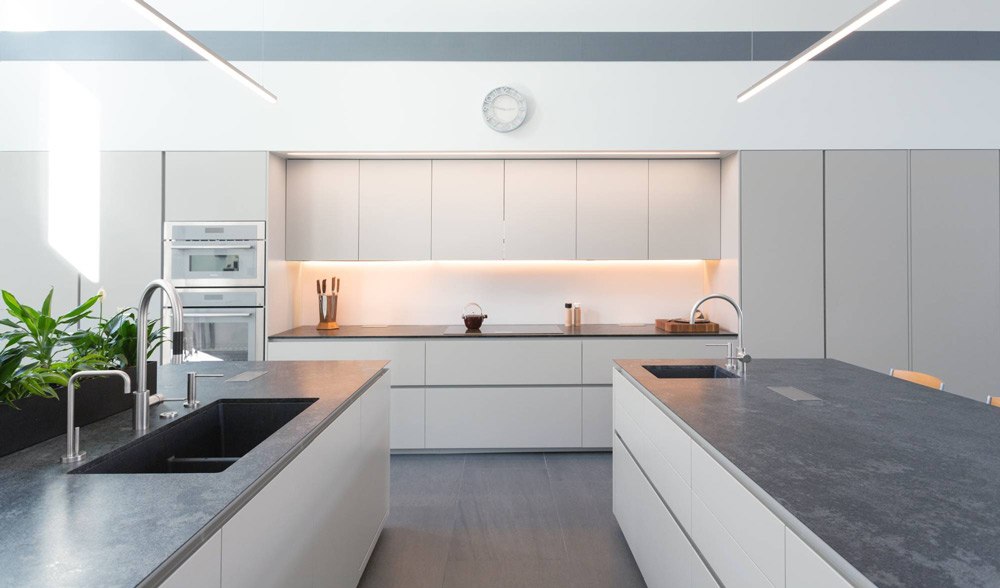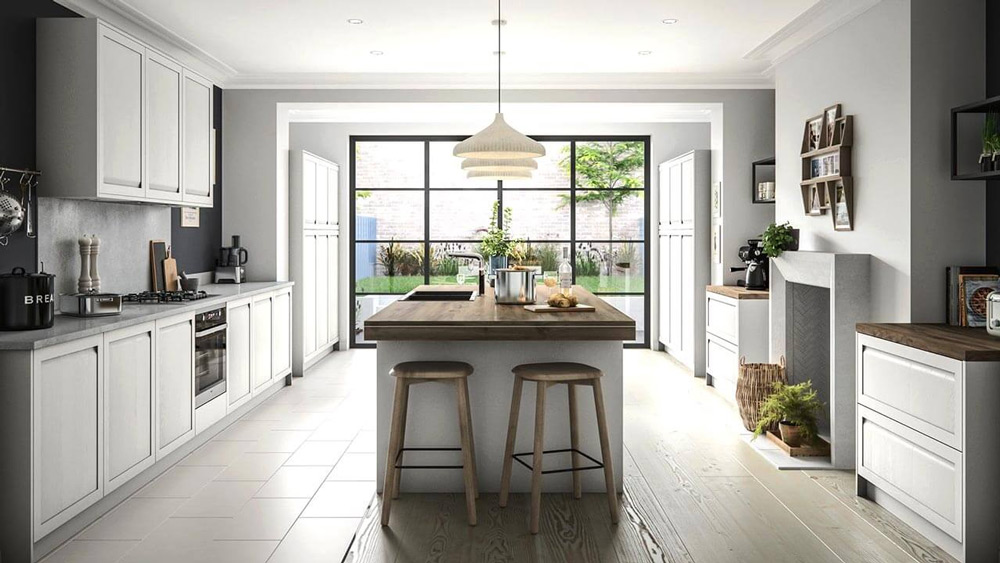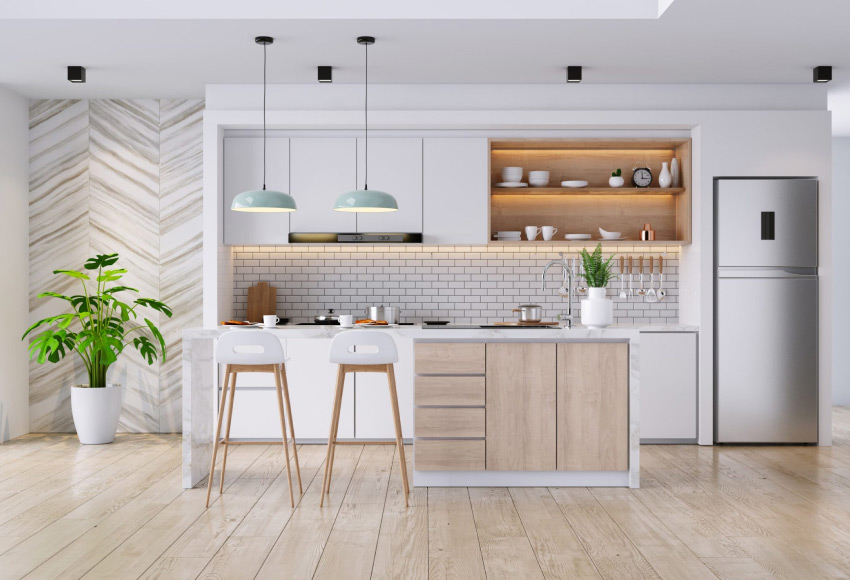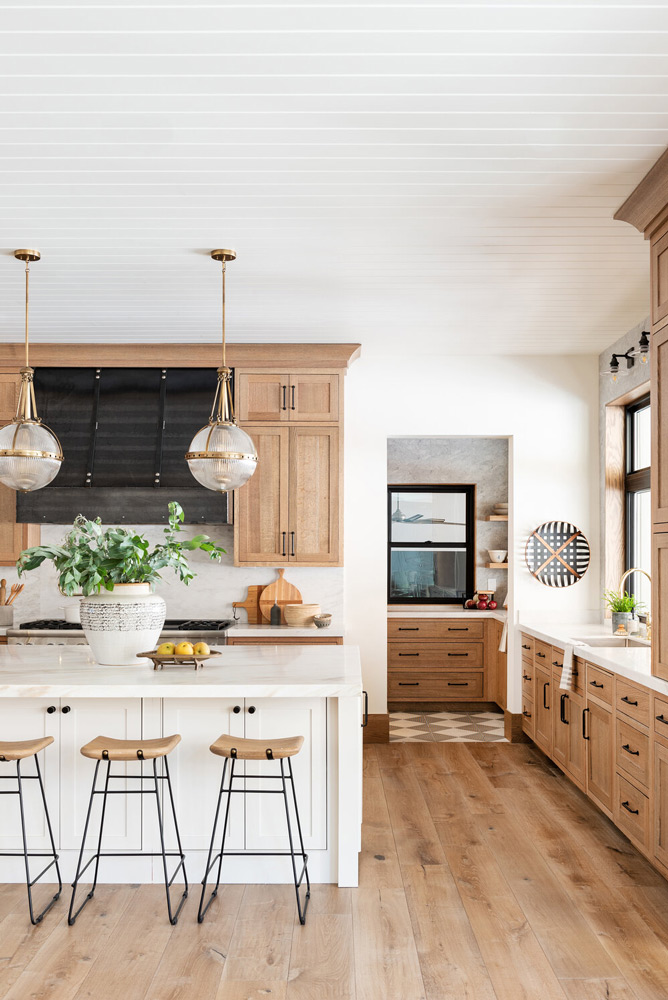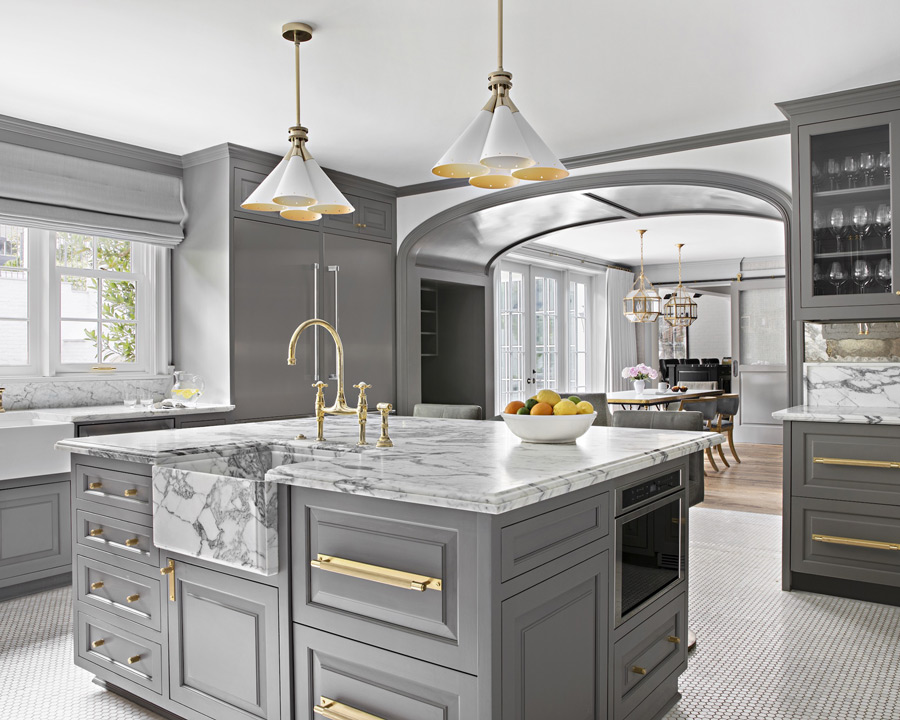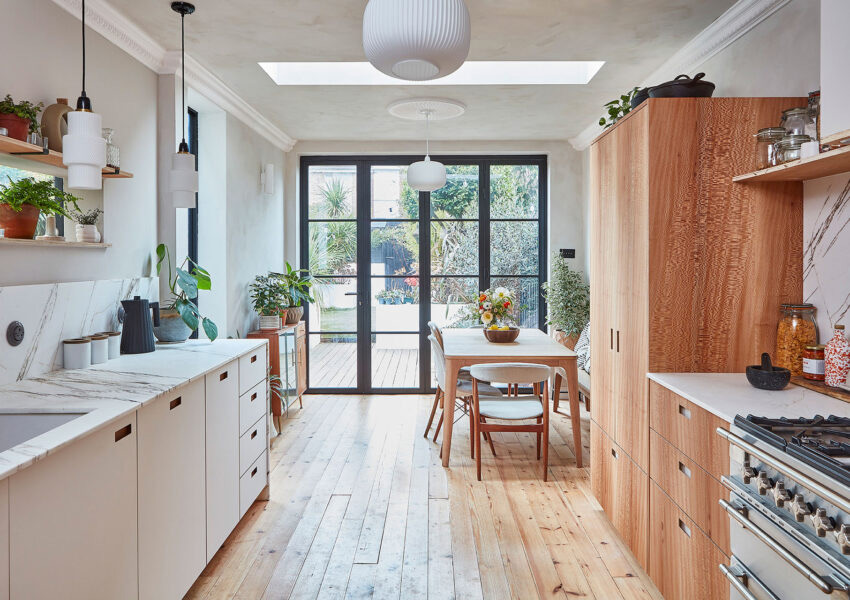
Getting your kitchen sink in the right spot isn't just about aesthetics—it fundamentally shapes how you'll use your kitchen every single day. The sink is the workhorse of kitchen operations, and where you position it determines traffic flow, efficiency, and whether you're constantly reaching or bending awkwardly while washing dishes. We've helped hundreds of homeowners across King County and Pierce County redesign their kitchens, and we can tell you that sink placement is one of the most consequential decisions in any remodeling project.
Quick Answer:
Optimal sink placement in a kitchen typically follows the "work triangle" principle—positioning the sink, stove, and refrigerator to form a triangle with sides of 4-9 feet each. Your sink should have adequate counter space on both sides (at least 18 inches on each side), be positioned away from high-traffic areas, consider window views and natural light, and account for plumbing accessibility underneath. A professional kitchen designer or remodeler can help evaluate your specific layout, but most homeowners find their ideal sink location by analyzing their workflow and existing water line access.
Key Takeaways:
-
The work triangle (sink, stove, fridge) should total 15-26 feet for optimal efficiency
-
Place sinks 18+ inches from corners with countertop space on both sides
-
Window placement and natural light should influence sink position
-
Single-wall and galley kitchens have different optimal sink placements
-
Underestimating plumbing costs is the #1 sink placement mistake
Table of Contents
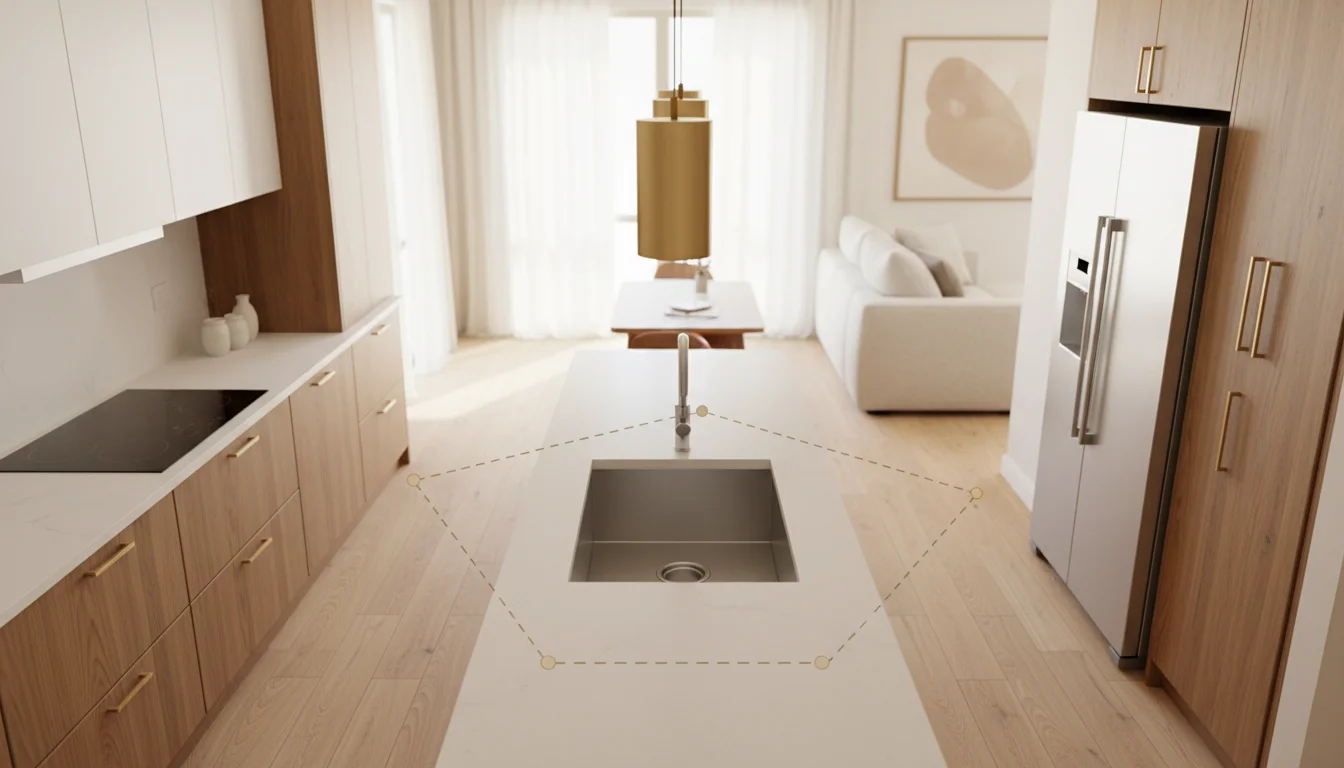
The work triangle principle guides optimal sink positioning in kitchen design
Understanding Kitchen Sink Placement
Sink placement in kitchen design goes far beyond picking a corner and installing plumbing. According to the National Kitchen and Bath Association, proper sink positioning should integrate with your overall kitchen workflow—the sequence of activities you perform daily, from food prep to cleanup. The sink serves as the hub for washing produce, filling cookware, cleaning dishes, and disposing of waste, making its position critical to kitchen functionality.
The reason sink placement matters so much is that it directly impacts ergonomics and workflow efficiency. When your sink is positioned correctly, you minimize unnecessary steps between major work zones. When it's poorly placed, you create congestion points where family members collide, you waste precious counter space, and you may even create plumbing issues that cost thousands to fix later. According to data from the National Association of Home Builders, kitchen remodeling projects rank in the top ROI investments for homeowners, but poor planning—including inadequate sink placement—can reduce that return by 15-20%.
The beauty of planning sink placement carefully is that it forces you to think holistically about how your family actually uses the kitchen. Different households have different priorities. If you're someone who bakes frequently, your sink needs close proximity to your prep area. If you entertain constantly, you might want the sink positioned away from the main traffic flow through the kitchen. Professional remodelers, like the team at WAREMODEL, spend considerable time understanding these nuances before recommending sink placement.
The Work Triangle Principle
The "work triangle" is the foundational concept in kitchen design that has guided professionals for decades. This invisible triangle connects three primary work zones: the sink (cleanup zone), the stove (cooking zone), and the refrigerator (food storage zone). According to research from the Cornell University College of Human Ecology, this triangle concept emerged from efficiency studies conducted in the 1940s, and it remains relevant today because human movement patterns haven't fundamentally changed.
The ideal work triangle has specific measurements that maximize efficiency without creating excessive travel distances. The total perimeter of the triangle should fall between 15 and 26 feet, with no single side exceeding 9 feet. For example, if your sink is 5 feet from your stove and 6 feet from your refrigerator, with the stove and fridge being 8 feet apart, you have a total of 19 feet—right in the optimal range. When any side exceeds 9 feet, you're asking the cook to walk too far between essential zones.
In modern kitchens, however, the work triangle principle requires adaptation. Island kitchens, for instance, introduce a fourth zone into the equation. Some contemporary designs completely reimagine the triangle into multiple smaller triangles or work zones throughout the kitchen. The critical insight is this: sink placement in kitchen design should prioritize the path of least resistance for your most frequent activities.
When positioning your sink within this framework, remember that the sink isn't just about water access—it's about minimizing the distance between where you store vegetables (near the fridge), where you prepare them (counter space), where you might cook them (stove), and where you clean up afterward (sink).
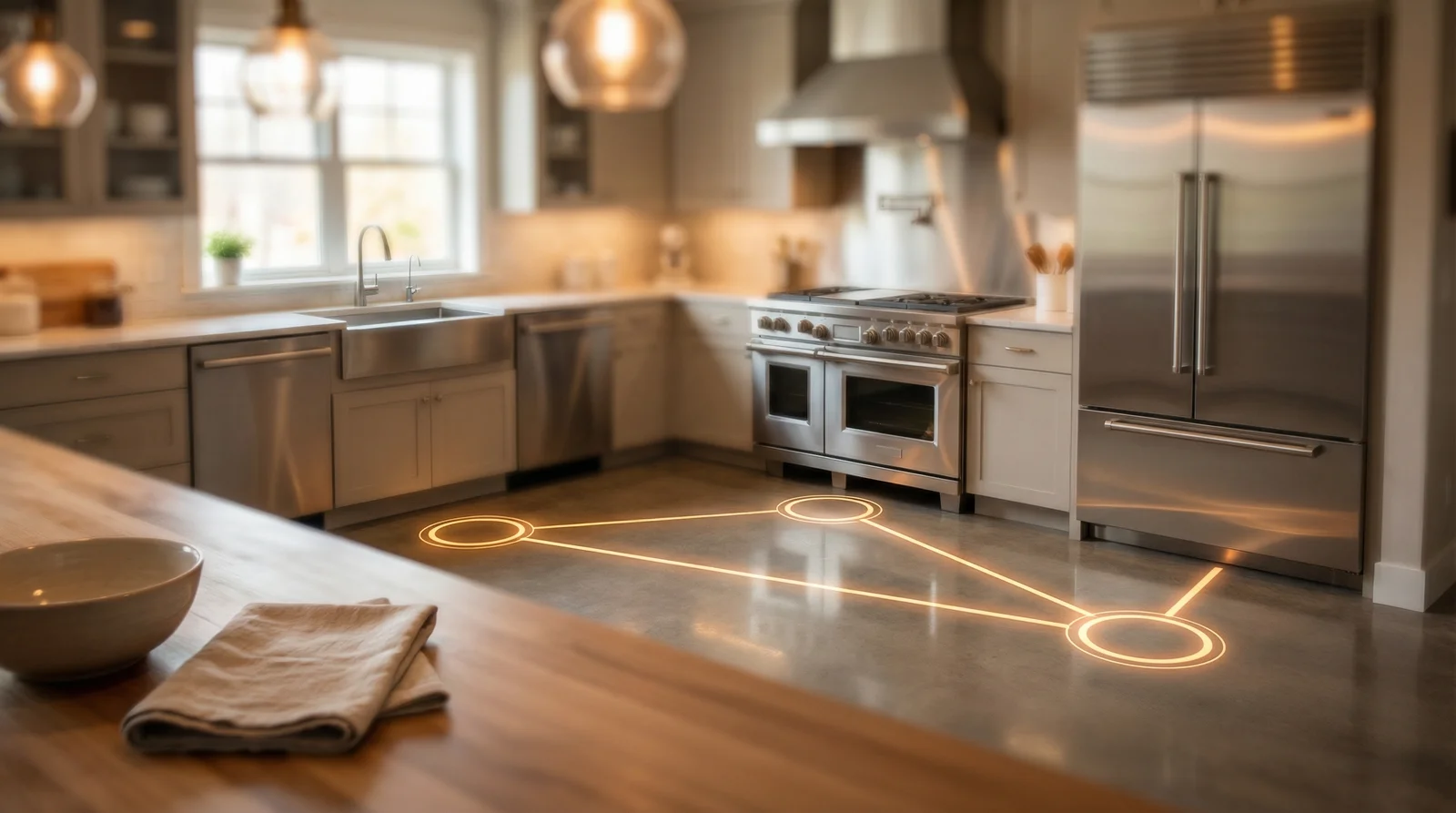
The work triangle principle positions the three primary work zones for optimal kitchen efficiency
Step-by-Step Planning Process
Planning sink placement in kitchen layout requires a systematic approach that considers multiple variables. Here's how professional remodelers tackle this decision.
Step 1: Audit Your Current Water and Drainage Lines
Before falling in love with a particular sink location, examine where your water supply enters and where your drainage exits. Water lines typically come into the kitchen through an exterior wall or foundation, and drain lines need to slope properly to exit through the wall or floor. If you're considering sink placement that's dramatically far from existing water/drainage access, you're looking at significant additional costs. Moving plumbing lines can easily add $1,500 to $4,000 to a project, depending on the distance and structural obstacles.
Step 2: Establish Your Work Triangle and Primary Zones
Measure the distances between your refrigerator, current stove location (or planned stove location if it's moving), and your proposed sink position. Calculate the total perimeter. Aim for 15-26 feet total, with no single side exceeding 9 feet. If your distances fall outside this range, adjust the sink position slightly and recalculate. This exercise often reveals whether your kitchen's physical dimensions support an ideal triangle or require compromise.
Step 3: Account for Counter Space on Both Sides
This is where many DIYers stumble. Your sink shouldn't be crammed into a corner or positioned right at the edge of available counter space. Ideally, you want at least 18 inches of counter space on each side of your sink. This gives you room for a dish rack, sponges, hand towels, and temporary food or dishes. Some design guidelines recommend 24 inches on at least one side for maximum flexibility. If your kitchen dimensions don't naturally accommodate this, you may need to reduce the size of your sink (going from double to single bowl, for instance) or reconsider the sink location.
Step 4: Consider Natural Light and Views
Sinks positioned in front of windows are tremendously popular—and for good reason. They provide natural light, ventilation, and a pleasant view while you're performing the somewhat monotonous task of dishwashing. If your kitchen has a window that offers nice outdoor views, positioning your sink beneath or adjacent to that window improves the experience substantially. However, if your window is small or faces a wall, this advantage diminishes. In this case, prioritizing your work triangle and counter space becomes more important.
Step 5: Evaluate Traffic Flow
Walk through your kitchen during a typical meal preparation and cleanup. Where do family members naturally move? Most kitchens have a primary entry point and a natural traffic corridor. Ideally, your sink placement shouldn't fall directly in this path—you don't want someone loading the dishwasher while another person is walking from the dining room to grab something from the fridge. However, if your kitchen is compact, some compromise here is inevitable.
Step 6: Determine Sink Size and Configuration
The size and configuration of your sink influences where it can physically fit. A large 33-inch double-bowl sink with a substantial apron front requires more space than a compact 24-inch single-bowl sink. An island sink with exposed plumbing underneath (no cabinet) has different spatial considerations than a traditional under-cabinet sink. These decisions should inform your location planning—not the other way around.
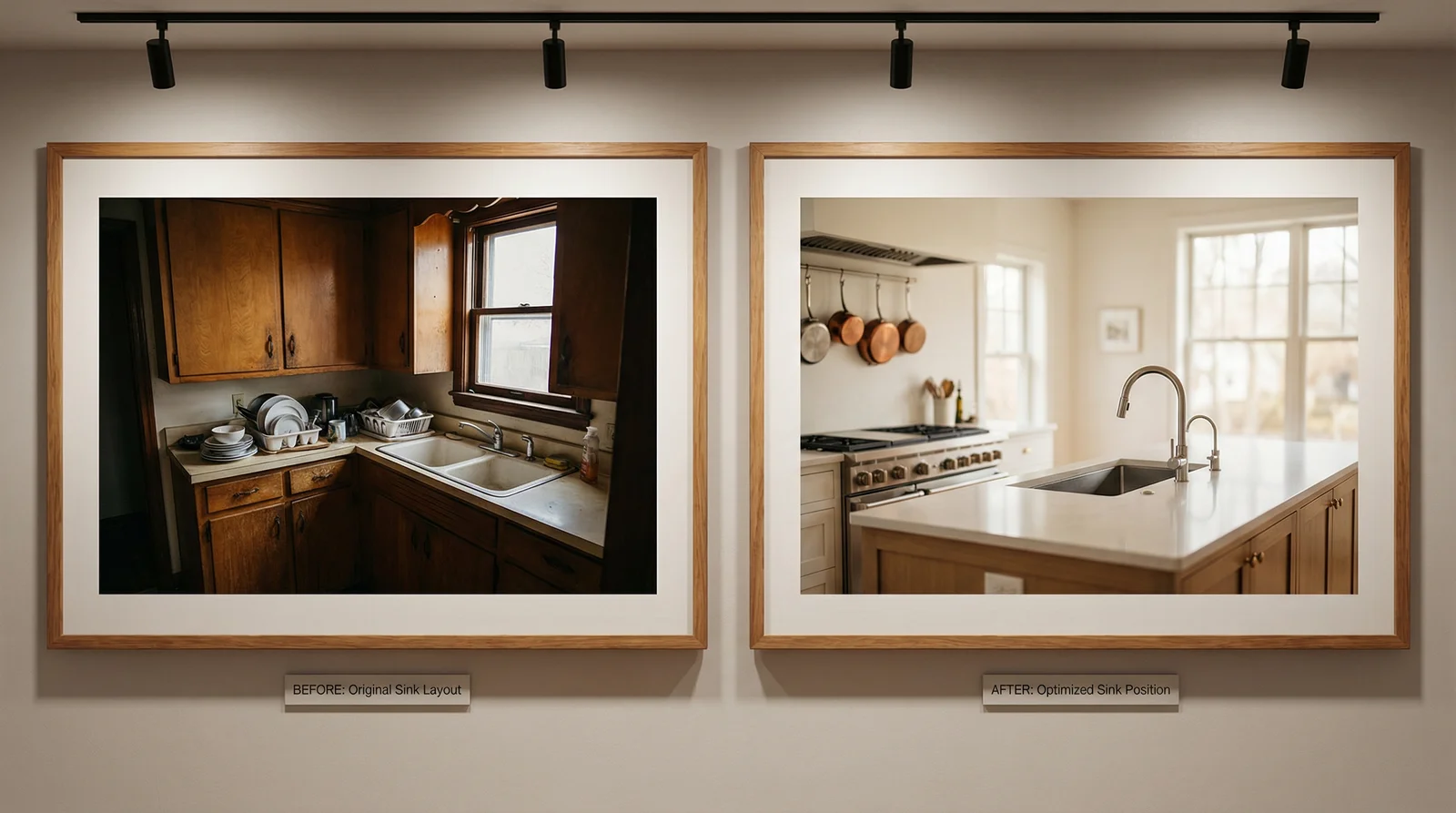
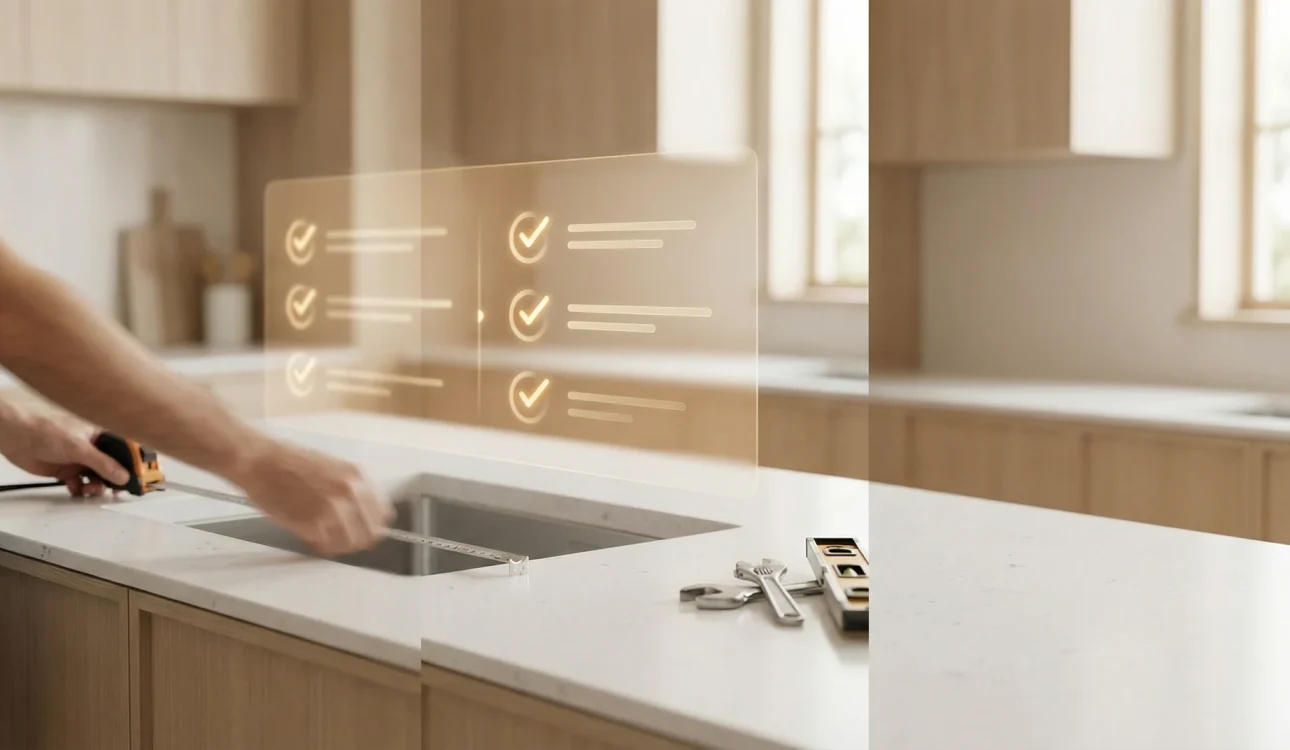
Professional sink repositioning creates better workflow and counter space utilization
Key Design Considerations
Beyond the basic work triangle principle, several other factors influence optimal sink placement in kitchen design.
Ergonomics and Height Standards
Standard kitchen sink depth is typically 7-8 inches, and most people install sinks at a height of 34-36 inches from the floor (measured to the rim). However, recent ergonomic research suggests that optimal sink height varies by person height. Taller individuals (6'+ feet) often prefer 36-38 inches, while shorter individuals may find 32-34 inches more comfortable. If your household has significant height variation, some design professionals recommend positioning the sink at 35 inches as a compromise, or considering a slightly sloped counter that accommodates different user heights.
Under-Sink Storage and Access
Whatever location you choose for your sink, remember that underneath will become a storage zone. You'll likely want to access your cleaning supplies, trash, and recycling directly below or adjacent to the sink. This means your cabinets underneath need to accommodate these items and remain accessible. If you're planning a particularly deep backsplash or unusual counter configuration, ensure the under-sink area remains functional.
Island Sink Considerations
Island sinks have become increasingly popular in modern kitchens because they position the cook more centrally, allowing them to face into the kitchen rather than toward a wall. However, island sink placement introduces additional considerations: plumbing complexity (water and drain lines must run under the island), the need for an island hood or ventilation system, and traffic flow around all sides of the island. Islands work best in kitchens with at least 15-20 feet of depth to avoid the island blocking natural walkways.
Material and Finish Compatibility
Your counter material (granite, quartz, butcher block, laminate) should influence sink positioning. Some countertop materials are extremely sensitive to water and moisture and perform better when the sink is positioned where water naturally drains away and air circulation is good. Materials like unsealed wood prefer locations with better ventilation and less constant water exposure.
Appliance Coordination
Consider whether your future appliances will be built-in or slide-in. A slide-in range or cooktop might slightly shift where your stove occupies the work triangle compared to a traditional freestanding range. Similarly, if you're planning a beverage refrigerator or wine cooler separate from your main fridge, this might create additional work zones that influence overall sink positioning.
Common Mistakes to Avoid
After ten years helping homeowners remodel kitchens, we've seen the same sink placement errors repeatedly. Learning from others' mistakes can save you money, frustration, and countless awkward moments in your kitchen.
Mistake #1: Underestimating Plumbing Costs
This is the most expensive error we encounter. A homeowner falls in love with a sink location that requires running plumbing lines 8-10 feet from the existing water supply. They budget $500 for this work only to discover it actually costs $2,000-$3,500. In the middle of a remodel, most people go ahead because backing out requires reworking the entire project. Budget realistically: every foot of plumbing relocation beyond direct access can add $150-$300 to your costs.
Mistake #2: Ignoring Counter Space Requirements
We've seen elegant kitchens where the sink is positioned so close to a corner or wall that there's almost nowhere to put a dish rack. This forces dishes to pile up or requires moving them around constantly. The result? A beautiful kitchen that's actually less functional than before the remodel. Always verify you have genuine counter space on both sides—not just the theoretical 18 inches, but actual usable space.
Mistake #3: Positioning Sinks in High-Traffic Zones
In open-concept kitchens, it's tempting to position the sink where it's visible from the living room or where natural light is best. But if this location happens to be directly in the path between the main entryway and the rest of the kitchen, you've created a collision point. Every time someone walks to the dining room, they brush past the person doing dishes. After a month, this becomes maddening.
Mistake #4: Forgetting About Ventilation
Sink placement should account for ventilation needs, particularly if you plan to install a window above the sink. If your window doesn't open easily or is blocked by cabinets, you lose the ventilation benefit. Additionally, if your sink is positioned where cooking steam and moisture concentrate, you may develop mold or damage issues over time.
Mistake #5: Not Considering Future Needs
Many people plan their sink placement based on their current household composition. Then five years later, they have an aging parent moving in or elderly relatives visiting frequently. A sink positioned too high or in an awkward location becomes problematic for someone with mobility issues. When planning sink placement, consider whether your kitchen needs to accommodate people of different ages or abilities.
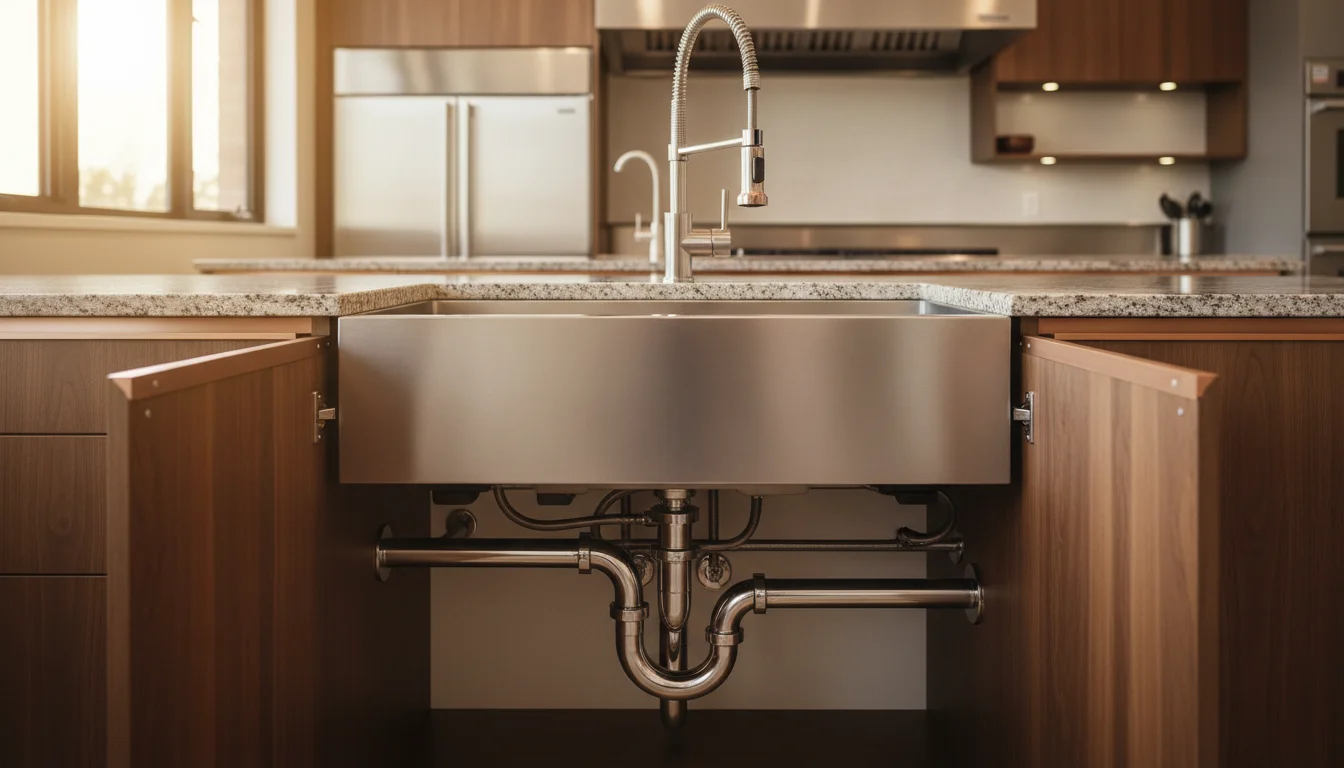
Proper sink installation with adequate counter space on both sides ensures functional, accessible kitchen design
Real-World Kitchen Example
Let's walk through how sink placement planning worked in a recent WAREMODEL project. This homeowner had a 12' x 14' galley kitchen with the refrigerator on one wall and an existing window that faced their prized garden view. They wanted to preserve the window view at the sink and felt strongly about having more counter space for meal preparation.
The original kitchen had the sink positioned 2 feet from the corner, leaving barely 16 inches of counter space on one side—barely enough for a small dish rack. The work triangle perimeter was approximately 28 feet—above the ideal 26-foot maximum. The homeowner was constantly moving dirty dishes around on a cramped counter.
Our remodeling plan repositioned the sink 3 feet from the corner, creating 30 inches of counter space on the left side and 24 inches on the right. We kept the sink facing the window exactly as the homeowner wanted. By slightly relocating the stove (a move that actually reduced plumbing costs because we moved away from the existing drain rather than adding new lines), we reduced the work triangle perimeter to 22 feet. The total counter space in the kitchen increased from 28 linear feet to 34 linear feet, primarily because the repositioned sink no longer "wasted" space near a corner.
During installation, we discovered the existing water line was actually 6 inches lower than modern code required. Rather than building up the counter, we ran new water lines at the correct height—an additional $800 in plumbing costs that the homeowner appreciated because it meant the sink height was ergonomically optimal for their household's average height (two people about 5'8").
When to Hire Professional Remodelers
While many homeowners can handle basic renovation decisions, sink placement benefits enormously from professional expertise. Here's why bringing in professional remodelers like WAREMODEL makes sense for this particular decision:
Professional remodelers understand local plumbing codes and can accurately predict water and drainage relocation costs before you commit. They can draw three-dimensional layouts showing exactly how your kitchen will function with the sink in different positions. They bring experience from dozens of similar kitchens, allowing them to predict which design choices age well and which become frustrating over time. Most importantly, they coordinate sink placement with countertop fabrication, cabinet construction, and appliance delivery—ensuring everything arrives on schedule and installs properly.
If you're undertaking a major kitchen remodel, starting with a professional in-home consultation—understanding your current layout, discussing your workflow preferences, and reviewing actual design options with measurements—typically costs $300-$600 but can save thousands in avoided mistakes. WAREMODEL offers free expert consultations for homeowners throughout the Seattle, Bellevue, Kent, Renton, Tacoma, and surrounding areas, allowing you to get professional guidance before committing to any particular approach.
Conclusion
Sink placement in kitchen design is far more consequential than most homeowners realize. The location you choose impacts daily functionality, efficiency, ergonomics, and even the resale value of your home. By following the work triangle principle, ensuring adequate counter space, accounting for plumbing access, and considering your family's actual workflow, you can position your sink where it becomes a genuine asset rather than a bottleneck.
The most successful kitchen remodels we've completed always start with careful planning of functional zones—and the sink placement decision is central to that planning. If you're considering a kitchen remodel or even just reconsidering your current sink location, take time to audit these factors. If the prospect of coordinating measurements, plumbing costs, and design considerations feels overwhelming, that's precisely why professional kitchen remodelers exist. A few hours of expert guidance early in your project invariably pays for itself in better decisions, fewer change orders, and a kitchen you'll genuinely enjoy using for decades to come.
FAQ
Q: What's the minimum counter space needed on each side of a kitchen sink?
A: The National Kitchen and Bath Association recommends a minimum of 18 inches of counter space on each side of the sink. However, 24 inches on at least one side provides better functionality for dish racks, soap dispensers, and temporary food placement. If your kitchen dimensions won't accommodate this, prioritizing counter space on the dominant side (where you typically load/unload dishes) is better than splitting the difference equally.
Q: Can I position my kitchen sink in an island?
A: Yes, island sinks are popular in modern kitchens and can work well in larger kitchens (at least 15-20 feet deep) with adequate traffic flow around all sides. However, they require running water supply and drain lines under the island, which adds complexity and cost. Island sinks also typically require an island hood or downdraft ventilation system. An island sink positions the cook more centrally, which many people prefer for entertaining, but they're not ideal for small or galley kitchens.
Q: How much does it cost to move a kitchen sink to a different location?
A: Costs vary dramatically based on distance and existing infrastructure. If you're moving the sink within 3-4 feet of existing water/drain lines, expect $500-$1,200 in plumbing costs. Moving 8-10 feet away typically runs $2,000-$4,000. Additionally, you'll need to factor in countertop fabrication changes, cabinet modifications, and potential structural work. A professional kitchen designer can provide accurate estimates after evaluating your specific kitchen layout.
Q: Should my kitchen sink face a window?
A: Many homeowners prefer sinks positioned in front of windows for natural light and outdoor views, which genuinely improve the experience of dishwashing. However, this shouldn't override the work triangle principle or adequate counter space. If your window is small, poorly positioned, or faces an undesirable view, prioritizing functional placement near your stove and refrigerator is more important than capturing a view. Some modern kitchens position sinks with windows as a bonus feature but don't sacrifice functionality to achieve it.
Q: What height should my kitchen sink be?
A: Standard sink height is 34-36 inches from the floor to the rim, with 34 inches being typical for single-bowl sinks and 36 inches for double-bowl configurations. However, optimal height varies by individual height. People over 6 feet tall often prefer 36-38 inches, while those under 5'6" may find 32-34 inches more comfortable. If your household has significant height variation, 35 inches is often a good compromise. Some modern designs use slightly sloped counters to accommodate different user heights.
Q: Can I have a small sink in my kitchen island?
A: Yes, compact bar or prep sinks (typically 18-24 inches) are often installed in islands specifically for this purpose. These usually serve as secondary sinks rather than the primary wash station, and they still require plumbing hookups and ventilation. A bar sink in an island can reduce traffic in front of the main sink and provide convenient water access for beverage preparation or outdoor entertaining prep.
Q: What's the ideal distance between my sink and stove?
A: According to the work triangle principle, the distance between sink and stove should ideally be 4-6 feet. This provides enough separation for safety (water and heat don't mix well in close quarters) while keeping them accessible during cooking and cleanup. If your kitchen layout forces these appliances further apart (8+ feet), it can create workflow inefficiency.
Q: How does sink placement affect cabinet space?
A: Sink placement determines what cabinet configuration you can use underneath. A sink 2-3 feet from a corner limits usable cabinet depth and can waste valuable storage space. Positioning the sink at least 3-4 feet from corners allows for full-width, full-depth cabinets underneath, which can accommodate larger items like trash cans, cleaning supplies, and food storage. This is yet another reason to carefully plan sink positioning—poor placement compromises storage efficiency throughout your lower cabinets.