Jack and Jill doors represent a practical and increasingly popular design solution for modern homeowners seeking to maximize space efficiency without sacrificing privacy or functionality. These shared bathroom doors—named after the nursery rhyme characters—connect two separate bedrooms to a single bathroom, creating a flexible layout that works particularly well in master suites, children's rooms, or guest accommodations. The concept has evolved significantly from its traditional roots, now incorporating advanced locking mechanisms and thoughtful design principles that address contemporary lifestyle needs.
Quick Answer: Jack and Jill doors are dual-entry doors that provide access to a shared bathroom from two adjoining rooms, typically bedrooms. They serve as a space-saving solution while offering privacy through individual locking mechanisms on each side, making them ideal for modern home remodeling projects that prioritize both functionality and efficient square footage usage.
Homeowners gravitate toward this solution for several compelling reasons. In homes where square footage comes at a premium—whether in urban condos, suburban family homes, or updated master suites—Jack and Jill bathroom configurations eliminate the need for multiple dedicated bathrooms while still providing convenient access from primary living spaces. The design also appeals to families with children, allowing siblings to share bathroom facilities without constant conflicts over access. Additionally, when executed thoughtfully with proper jack and jill bathroom design principles, the arrangement actually enhances property value by increasing functional living space and bathroom utility.
This article explores the complete picture of designing Jack and Jill doors for your remodeling project. You'll discover how to assess whether this layout suits your home's architecture, understand the hardware and locking systems that make shared access work seamlessly, learn design strategies that maintain privacy and aesthetic appeal, and explore how innovative remodeling solutions like those offered through comprehensive planning can transform your space into something both practical and beautiful. Whether you're renovating a master suite or rethinking your home's layout, understanding these doors' potential and limitations will help you make an informed decision that aligns with your lifestyle and long-term home investment goals.
Table of Contents
- Key Advantages of Installing Shared Bathroom Doors in Your Home
- Planning Your Jack and Jill Door Layout: Essential Design Considerations
- Selecting the Right Door Hardware and Locking Mechanisms
- Design Styles and Aesthetic Integration for Jack and Jill Doors
- Addressing Common Challenges in Jack and Jill Door Installation
- Step-by-Step Installation Process for Jack and Jill Doors
- Real-World Examples: Successful Jack and Jill Door Installations
- Budget Planning and Cost Considerations for Your Project
- Frequently Asked Questions About Jack and Jill Doors
- Creating More Functional Space with Thoughtful Jack and Jill Door Design
Key Advantages of Installing Shared Bathroom Doors in Your Home
The primary appeal of jack and jill bathroom configurations lies in their exceptional efficiency—they deliver dual bedroom access through a single, thoughtfully designed shared space. Rather than requiring two separate full bathrooms, a shared bathroom setup maximizes square footage while maintaining the en-suite convenience both bedrooms expect. For homeowners working within space constraints or budget limitations, this represents a meaningful opportunity to enhance functionality without sacrificing comfort or privacy.
According to Fixr.com's analysis of bathroom design trends, shared bathroom doors provide efficient space utilization by delivering two-bedroom ensuite access through a single shared bathroom, eliminating the need to construct two separate full bathrooms while maintaining privacy for each bedroom. This distinction matters significantly during remodeling projects—the cost savings from consolidating plumbing, electrical work, and structural elements can be redirected toward higher-quality fixtures, finishes, or other areas of your home renovation.
Beyond raw space efficiency, shared bathrooms fundamentally improve daily household functionality. Morning routines become less contentious when siblings or household members have designated entry points rather than competing for access through a single door. Families with children particularly benefit from this arrangement, as it allows each bedroom occupant independent entry without constant negotiation. The configuration also appeals to guest accommodations—two adjacent bedrooms served by one bathroom create an attractive suite-like arrangement ideal for visiting family or rental income scenarios.
The investment value extends further than immediate convenience. Homes featuring well-designed jack and jill bathrooms with proper hardware and locking mechanisms command stronger resale appeal, as they signal thoughtful space planning and modern lifestyle accommodation. Potential buyers recognize that this layout addresses real family needs—the ability to serve two bedrooms without the expense of separate bathrooms represents smart design that enhances property value while reducing construction costs.
When paired with innovative remodeling approaches that emphasize comprehensive space planning, shared bathroom doors become part of a larger strategy to create more usable living areas. This alignment with contemporary home design expectations—where efficiency and functionality matter as much as aesthetics—positions your home favorably in today's market while delivering immediate quality-of-life improvements for current occupants.
Planning Your Jack and Jill Door Layout: Essential Design Considerations
Designing an effective jack and jill bathroom configuration requires careful spatial analysis and strategic decision-making before construction begins. The success of this layout depends not on aesthetic preferences alone, but on how well the physical arrangement accommodates daily traffic patterns, privacy needs, and structural realities of your home. Understanding these planning fundamentals separates layouts that function seamlessly from those that create friction between occupants.
Assessing Your Current Floor Plan
Begin by evaluating your existing bathroom footprint and the two bedrooms it will serve. Measure the wall thickness between these spaces—most interior walls are 4.5 to 6 inches deep, which must accommodate two functional doors. The bathroom itself should ideally measure at least 5 feet by 8 feet to comfortably fit two entry doors, fixtures, and comfortable circulation space. Cramped bathrooms become bottlenecks when two people need simultaneous access; generous layouts prevent the morning routine conflicts that undermine the entire concept.
Examine ceiling height carefully. Standard doors are 6 feet 8 inches tall, but angled ceilings, ductwork, or structural beams can create clearance problems. If your home has vaulted ceilings or architectural features, verify that both door openings will have unobstructed overhead space. Existing plumbing locations matter significantly—if the main drain stack, water supply lines, or ventilation duct run through the wall between bedrooms, relocating them adds substantial cost and complexity.
Door Placement and Swing Direction
The position of each door within the bathroom determines workflow efficiency. Ideally, doors should be positioned at opposite corners or along different walls rather than facing each other directly. This arrangement minimizes visual exposure when one person enters while another uses fixtures. When planning the bathroom floor plan, consider that each door requires swing clearance—typically 32 to 36 inches of clear width and unobstructed floor space equal to the door's swing radius.
Swing direction matters for privacy and convenience. Doors should swing inward into the bathroom rather than outward into bedrooms, which prevents blocking bedroom access when the bathroom is in use. Position doors to avoid colliding with the toilet or sink when opened, and ensure mirrors or towel racks don't obstruct the swing path. If space constraints force compromise, pocket doors (which slide into the wall) eliminate swing radius requirements entirely, though they cost more and require careful framing planning.
Privacy Hardware and Locking Mechanisms
Effective jack and jill doors must feature independent locking systems on both sides. Standard privacy locks allow occupants to secure access from either bedroom without requiring a key, but they should include emergency override capability for safety. Soundproofing becomes relevant here—solid-core doors with acoustic sealing reduce noise transmission between bedrooms and the bathroom. Thicker doors and weatherstripping add modest cost but significantly improve the privacy experience that makes this configuration practical.
Structural and Utility Considerations
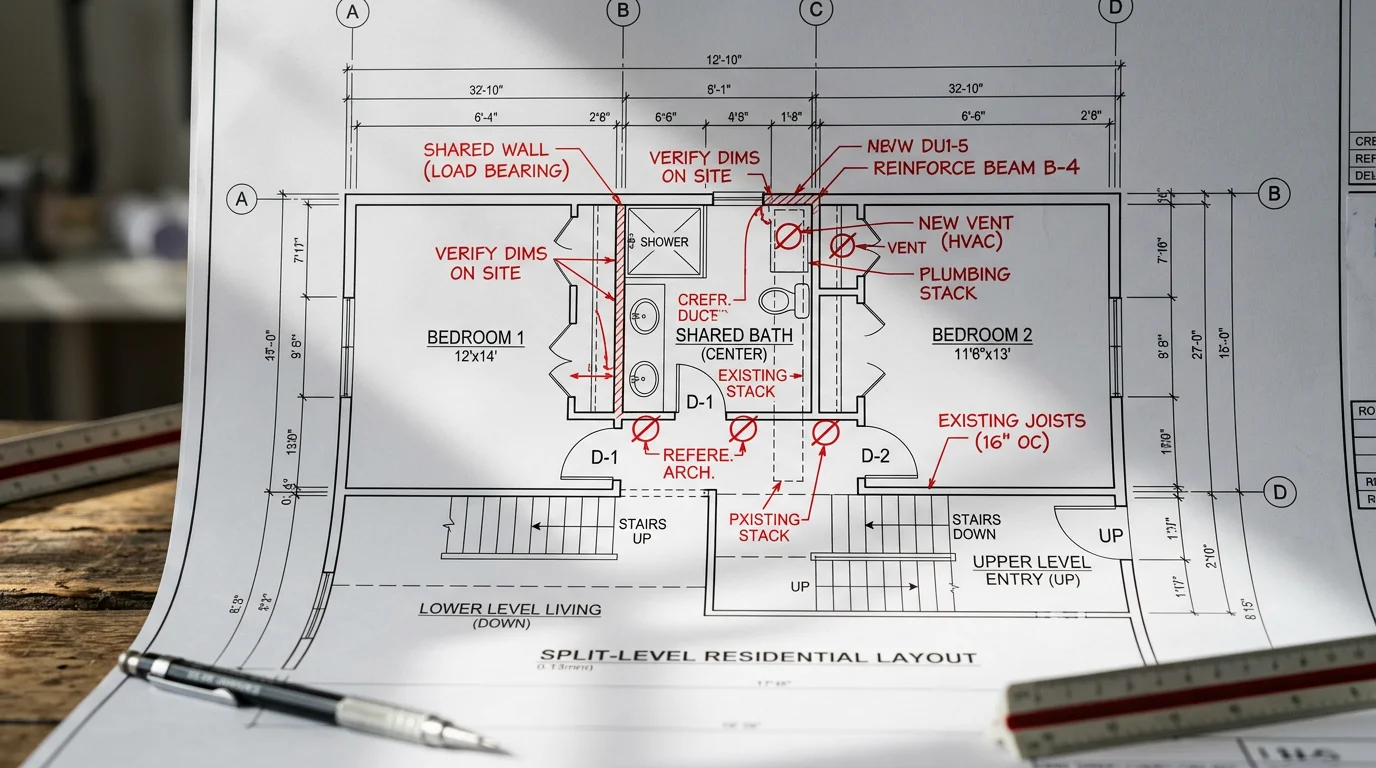
Before finalizing your layout, confirm that the wall supporting both doors can bear the structural modifications. Load-bearing walls require a header or beam to maintain structural integrity when door openings are cut. Have a structural engineer or experienced contractor evaluate whether the wall between bedrooms is load-bearing. Additionally, verify plumbing and electrical rough-in locations—moving supply lines or drain pipes around new door openings may require professional rerouting.
Ventilation placement deserves attention too. A single exhaust fan serving two entry points should be positioned centrally and sized appropriately (typically 80–100 CFM for a standard bathroom). If the fan is mounted directly above one door, it may create noise or air circulation issues for users entering from the other side.
When planning comprehensive remodeling projects that include jack and jill bathrooms, WAREMODEL's innovative approach to space planning helps integrate this layout into your overall home design strategy, ensuring the bathroom configuration supports efficient traffic flow throughout your living spaces. Professional assessment during the planning phase prevents costly revisions during construction and ensures the finished layout delivers the convenience and privacy both bedrooms deserve.
Selecting the Right Door Hardware and Locking Mechanisms
The hardware you choose for jack and jill bathroom doors carries far greater responsibility than standard interior door installations. These mechanisms must function flawlessly from both bedrooms while maintaining privacy, security, and ease of use for household members of varying ages and abilities. Unlike a typical bedroom door that serves a single entry point, jack and jill configurations demand specialized locking solutions that accommodate simultaneous access control from two independent locations.
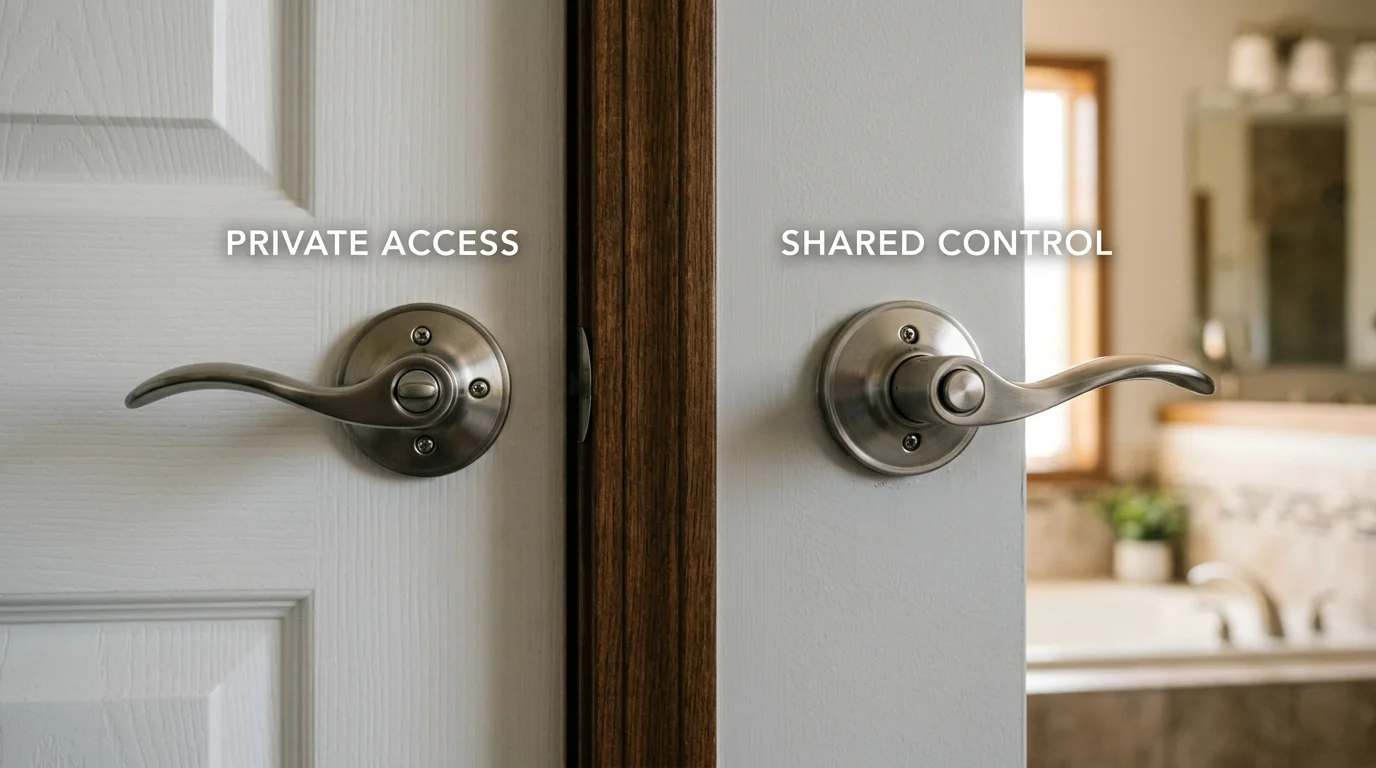
A jack and jill door lock differs fundamentally from conventional interior door hardware. The primary distinction lies in its dual-sided locking capability—both users must be able to lock the bathroom from outside their respective bedrooms, and either party should be able to lock it from inside the bathroom itself. This creates a three-point control system: bedroom A locks the door, bedroom B locks the door, and the bathroom occupant can secure it from within. Standard push-button locks or simple privacy locks cannot deliver this functionality. Instead, you'll need either keyed entry locks on both sides with matching keys, or modern coded/electronic locks that allow personalized access management.
The material composition of your hardware directly impacts longevity and performance in the humid bathroom environment. Solid brass, stainless steel, and quality zinc alloy withstand moisture, temperature fluctuations, and daily wear far better than cheaper alternatives. Finishes matter equally—polished chrome and brushed nickel resist tarnishing, while oil-rubbed bronze adds aesthetic warmth but requires occasional maintenance. When selecting finishes, ensure consistency across both doors and coordinate with your overall bathroom design aesthetic. The investment in quality hardware typically ranges from $20 to $200 per door depending on the sophistication of the locking mechanism, with keyed systems and electronic locks occupying the higher end of that spectrum.
Installation requirements vary by lock type. Traditional keyed locks require precise boring and mortising to fit within the door frame—a task best handled by experienced contractors to ensure proper alignment and function. Electronic or coded locks demand additional considerations: battery placement, backup power systems in case of failure, and weatherproofing around any electronic components. When planning your remodeling project, coordinate with your contractor about whether existing doors can accommodate your chosen hardware or if the door thickness, material, and construction require specialized solutions.
| Lock Type | Best For | Privacy Control | Installation Complexity | Typical Cost Range |
|---|---|---|---|---|
| Keyed Entry Locks | Families wanting traditional security with two independent keys | Excellent—each bedroom controls access independently | Moderate—requires precise boring and mortising | $40–$100 per lock |
| Electronic/Coded Locks | Tech-forward households or rental properties needing flexible access | Excellent—programmable codes allow customized access | Moderate to High—requires electrical rough-in and battery management | $150–$250 per lock |
| Passage Locks with Interior Privacy Button | Budget-conscious installations where privacy is secondary to convenience | Moderate—only the bathroom occupant can lock from inside | Low—simple installation, fits standard door bores | $20–$50 per lock |
| Pocket Door Hardware with Keyed Locks | Tight spaces where swing clearance is limited | Excellent if pocket doors are chosen for the jack and jill configuration | High—requires structural modification for pocket installation | $80–$200 per door assembly |
Consider your household's specific needs when evaluating options. Families with young children may prefer keyed systems that prevent unsupervised bathroom access, while households with teenagers or multiple adults might value electronic locks that allow temporary access codes for guests. The positioning of locks on both doors should be symmetrical and at a consistent height—typically 36 to 48 inches from the floor—to ensure comfortable operation regardless of which bedroom the user occupies.
Compatibility between your chosen doors and hardware cannot be overlooked. Solid core doors and engineered wood doors accept most standard locks readily, but hollow-core doors may not provide sufficient material for secure lock installation. Verify door thickness and material composition before finalizing your hardware selection. When implementing comprehensive bathroom remodeling, WAREMODEL's space-planning expertise helps ensure that your chosen locking system integrates seamlessly with the overall bathroom layout, door swing clearances, and traffic flow patterns between bedrooms.
Professional installation of jack and jill door locks ensures proper function and longevity. Misaligned locks create jamming, incomplete engagement, or frustrating operation—problems that compound over years of daily use. A qualified contractor will verify that both locks operate smoothly, that keys turn without resistance, and that the latch mechanism engages fully from all access points. This attention to detail during installation prevents costly adjustments later and guarantees the privacy and security your household deserves.
Design Styles and Aesthetic Integration for Jack and Jill Doors
The functional purpose of jack and jill doors should never overshadow their aesthetic potential. These dual-access bathroom configurations present a unique design opportunity—when thoughtfully executed, they become seamless architectural features that enhance rather than compromise the visual flow between connected spaces. The key lies in treating door selection, materials, and finishes as integral components of your broader bathroom design strategy, not afterthoughts.
Modern and Contemporary Approaches
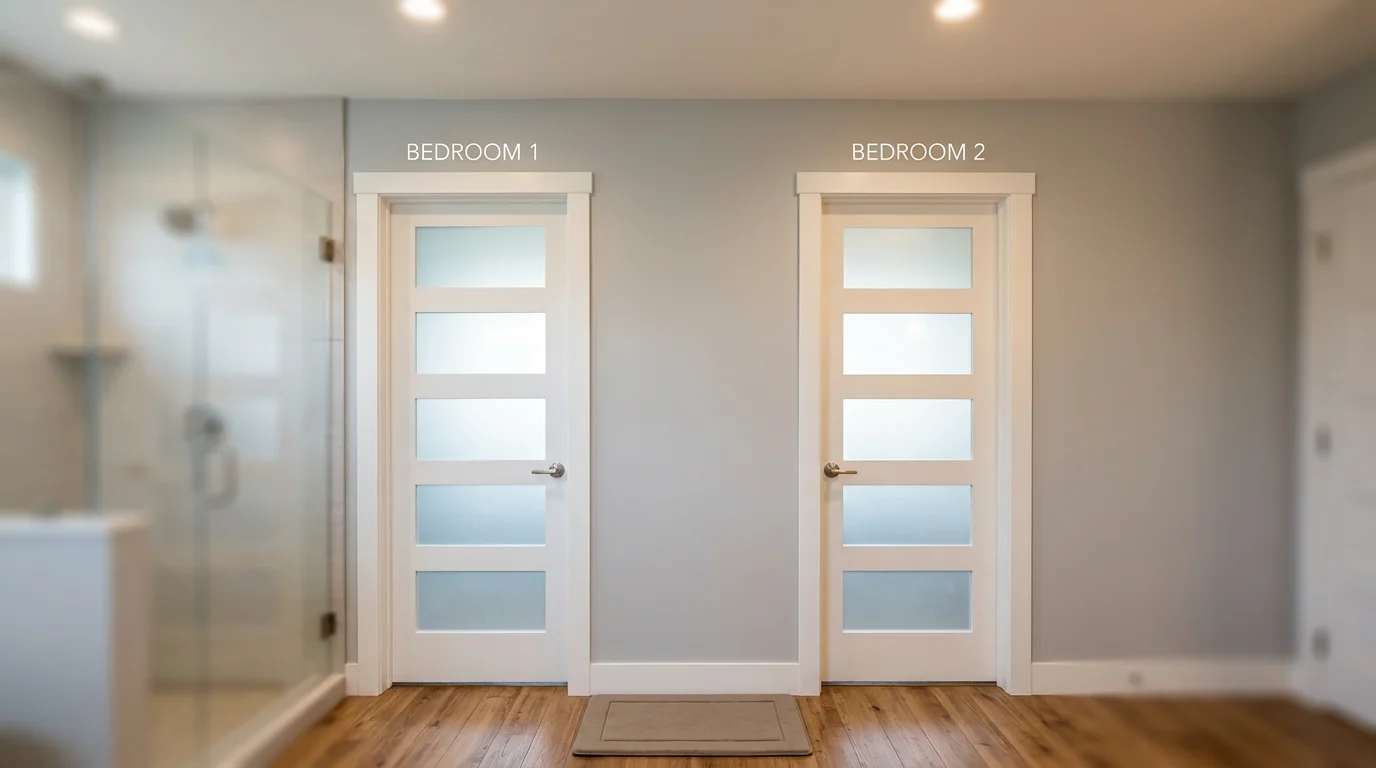
Minimalist aesthetics favor clean-lined doors in matte finishes or natural wood tones that echo the bedroom's color palette. Frameless glass or semi-frosted panels create visual lightness while maintaining privacy, allowing light to travel between rooms without creating visual barriers. Flush-mount hardware and handle-less designs reinforce the streamlined sensibility, eliminating visual clutter on either side of the entry. Pair these selections with neutral wall colors—soft grays, warm whites, or pale oak—to allow the doors themselves to function as architectural statements rather than visual interruptions.
Traditional and Transitional Styles
For homes embracing classic or transitional aesthetics, raised-panel doors in solid wood construction offer timeless sophistication. Coordinate the door finish with existing trim work, baseboards, and crown molding throughout the home to create visual continuity. Warm stains like cherry, walnut, or honey oak complement traditional bathrooms featuring pedestal sinks and vintage-inspired fixtures. Transitional spaces benefit from doors that split the difference—perhaps shaker-style panels in a lighter finish that bridges contemporary and classic sensibilities. Brass or oil-rubbed bronze hardware reinforces this balanced approach without veering too heavily toward either design extreme.
Material and Color Coordination Strategy
The most successful modern remodeling projects treat jack and jill doors as connective elements between two distinct spaces. If the master bedroom features warm earth tones while a guest bedroom leans cooler, select a door finish that harmonizes with both environments—a greige or warm taupe works as neutral common ground. Consider the bathroom wall color as well; doors should either complement or intentionally contrast with surrounding surfaces, depending on your design intent. Engineered wood and solid core doors accept stain and paint equally well, offering flexibility if you later adjust your color scheme. WAREMODEL's space-planning approach ensures that door aesthetics integrate thoughtfully with overall bathroom layout, allowing the doors to enhance rather than interrupt the visual journey through your remodeled space.
Practical Aesthetic Decisions
Match door thickness and panel style on both sides of the bathroom entry to avoid asymmetrical visual weight that disrupts symmetry. If one bedroom receives abundant natural light while the other remains shadowed, slightly lighter door finishes in the darker space can optically balance the perceived brightness differential. Glass inserts—frosted, textured, or clear—add visual interest while maintaining privacy; they're particularly effective in contemporary and modern settings where transparency and layering are design values. Hardware finish deserves equal consideration: brushed nickel, matte black, and polished brass each communicate different design narratives and should echo other hardware choices throughout the home.
Addressing Common Challenges in Jack and Jill Door Installation
Jack and Jill bathroom configurations introduce genuine complexity into home renovation challenges that extend beyond standard interior door installation. Understanding these obstacles—and knowing when to call professionals—separates successful remodeling projects from costly mistakes that compromise functionality and safety.
Structural and Framing Complications
The most frequent challenge emerges during the framing phase itself. Many existing homes were never designed with shared bathroom access in mind, meaning walls may contain plumbing stacks, electrical conduit, or HVAC ducts that occupy the precise space where you need to cut doorway openings. Removing or rerouting these utilities requires licensed contractors, particularly when plumbing or electrical work is involved. Load-bearing walls present an additional layer of complexity—cutting large openings without proper header installation risks structural failure. Before committing to your jack and jill configuration, a structural engineer should evaluate the wall in question. This assessment typically costs $300–$500 but prevents catastrophic problems worth tens of thousands in remediation.
Plumbing and Ventilation Conflicts
Bathrooms demand robust ventilation and drainage infrastructure, and shared configurations multiply these demands. A single exhaust fan may prove inadequate for two bedrooms' worth of moisture generation, leading to mold growth and poor air quality. Each bedroom entrance should ideally have its own ventilation pathway, or you'll need to upsize your existing system significantly. Plumbing conflicts—particularly when bedroom layouts don't align neatly with existing drain lines—force expensive rerouting through walls and subfloors. Plan ventilation strategy early in design; retrofitting ductwork after framing is complete costs substantially more than incorporating it upfront.
Moisture Management and Humidity Control
Shared bathroom doors experience moisture exposure from both sides simultaneously, accelerating wood swelling and hardware corrosion. Solid core or engineered wood doors resist moisture better than hollow-core alternatives, but even premium doors require proper sealing. Door sweeps and weatherstripping become non-negotiable—they're not aesthetic choices but functional necessities that prevent water vapor from migrating into adjacent bedrooms. According to research on soundproofing solutions from Fixr.com, solid core doors provide superior performance in moisture-prone environments, with door sweeps being crucial for sealing gaps that allow humidity infiltration.
When to Hire Professional Contractors
Load-bearing wall modification, plumbing relocation, electrical circuit rework, and structural alterations absolutely demand licensed professionals. Even experienced DIYers should pause at these thresholds. WAREMODEL's space-planning approach integrates structural feasibility assessment into the design phase itself, ensuring your jack and jill configuration works with your home's existing infrastructure rather than fighting against it. Attempting these tasks without proper licensing exposes you to liability, building code violations, and potential loss of homeowner's insurance coverage.
Minor challenges—like adjusting door swing direction or adding hardware—fall within capable homeowner territory, but the foundational work requires expertise. Budget 2–4 weeks for professional assessment and structural modifications before installation begins.
Step-by-Step Installation Process for Jack and Jill Doors
The installation process for jack and jill doors demands methodical planning and precise execution. Whether you're retrofitting an existing bathroom or building new construction, understanding what the remodeling process entails helps you set realistic timelines, budget appropriately, and communicate effectively with contractors. Most homeowners benefit from professional installation, particularly when structural modifications are involved, though smaller adjustments fall within capable DIY territory.
Prerequisites and Timeline
Before installation begins, gather essential tools: a stud finder, level, drill-driver, circular saw, measuring tape, and shims. You'll also need the door units themselves, frame components, hinges, and locking hardware. Professional assessment typically requires 2–4 weeks, accounting for structural evaluation and any necessary modifications to wall framing. The actual door installation itself—once walls are prepared—spans 6 or more hours of professional labor for pocket doors, compared to the 2–4 hours required for standard interior door replacement, according to installation data from ASP Windows. Solid core doors and moisture-resistant materials are non-negotiable for bathroom applications, given humidity exposure.
Step 1: Assess and Prepare the Wall Structure
Your contractor begins by examining the existing wall where jack and jill doors will be installed. This involves identifying studs, electrical wiring, plumbing lines, and any load-bearing elements. If you're converting a single-door opening into a dual-access configuration, structural reinforcement may be necessary. The wall must be opened carefully—demolition work requires temporary support walls if bearing capacity is compromised. Once the opening is clear, the framing team installs header beams appropriately sized for the span, ensuring the wall maintains its structural integrity throughout the remodeling process.
Step 2: Install the Door Frame Assembly
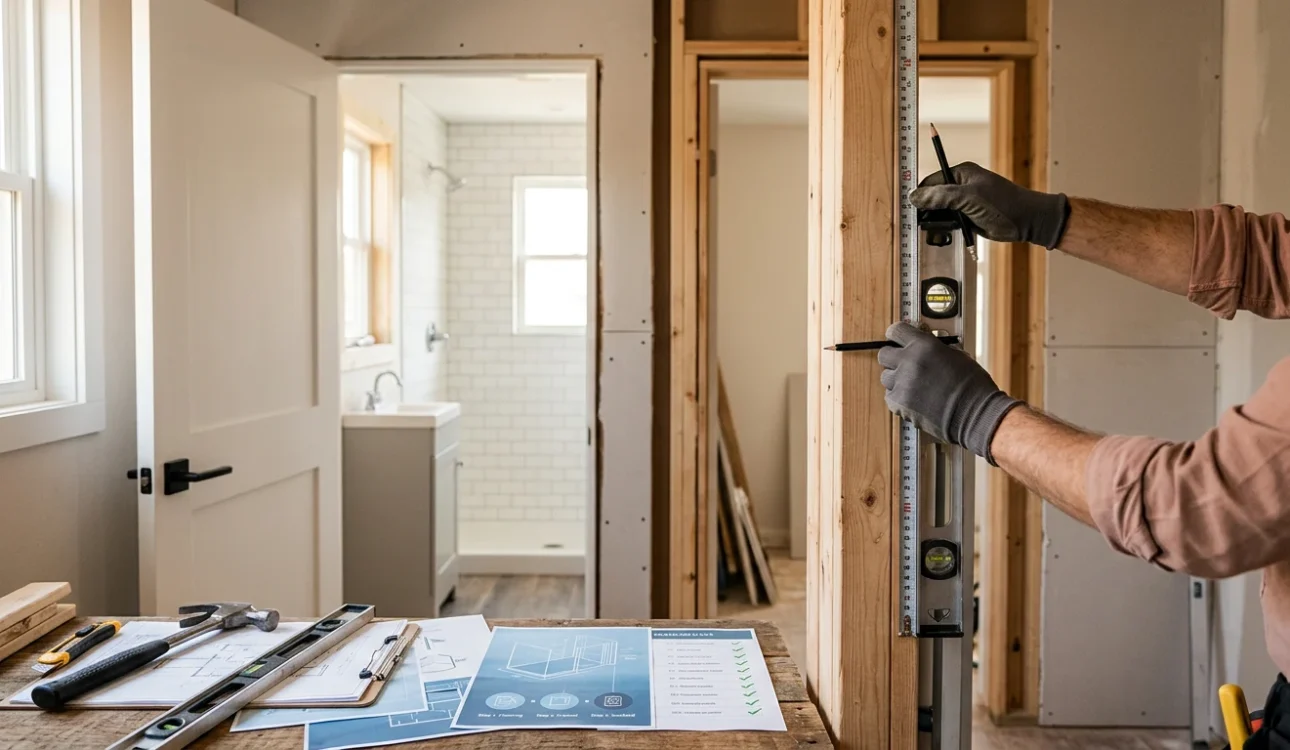
The frame assembly anchors everything that follows. Professional installers position the frame squarely within the opening, checking both vertical and horizontal alignment with a level. Shims fill gaps between frame and studs, ensuring the frame doesn't twist or bow. The frame is then fastened to the structural studs using construction screws or nails—never relying on drywall alone to support door weight. For pocket door configurations, the track system is mounted at this stage, with careful attention to clearance and alignment. This step typically takes 1–2 hours and sets the foundation for all subsequent work.
Step 3: Hang the Doors
Door hanging requires precision. Each door is positioned within its frame, and hinges are aligned to ensure smooth operation and proper clearance. If you're installing pocket doors, the door panels slide into the track system—a process that demands patience and fine adjustment. Bifold or swing doors receive hinge installation followed by test-fitting to verify operation. The doors should open and close without binding, rubbing against frames, or leaving gaps. Adjustments are made by loosening hinge screws slightly and repositioning until movement is fluid. This step consumes 2–3 hours per door.
Step 4: Install Locking Hardware and Handles
Once doors operate smoothly, hardware installation proceeds. Door handles, locks, and privacy mechanisms are mounted according to your chosen configuration—whether you're using traditional keyed locks, push-button privacy locks, or sliding bolt systems. WAREMODEL's space-planning approach considers hardware placement to ensure both aesthetic integration and functional accessibility. Holes are drilled precisely to avoid damaging the door surface, and all mechanisms are tested multiple times to confirm smooth engagement and disengagement.
Step 5: Seal Gaps and Apply Weatherstripping
Moisture infiltration poses the greatest threat to jack and jill bathroom doors. Door sweeps are installed along the bottom edge to seal gaps, while weatherstripping runs along the frame perimeter. These components prevent humidity migration into adjacent bedrooms and protect the door frame from warping. Caulking around the frame exterior (where it meets drywall) adds another moisture barrier. This sealing work takes 1–2 hours but proves essential for longevity.
Step 6: Final Adjustments and Testing
The final phase involves comprehensive testing. Both doors are opened and closed repeatedly from each side, checking for smooth operation, proper locking engagement, and silent closure. Adjustments to hinges or latch mechanisms address any remaining binding or misalignment. Door sweeps are verified to make full contact with the floor. The contractor walks through the space with you, demonstrating operation and explaining maintenance requirements for hardware and weatherstripping.
Professional installation protects your investment and ensures compliance with building codes, particularly in moisture-sensitive bathroom environments. Budget accordingly for quality craftsmanship and materials that withstand humidity exposure over decades.
Real-World Examples: Successful Jack and Jill Door Installations
Understanding how jack and jill doors function in practice reveals their true potential for transforming residential spaces. These real-world installations demonstrate that thoughtful design choices, combined with strategic problem-solving, can deliver both aesthetic appeal and functional excellence in any home design scenario.
The Suburban Family Home: Maximizing Space in Tight Quarters
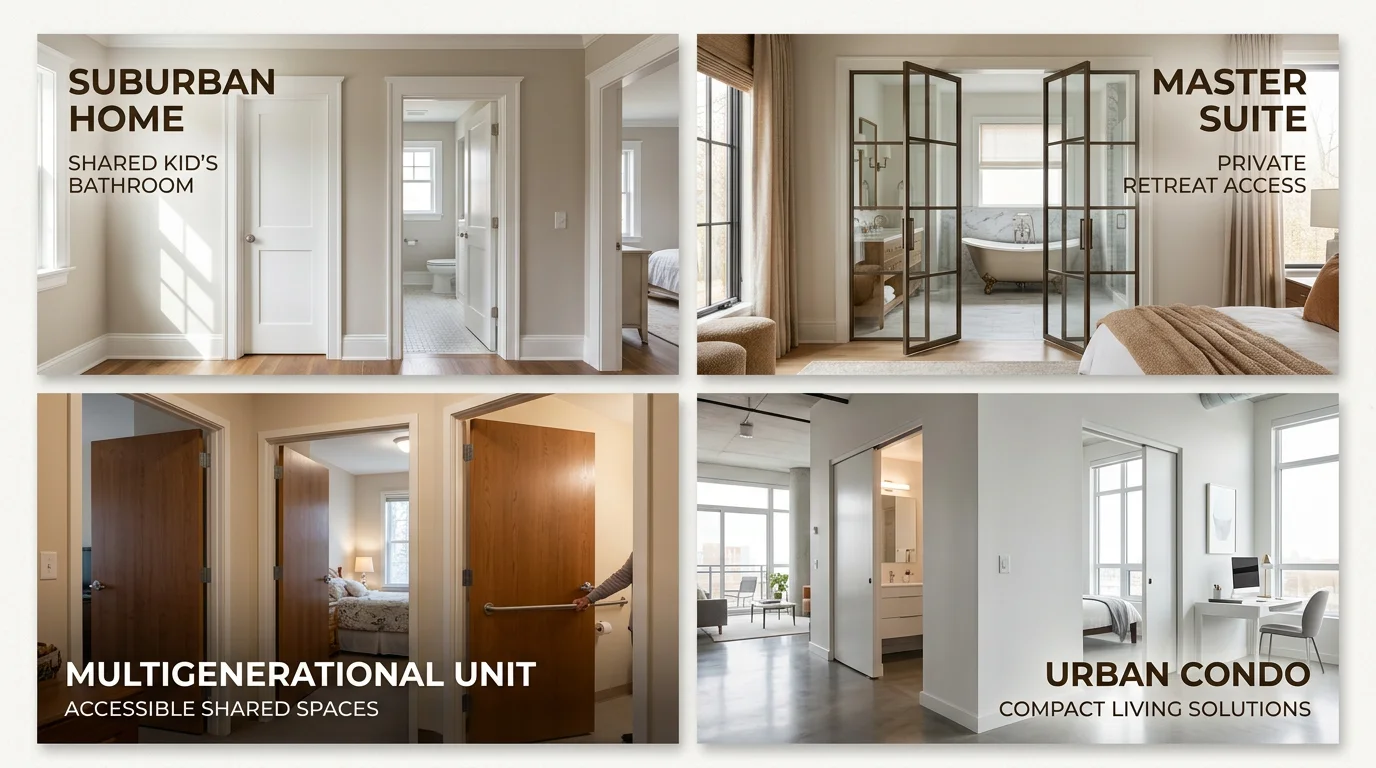
A 1,200-square-foot suburban home faced a common challenge: two children sharing adjacent bedrooms with only one bathroom serving both spaces. The original floor plan included a single door from the hallway, creating traffic congestion and privacy concerns. The homeowners partnered with a remodeling team to install symmetrical jack and jill doors with brushed nickel hardware and soft-close mechanisms. The doors swing inward from each bedroom, meeting at the center of the bathroom wall. By eliminating the hallway entrance entirely, they reclaimed 18 square feet of hallway space—enough to accommodate a small linen closet. The bathroom remodel also included improved ventilation with a humidity-sensing exhaust fan to prevent moisture issues. Result: both children gained independent access without compromising privacy, and the reclaimed hallway space enhanced flow throughout the home.
The Master Suite Upgrade: Luxury Meets Practicality
A master bathroom renovation in an upscale home presented a different scenario. The owners wanted their ensuite to feel like a personal spa while maintaining guest accessibility from a secondary bedroom. The solution involved installing premium solid-core doors with sound-dampening cores and magnetic soft-close hinges. The doors featured a contemporary shaker-panel design finished in white oak to match the bedroom trim work. Soundproofing was prioritized through weatherstripping and acoustic caulking around the frame perimeter. The bathroom remodel incorporated heated floors and a dual-vanity layout that accommodated traffic from both directions. Result: the master suite gained an additional functional entrance without sacrificing the serene, private atmosphere the owners desired.
The Multi-Generational Addition: Accessibility and Independence
When aging parents moved into a newly constructed accessory dwelling unit on their adult child's property, universal design principles guided the jack and jill door installation. Wide-swing doors (36 inches) were specified to accommodate potential mobility aids, and lever-style handles replaced traditional knobs for easier operation. The doors featured low-profile thresholds to eliminate tripping hazards. Lighting was installed above the doors with motion sensors for nighttime safety. This thoughtful approach ensured the shared bathroom served multiple generations without requiring modifications later. Result: the multigenerational living arrangement succeeded because accessibility was designed in from the start, not retrofitted afterward.
The Urban Condo: Style Meets Smart Layouts
A downtown condo conversion presented spatial constraints that demanded creative solutions. Two bedrooms shared a compact 5-by-8-foot bathroom with limited wall space. The contractor installed pocket doors instead of traditional swing doors—a variation of the jack and jill concept that slides into the wall cavity, eliminating the floor space required by hinged doors. This unconventional choice freed up precious square footage while maintaining the dual-access functionality. The doors featured frosted glass panels that provided visual privacy while maintaining an open, airy aesthetic. Result: the condo's floor plan became more flexible, and the pocket door solution proved so effective that the owners recommended it to neighbors facing similar constraints.
Each installation reinforces a core principle: jack and jill doors succeed when design decisions respond to specific household needs rather than following a one-size-fits-all formula. Whether addressing space constraints, enhancing privacy, improving accessibility, or simply creating more functional living environments, these examples show how thoughtful remodeling transforms bathrooms from purely utilitarian spaces into integral components of modern home design.
Budget Planning and Cost Considerations for Your Project
Understanding the financial scope of a jack and jill door installation is essential for making informed remodeling decisions. According to research from Fixr.com, the average cost to convert an existing bathroom to a jack and jill layout runs approximately $15,000, while adding a completely new jack and jill bathroom typically ranges between $20,000 and $50,000. These figures represent broad ranges because actual expenses depend heavily on your home's structural condition, chosen materials, labor rates in your region, and whether you're working within existing space or expanding square footage.
| Cost Component | Budget-Friendly Option | Premium Option |
|---|---|---|
| Interior doors (per door) | $30–$150 (hollow-core) | $100–$500 (solid-core) |
| Hardware & locks | $150–$400 | $600–$1,500 |
| Labor (installation) | $800–$2,000 | $2,500–$5,000 |
| Structural modifications | $0–$3,000 | $5,000–$15,000 |
| Finishing (paint, trim) | $200–$500 | $1,000–$3,000 |
Door selection represents one of your most flexible budget decisions. Hollow-core doors offer affordability but lack sound dampening—a genuine concern when two bedrooms share bathroom access. Solid-core doors provide superior acoustic insulation and durability, making them the preferred choice for bathroom environments where moisture and humidity demand long-term performance.
Hardware and locking mechanisms warrant careful budget allocation. Standard keyed locks start modestly but premium options—including electronic locks with remote access or specialized privacy mechanisms—demand investment. Remember that bathroom-grade hardware must resist moisture corrosion, so the cheapest option often creates maintenance problems within five years.
Labor costs fluctuate dramatically based on your contractor's expertise and local market rates. Complex structural modifications, such as relocating plumbing or reinforcing walls for pocket door installations, escalate expenses quickly. When planning your renovation budget, consult with multiple contractors and request itemized quotes that distinguish between material costs and labor, allowing you to identify areas where strategic choices can reduce overall expenses without compromising functionality or safety.
Frequently Asked Questions About Jack and Jill Doors
Can Jack and Jill bathrooms truly provide adequate privacy for both bedrooms?
Privacy concerns represent the most legitimate hesitation homeowners express about shared bathroom configurations. The answer depends entirely on your hardware selection and door quality. Premium locking mechanisms—particularly those featuring simultaneous dual locks or electronic privacy systems—effectively prevent unauthorized entry from either side. Solid-core doors with acoustic sealing dramatically reduce sound transmission, addressing the secondary privacy concern many families face. The key distinction: a jack and jill bathroom with quality hardware and construction performs as well as any standard bathroom door, provided both users respect the locking protocol.
How much maintenance do jack and jill doors require compared to standard bathroom doors?
Maintenance demands remain virtually identical to conventional interior doors, with one critical exception: moisture exposure. Bathroom environments introduce humidity that can warp cheaper hollow-core doors within three to five years. Solid-core and engineered doors resist warping significantly better. Hardware requires periodic inspection—hinges should be tightened annually, and locks tested seasonally to ensure smooth operation. The shared-use aspect actually simplifies certain maintenance tasks; you're servicing one door mechanism rather than two separate bathroom entries, reducing overall upkeep complexity.
Will jack and jill doors work with my home's architectural style?
Absolutely. Contemporary designs, traditional farmhouse aesthetics, minimalist interiors, and transitional styles all accommodate shared bathroom doors seamlessly. The visual impact depends on your material choices and hardware finishes. Paneled wooden doors complement period homes, while frosted glass or sleek contemporary frames suit modern spaces. Since the door itself occupies the same visual plane as any standard interior door, it integrates naturally into existing design schemes. The real consideration involves ensuring your chosen style aligns with adjacent bedroom doors and hallway aesthetics.
Are jack and jill bathrooms practical for rental properties?
Rental properties benefit significantly from shared bathroom configurations, particularly in multi-bedroom units where maximizing functional space increases rental value. The durability factor becomes paramount—choose commercial-grade hardware and solid-core doors rated for high-traffic environments. Electronic locks with keypad access simplify tenant management compared to keyed systems. Document the locking mechanism clearly in your lease agreement, establishing explicit expectations about simultaneous access rights. Properties with well-maintained jack and jill bathrooms often command premium rental rates, particularly in markets where space efficiency drives demand.
Do jack and jill doors negatively impact home resale value?
Market data suggests the opposite. Homes featuring thoughtfully designed shared bathroom configurations typically sell faster and command comparable or higher prices than single-access alternatives, particularly in markets where space optimization commands premium value. The determining factor lies in execution quality—professionally installed doors with robust hardware and acoustic properties appeal to buyers, while poorly constructed installations with substandard locking mechanisms create buyer hesitation. Real estate professionals increasingly recognize shared bathrooms as value-added features rather than compromises, especially when the installation demonstrates clear attention to privacy and functionality.
What's the typical cost difference between standard doors and jack and jill configurations?
Material costs increase modestly—solid-core doors cost slightly more than hollow-core alternatives, and premium locking mechanisms represent the largest expense variable. Installation complexity drives the more significant cost differential. Standard door installation typically requires four to six hours of labor; jack and jill installations often demand double that time due to precise alignment requirements and dual-lock coordination. Budget an additional 30-50% labor expense compared to standard interior door installation. When factoring long-term durability and the space efficiency gains, most homeowners find the investment justifiable within five-year renovation horizons.
Can I retrofit jack and jill doors into an existing bathroom, or does this require new construction?
Retrofitting is entirely feasible, though it demands more complexity than new construction. Your contractor must assess structural integrity around the doorway, verify adequate clearance for dual-swing configurations, and potentially relocate plumbing fixtures depending on your layout. Pocket door installations provide solutions for tight spaces but require wall cavity depth that older homes sometimes lack. Modern remodeling approaches, like those pioneered by WAREMODEL's innovative space-optimization concepts, demonstrate how existing bathrooms can be reconfigured to accommodate shared access without compromising functionality. Consult with experienced contractors who've completed similar retrofits in your home's architectural era—their insights prove invaluable for identifying potential complications before construction begins.
Creating More Functional Space with Thoughtful Jack and Jill Door Design
Jack and Jill bathroom configurations represent far more than a trendy architectural choice—they embody a fundamental shift in how modern homeowners approach space planning and daily functionality. Throughout this comprehensive exploration, we've examined the technical considerations, design possibilities, and installation realities that define successful shared-access bathrooms. The decision to implement this solution hinges on understanding both its genuine advantages and the practical constraints of your specific home environment.
The true value of jack and jill doors emerges when thoughtfully integrated into your broader home remodeling strategy. Unlike cosmetic upgrades that enhance aesthetics alone, this design approach directly addresses space efficiency by eliminating wasted corridor footage and creating dual-access functionality within existing square footage. When paired with strategic storage solutions and modern fixture selection, shared-access bathrooms transform how families navigate daily routines—reducing morning congestion, improving accessibility for children and elderly residents, and maximizing the usable area that justifies your renovation investment.
Your next step requires honest assessment of your home's layout and household dynamics. Evaluate whether your current bathroom configuration supports dual access without compromising privacy or plumbing logistics. Consider consulting with experienced remodeling professionals who can conduct a thorough spatial analysis and identify potential structural or mechanical complications before design finalization. Companies like WAREMODEL specialize in innovative design solutions that maximize functional space, and their expertise in space-optimization concepts can prove invaluable when assessing whether jack and jill doors align with your renovation goals.
Ready to transform your bathroom into a more efficient, functional space? Contact WAREMODEL today for a professional design assessment. Our team will evaluate your home's specific layout, discuss your household needs, and provide a detailed quote for implementing jack and jill doors tailored to your space. Whether you're planning new construction or retrofitting an existing bathroom, we'll guide you through every decision—from hardware selection to final installation—ensuring your remodeling project maximizes both functionality and aesthetic appeal. Request your free consultation now and discover how thoughtful jack and jill door design can revolutionize your home's efficiency.