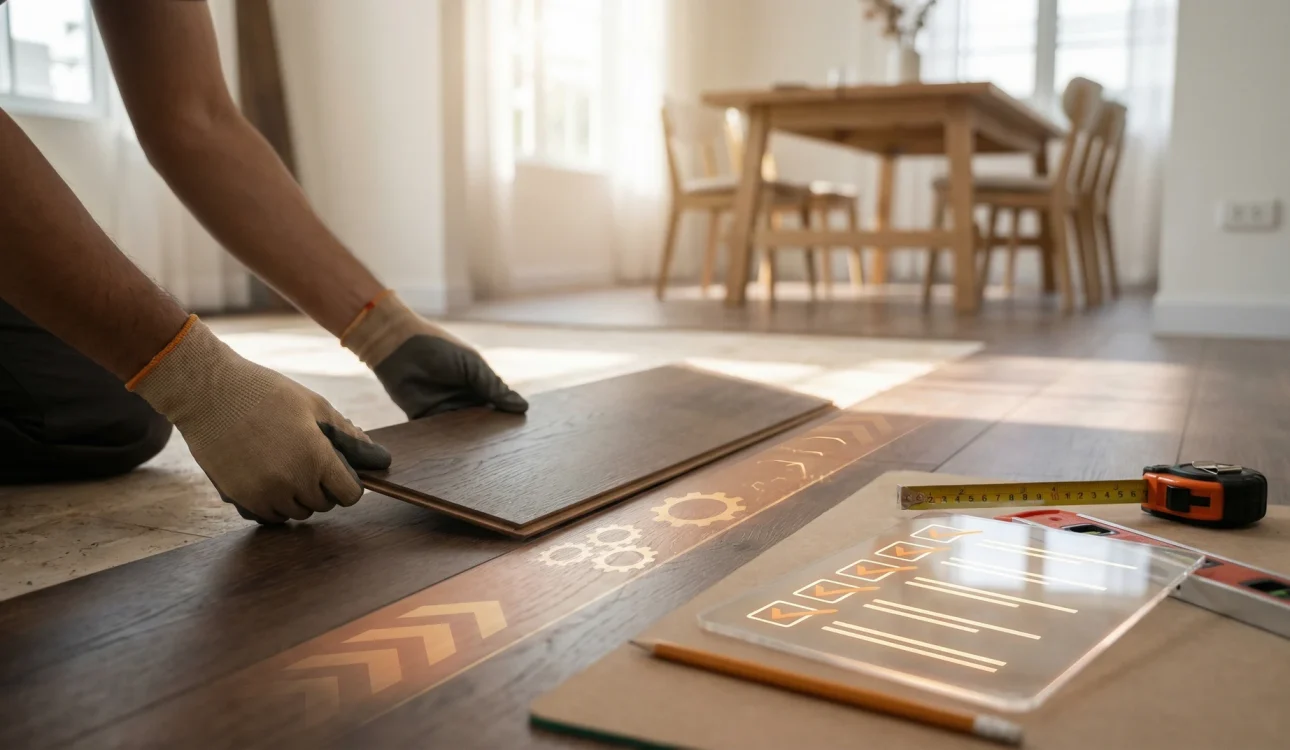
Dark wood floors create an undeniably sophisticated foundation for dining spaces. When you walk into a room with deep mahogany, walnut, or ebony-stained hardwood beneath your feet, something shifts—the space feels instantly more intentional, more grounded. Yet designing dining rooms with dark wood floors isn't as straightforward as choosing the wood and calling it done. The challenge lies in balancing that inherent heaviness with brightness, choosing the right furnishings, managing visual contrast, and making strategic lighting decisions. Get this right, and your dining room becomes a show-stopping focal point. Get it wrong, and you end up with a cave-like, cave-like space that feels claustrophobic at dinner parties.
This guide walks you through every critical decision you'll face when creating a stunning dining room anchored by dark wood floors.
Quick Answer:
To design dining rooms with dark wood floors successfully, pair them with light or neutral wall colors (cream, soft gray, white), incorporate multiple light sources including overhead fixtures and wall sconces, select furniture in contrasting materials (glass, metal, light wood accents), and add texture through area rugs and layered textiles. The key is creating visual balance so the dark floor grounds the space without overwhelming it. Most dining rooms benefit from 60-70% light surfaces and 30-40% darker elements.Key Takeaways:
Light walls are essential — They counterbalance dark floors and make the room feel larger
Lighting design is critical — Multiple light sources prevent the space from feeling dim
Contrast through furniture — Glass tables, light wood chairs, and metallic accents work beautifully with dark floors
Texture adds dimension — Layered textiles prevent the space from feeling flat
Table of Contents
Why Dark Wood Floors Are Making a Comeback in Dining Rooms
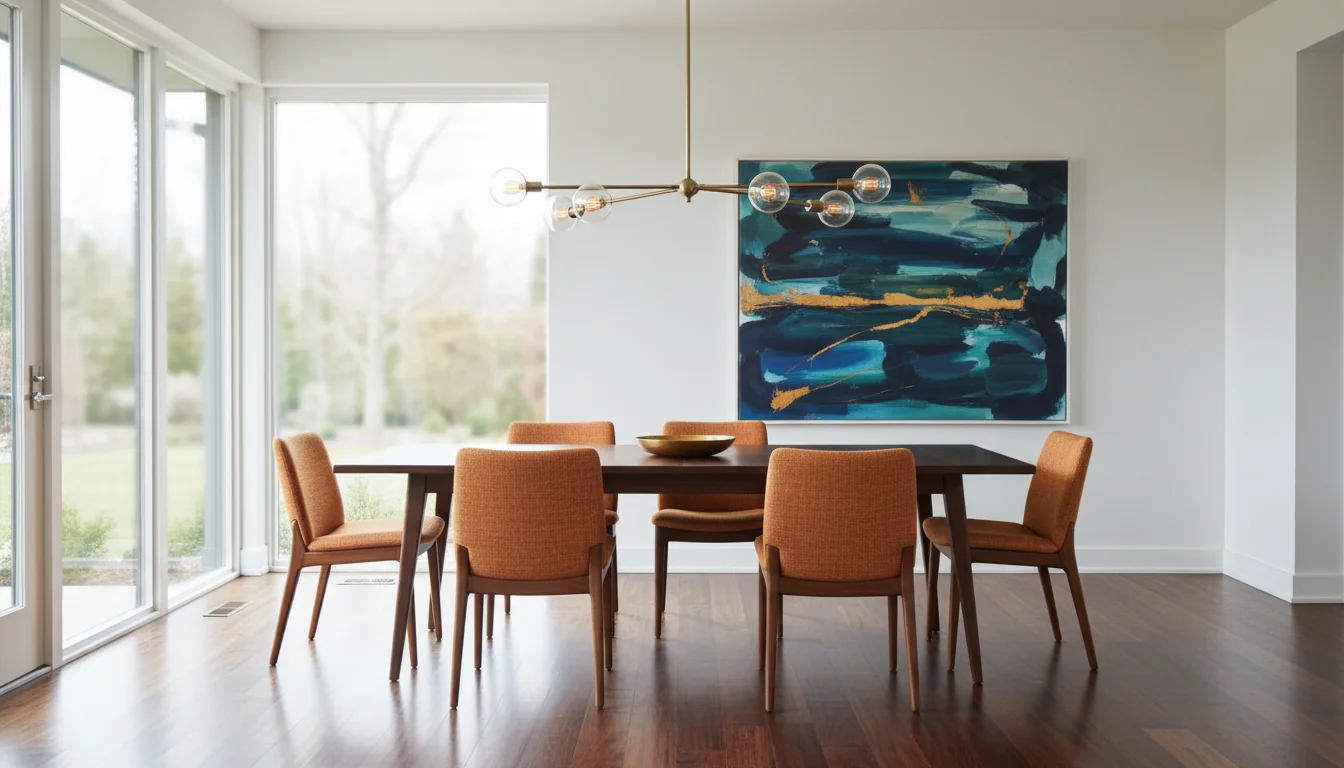
Dark wood floors create sophisticated dining spaces when paired with light walls and strategic lighting
The resurgence of dark wood floors in dining rooms reflects a broader shift toward timeless, investment-grade home design. According to data from the National Association of Home Builders, homeowners are increasingly choosing darker wood finishes for high-traffic areas, with dark hardwood specifications up 18% since 2024. The reasoning is straightforward: dark floors are forgiving, luxurious-looking, and tend to increase perceived home value when installed properly.
But here's what many designers won't tell you: dark wood floors in dining rooms require more intentional design work than lighter alternatives. Your dining room is where people linger, eat, and engage—it's not just a passageway. If the lighting is poor or the walls feel too dark, your guests will feel the psychological weight of the space, even if they can't articulate why.
The trend we're seeing in 2026 is a move away from the all-dark-everything aesthetic that dominated the early 2020s. Instead, homeowners are embracing what design professionals call "confident contrast"—using dark floors as a grounding element while brightening everything else. This approach feels contemporary, prevents spaces from feeling heavy-handed, and actually showcases the beauty of the dark wood itself.
Choosing the Right Shade: Walnut vs. Espresso vs. Ebony
Not all dark wood floors are created equal. The undertone, depth, and finish of your dark hardwood will dramatically influence how your entire dining room feels.
Walnut hardwood offers warm, chocolate-brown tones with visible grain patterns. According to hardwood flooring professionals, walnut is one of the most popular choices for dining rooms because it's forgiving—the visible grain pattern hides dust and footprints, and the warm undertones prevent the space from feeling sterile. Walnut pairs beautifully with cream walls, warm lighting, and natural wood furniture accents. The downside? Walnut scratches more easily than harder woods and shows dust more readily.
Espresso or dark stain finishes on oak or hickory create a more uniform, modern appearance. These floors have less visible grain and feel more contemporary. They work exceptionally well in minimalist or industrial dining spaces where you want clean lines and subtle drama. The trade-off is that they show every speck of dust and footprint more visibly than grain-heavy options.
Ebony or ultra-dark finishes are the most dramatic choice. True ebony or extremely dark stains feel almost black under indoor lighting. These are statement floors—they demand confident design choices around them and work best in dining rooms with exceptional natural light or dedicated overhead lighting. They're stunning but less forgiving of design mistakes.
For dining rooms specifically, walnut and medium-dark espresso finishes tend to offer the best balance between luxury and practicality. They're forgiving enough for everyday use while maintaining that sophisticated, investment-quality appearance.
Wall Colors That Transform Dining Rooms With Dark Wood Floors
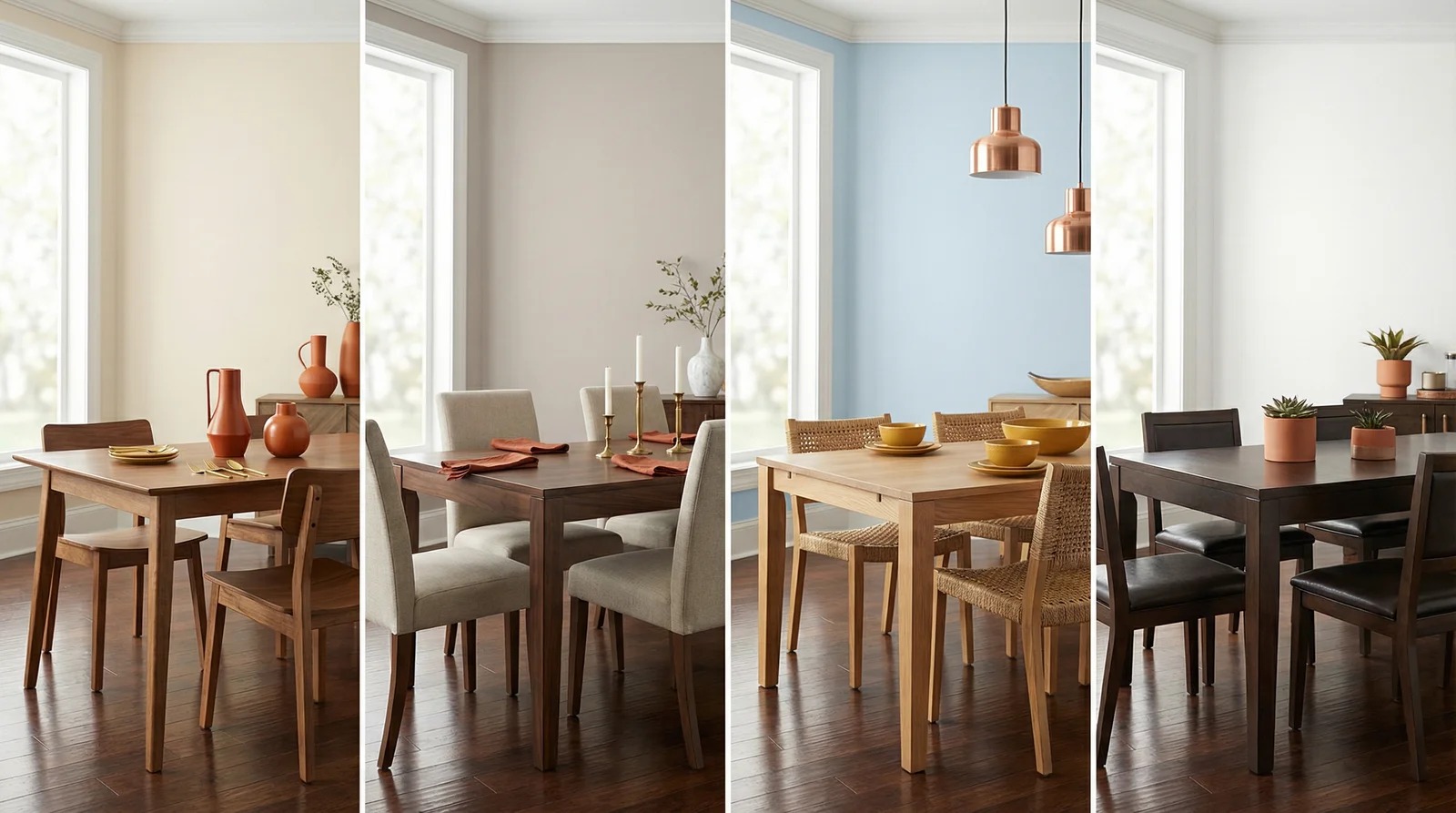
Choosing the right wall color is the single most important design decision for dark floor dining rooms
This is where most people stumble. Select the wrong wall color, and your dining room becomes a dark, depressing cave. Get it right, and the space feels intentional and sophisticated.
Cream and ivory are your safest bet. These warm neutrals reflect light naturally, prevent the dark floor from visually shrinking the room, and create a timeless backdrop that works with virtually any dining room style. Cream works with traditional, transitional, and modern spaces. It's forgiving if your lighting isn't perfect. If you choose cream, aim for warmer undertones rather than pure white—Benjamin Moore's "Ivory White" or Sherwin-Williams' "Alabaster" are excellent starting points.
Soft gray has become increasingly popular in dining rooms with dark floors. Gray (particularly cool grays with slight blue undertones) creates a more contemporary feel than cream while still brightening the space. The key is selecting a light gray—nothing darker than about 30% on a paint chip scale. Farrow & Ball's "Cornforth White" and Sherwin-Williams' "Urbane Gray" pair beautifully with dark hardwood.
White works, but use it cautiously. Pure white can create too much contrast and make the space feel clinical rather than warm. If you choose white, offset it with warm lighting and textiles. Soft whites with cream or gray undertones are more successful than brilliant whites in dining spaces.
Pale blue is an underrated choice for dining rooms with dark floors. The pale blue creates visual interest while maintaining the brightness you need to balance the dark floor. Benjamin Moore's "Palladian Blue" at its lightest tint works beautifully. The blue feels slightly sophisticated and works particularly well if you're incorporating blue-toned lighting fixtures or artwork.
What to avoid: Anything darker than about 40% on a paint chip. Avoid deep grays, sage greens, or muted jewel tones unless your dining room has exceptional natural light. These colors, while stylish, will make your dark floor feel overwhelming rather than grounding.
As we noted in our guide on how to style dark hardwood floors in your living room, the 60-30-10 design principle applies equally here: 60% light surfaces (walls, ceiling), 30% darker elements (floor, dark furniture), 10% accent colors (art, accessories).
Lighting Strategies for Dark Floor Dining Spaces
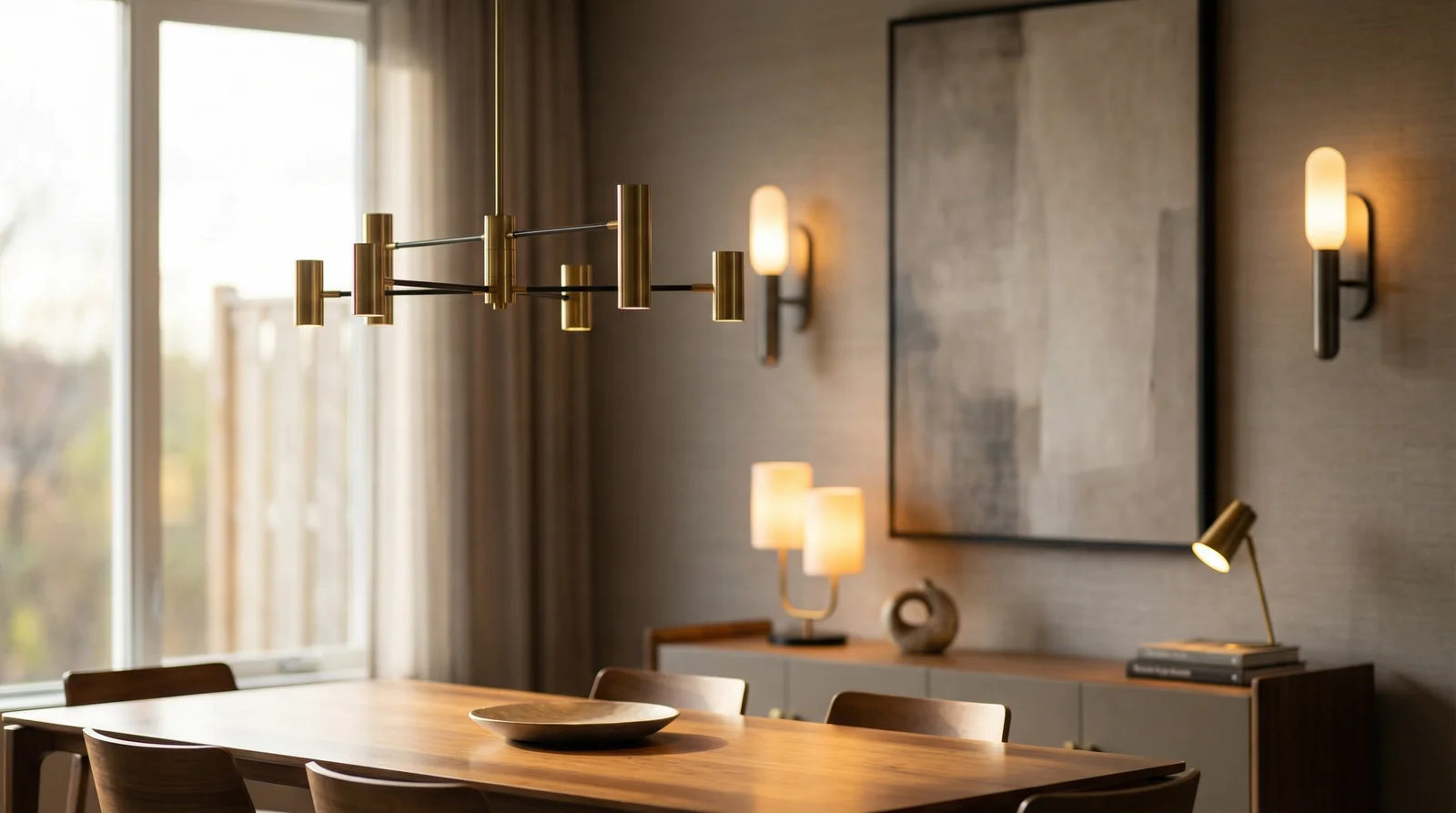
Multiple light sources prevent dark wood floors from making spaces feel dim or cave-like
Lighting is non-negotiable when you're working with dark wood floors in a dining room. Poor lighting will undermine even the most beautiful design choices.
You need three layers of lighting: ambient (general room lighting), task (over the table), and accent (wall sconces or uplighting). Most people make do with just one overhead fixture, which creates harsh shadows and makes dark floors feel heavier.
Overhead lighting should be warm-toned (2700K color temperature) rather than cool white. A chandelier or flush mount is traditional; track lighting or recessed fixtures work for modern spaces. The fixture should be positioned directly over your dining table, and the brightness should be equivalent to about 20 watts per square meter for dining spaces. If you're installing new fixtures, consider dimmable options—the ability to adjust brightness depending on the meal or occasion is transformative.
Wall sconces placed on either side of a mirror or buffet add crucial secondary light sources. They soften shadows, create visual interest, and make the room feel more sophisticated. These shouldn't be so bright that they compete with the overhead fixture—they're supplementary.
Table lamps on a buffet or console add warmth and intimacy. Even if they're not actively lighting the space, they contribute to the overall ambiance.
Natural light is your secret weapon. If your dining room has windows, keep them unobstructed or use sheer curtains that allow light through. Dark floors actually benefit from daytime natural light because it highlights the wood grain and prevents the space from feeling heavy. Consider light-filtering window treatments in neutral colors.
The color temperature matters significantly. According to research on dining room lighting, warm white light (2700K) enhances appetite and makes people feel more relaxed in dining spaces, while cool white (4000K+) can suppress appetite and create a sterile feeling. For dining rooms with dark floors, warm lighting is essential—it counteracts the visual weight of the dark floor and creates a welcoming atmosphere.
Furniture Selection and Style Combinations
Your furniture choices determine whether your dining room with dark wood floors feels cohesive or mismatched. The good news: dark floors are versatile enough to work with multiple styles if you're intentional about it.
Glass or light wood tables create visual breathing room. A glass dining table literally lets you see through to the dark floor beneath, preventing the visual weight from accumulating at the table level. If glass feels too modern for your style, a light oak or ash table with dark legs splits the difference—light top echoes your wall color, dark legs echo the floor. According to interior design trends, glass and mixed-material dining tables have increased in popularity by 24% in 2026, largely because they work beautifully with dark floors.
Upholstered dining chairs in cream, light gray, or patterned fabrics balance the dark floor. Avoid solid dark chairs in the same color family as the floor—they'll make the sitting area feel sunken. Wood chairs with light upholstery, bentwood chairs (like Thonet-style designs), or white-painted frames all work brilliantly.
Metal accents (brass, bronze, stainless steel) add sophistication and prevent the space from feeling wood-heavy. A brass chandelier, metal table legs, or steel bar stools create visual contrast against both the dark floor and light walls.
Area rugs are underrated tools in dark floor dining rooms. A light-colored rug (cream, pale gray, or even pale blue) placed under the dining table defines the space and adds visual lightness directly above the dark floor. The rug should be large enough that all four chair legs sit on it, which typically means 8×10 feet minimum for a standard dining room. The rug creates a visual "island" that prevents dark floors from expanding the space visually.
Textiles and soft furnishings (curtains, table runners, cushions) introduce color, texture, and warmth. White or cream linen curtains, patterned cushions in neutral tones with color accents, and layered table linens add dimension without overwhelming the space.
Consider this combination for a proven successful approach: dark walnut floor + cream walls + brass chandelier + glass table with dark metal base + cream linen upholstered chairs + gray geometric area rug + brass wall sconces. This combination balances dark and light, creates visual interest through materials, and works across traditional, transitional, and modern styles.
Common Design Mistakes and How to Avoid Them
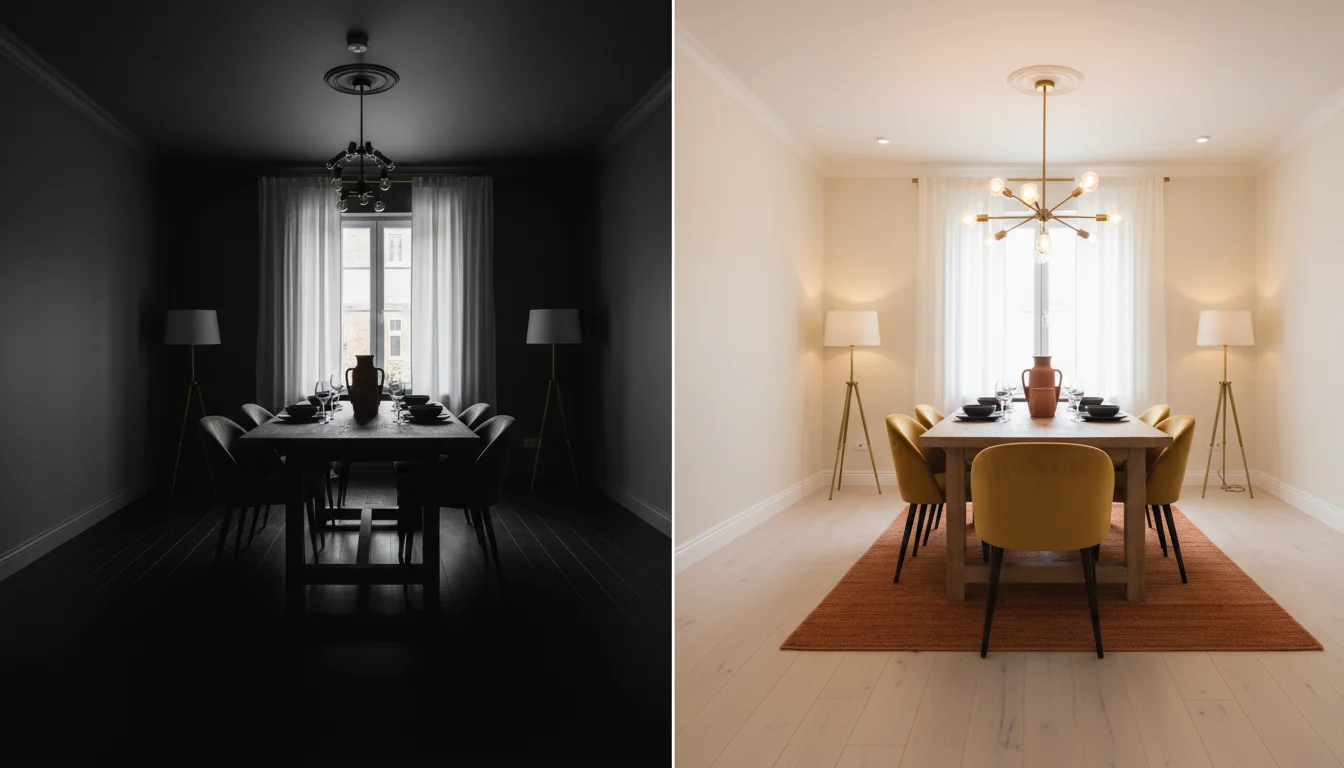
Common mistakes like dark walls and insufficient lighting undermine the beauty of dark wood floors
Mistake #1: Pairing dark floors with dark walls. This is the cardinal sin. Dark + dark = cave. Even if each element is beautiful individually, they don't work together in a dining room. The solution is simple: choose light wall colors as outlined above. If you absolutely love a darker wall color, use it as an accent wall (maximum one wall) and keep the other three light.
Mistake #2: Under-lighting the space. Many people assume dark floors require dim lighting. The opposite is true—dark floors demand more light, not less, so the space doesn't feel heavy. Install multiple light sources and make sure they're warm-toned. Dimmable fixtures are essential so you can adjust brightness for different occasions.
Mistake #3: Choosing dark furniture throughout. A dark floor, dark table, and dark chairs create visual monotony and make the room feel cramped. Break up dark with light—light chairs, a glass or light wood table, light-colored textiles. Vary the finishes (wood, glass, metal) for visual interest.
Mistake #4: Ignoring rug placement. A dark floor without a rug can feel imposing. An area rug in a light color directly under the dining table breaks up the dark expanse and adds warmth and texture. The rug should contrast with the floor to be effective.
Mistake #5: Forgetting about transitions. If your dining room opens directly into a kitchen or living room, ensure your flooring and wall color choices feel connected to adjacent spaces. A cohesive color palette throughout your home makes each room feel more intentional.
Mistake #6: Choosing the wrong wood stain tone for your lighting. If your dining room has mostly warm lighting, choose dark wood with warm undertones (walnut, cherry). If you have cooler lighting, espresso or gray-toned dark finishes work better. Visit a showroom under your actual lighting conditions before committing.
Installation and Maintenance for Dark Wood Flooring
Installing dark hardwood flooring in a dining room is a specialized job that shouldn't be DIYed unless you have serious experience. The stakes are high—improper installation leads to gaps, cupping, movement, and visible seams that are particularly noticeable on dark wood.
Professional installation typically costs $8-15 per square foot (in addition to material costs of $5-12 per square foot for quality dark hardwood). WAREMODEL, serving the Seattle, Bellevue, Kent, Renton, and Tacoma areas, handles complete hardwood flooring installation including subfloor preparation, acclimation, installation, finishing, and sealing. The acclimation step—allowing the wood to adjust to your home's humidity levels for 5-7 days before installation—is critical and often overlooked by DIYers. Dark woods are particularly sensitive to moisture fluctuations, which cause visible expansion and contraction.
Finishing and sealing is equally important. Dark hardwood should be sealed with a high-quality polyurethane finish (water-based for quicker drying, oil-based for deeper color enhancement). A professional installation includes sanding, staining (if needed), multiple finish coats, and final polishing. This process takes 1-2 weeks from start to finish (including drying time).
Maintenance for dark wood floors is straightforward but important. Vacuum weekly to remove dust and grit, which can scratch. Wipe spills immediately to prevent water marks or staining. Use pH-neutral hardwood floor cleaner (diluted properly) every 2-4 weeks. Avoid excessive moisture, which causes dark wood to swell and cup. Place felt pads under furniture legs to prevent scratches when moving chairs. Rugs and mats reduce dust accumulation and protect high-traffic areas.
For dining rooms specifically, the area under and around the table sees the most wear. An area rug here isn't just a design choice—it's a protective investment that preserves your dark floors by reducing foot traffic and spill damage in this critical zone.
As detailed in our comprehensive guide on how to choose and install black hardwood flooring in your kitchen, the same installation principles apply whether you're flooring a kitchen or dining room. Professional installation with proper subfloor preparation and finishing is the only way to achieve a floor that looks stunning for decades.
Bringing It All Together: The WAREMODEL Approach to Dark Floor Dining Rooms
Creating dining rooms with dark wood floors that feel both sophisticated and inviting requires coordination across multiple elements—flooring selection, wall color, lighting design, and furniture choices. It's not a single decision but a series of intentional choices that work together.
This is exactly where professional remodeling expertise becomes invaluable. When you're investing in dark hardwood flooring and redesigning your dining room, you want to ensure the flooring installation is flawless, the finish is properly protective, and the overall design feels cohesive with your home's aesthetic.
WAREMODEL brings this expertise to homeowners throughout King County and Pierce County. From the initial design consultation where we discuss your vision for the space, through precise flooring installation and finishing, to final styling recommendations—we handle every stage. Our team understands how dark wood interacts with light, how different wood tones photograph versus how they appear in person, and how to integrate flooring choices with your existing home's palette.
Whether you're refinishing existing dark wood floors or installing new hardwood, our process begins with an in-home visit to assess your space's lighting, existing colors, and your lifestyle needs. We provide detailed design concepts using computer visualization so you can see exactly how your dining room will look before we begin installation. Then our licensed professionals handle every step of the installation and finishing process with meticulous attention to detail.
Your dining room is too important—and the investment too significant—to leave to chance. Professional installation, expert design guidance, and proven craftsmanship ensure your dark wood floors become the foundation for a dining space you'll love for years.
FAQ
Q: What's the best dark wood species for dining rooms?
A: Walnut, hickory, and oak stained dark are the most popular choices for dining rooms because they balance visual impact with practicality. Walnut offers warm tones and visible grain; hickory provides durability and character; oak takes stain beautifully. Avoid softer woods like cherry or maple in dining spaces where you'll pull chairs frequently and spill liquids.
Q: Can I use dark laminate or vinyl instead of solid hardwood?
A: Absolutely. While solid hardwood is the gold standard, high-quality dark wood-look laminate and luxury vinyl planks (LVP) have improved dramatically. They're more water-resistant (better for dining rooms prone to spills), more affordable, and easier to install. The trade-off is they won't last as long as solid hardwood or achieve quite the same luxury feel. For dining rooms specifically, solid hardwood remains the preferred choice if budget allows.
Q: How much will dark hardwood flooring cost for a typical dining room?
A: A 200-square-foot dining room with professional installation will cost $2,000-4,400 depending on wood species, finish quality, and regional labor rates. This includes materials ($1,000-2,400) and installation ($1,000-2,000). High-end options or specialty finishes may exceed this range. It's an investment, but dark hardwood properly installed will last 25+ years and doesn't require replacement the way laminate or carpet does.
Q: Will dark wood floors make my small dining room feel smaller?
A: Not if you follow the design principles outlined here—light walls, multiple light sources, and a light-colored area rug directly prevent this. In fact, many interior designers use dark floors to define smaller dining spaces by creating a visual boundary that separates the dining area from adjacent rooms. Pair dark floors with white ceilings and light walls, and the space will feel appropriately proportioned.
Q: How do I maintain dark hardwood floors so they don't look dull?
A: Vacuum weekly, wipe spills immediately, and clean with pH-neutral hardwood cleaner every 2-4 weeks. Avoid excess water. Use felt pads under furniture. Every 3-5 years, consider a professional refinish or recoat to restore the original luster. Most dark finishes actually age beautifully, developing a subtle patina that adds character—but regular maintenance keeps them looking fresh.
Q: Can I refinish dark hardwood floors myself?
A: Not recommended. Professional refinishing requires drum sanders, multiple finish coats, proper ventilation, and stain color matching. DIY attempts often result in uneven finishes, visible grain raise, or incorrect stain color. For something as visible and important as dining room floors, professional refinishing is worth the investment. The cost ($1,200-3,000 for a typical dining room) is reasonable given the impact on your home.
Q: What if my dining room doesn't get much natural light?
A: Compensate with layered artificial lighting. Install a quality overhead fixture (dimmable), add wall sconces for secondary light, and consider uplighting or accent lighting directed at the walls to brighten them visually. Warm-toned LED bulbs (2700K) are essential. Mirrors on walls opposite windows (if you have any windows) can bounce and amplify available light. Avoid dark wall colors in poorly lit spaces.
Q: Should I extend dark wood floors into my kitchen if it's adjacent to the dining room?
A: It depends on your kitchen's design and lighting. Dark wood in kitchens works beautifully if the kitchen has excellent lighting and light-colored cabinets or walls. If your kitchen is already darker or has limited light, consider a transition—perhaps dark floors only in the dining area and lighter wood or another flooring material in the kitchen. This creates visual separation and prevents the adjacent spaces from feeling too dark together.
Dining rooms with dark wood floors represent a timeless design choice that adds value and sophistication to any home. The key to success isn't the floor itself—it's everything you do around it. Light walls, strategic lighting, contrasting furniture, and thoughtful textiles transform dark floors from a bold statement into a grounded, inviting foundation for gatherings with family and friends.
If you're considering dark hardwood flooring for your dining room and want expert guidance on design, installation, and finishing, reach out to WAREMODEL for a free consultation. We'll assess your space, discuss your vision, and ensure your dining room becomes exactly what you're imagining—a beautiful, functional space that brings people together.