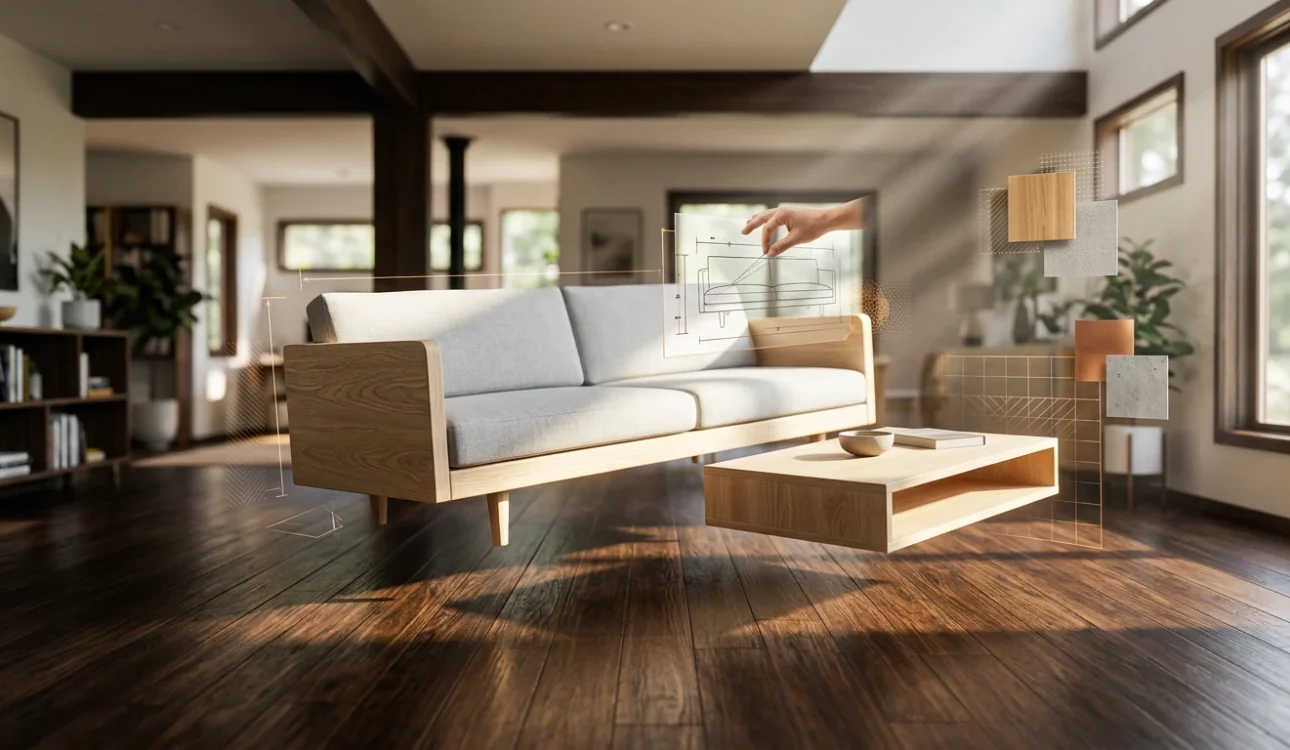
Dark wood floors have become a statement piece in modern home design, but pairing them with light wood furniture can seem like a risky aesthetic choice at first glance. The truth is, when done intentionally, this combination creates stunning visual balance and depth that transforms your entire space. The key lies in understanding color theory, proportion, and how light and dark elements interact within a room.
According to Bentham Plank, dark-colored wood flooring is making a bold statement in home interiors, overtaking the light oak shades that have dominated past years, with rich hues like ink black, deep coffee, and grayish walnut becoming increasingly popular choices in 2025. But achieving a cohesive look requires thoughtful furniture selection and color coordination.
Quick Answer:
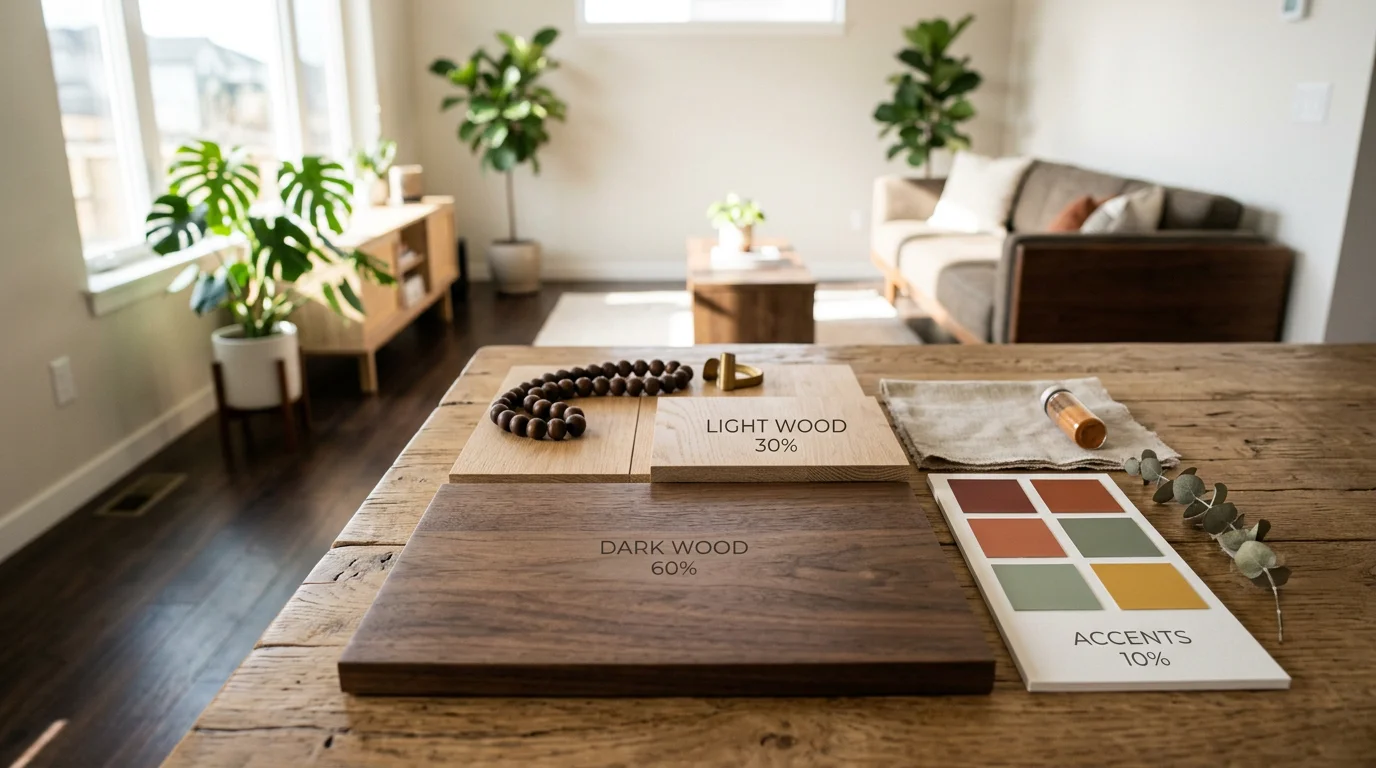
Pair dark wood floors with light wood furniture by creating visual balance through contrast—use light-toned pieces as anchors, introduce mid-tone accent furniture for transition, and control the color palette with strategic use of rugs and wall colors. The 60-30-10 design rule works best: 60% dark (floor), 30% light (furniture), 10% accent colors (accessories). This approach prevents the space from feeling too dark while maximizing the dramatic impact of your flooring choice.
Table of Contents
Why Dark Floors and Light Furniture Work Together
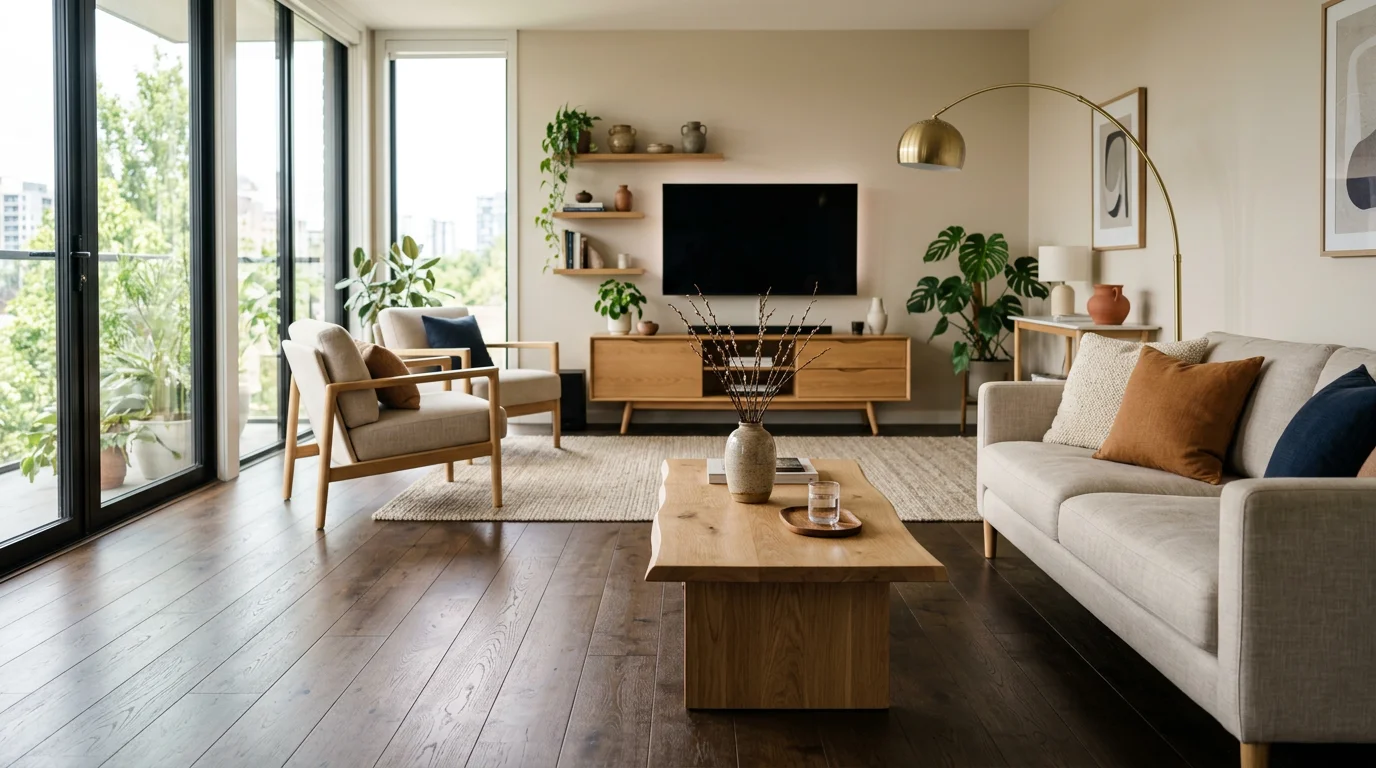
The pairing of dark wood floors with light wood furniture isn't trendy—it's rooted in fundamental design principles that have worked for decades. When you place a light object against a dark background, the light element naturally draws the eye and creates visual interest. Your furniture becomes the focal point, while the flooring grounds the entire space.
This design approach also solves a practical problem many homeowners face. According to Duramagic Floor, interior designers specifically recommend pairing dark wood floors with light-colored furniture because light wood pieces and all products light in color are best used as furniture on dark hardwood floors as they help in equalizing the house and creating visual balance.
From a technical standpoint, light furniture on dark floors creates what designers call "visual equilibrium." The eye naturally balances the weight of the dark floor by focusing on the lighter furniture pieces throughout the room. Without this contrast, a space with dark flooring can feel cave-like or oppressive. The light furniture lifts the entire aesthetic and makes the room feel more open and inviting.
The durability of hardwood itself supports this design choice. According to Floor Covering News, the U.S. flooring industry posted total sales of $23.955 billion in 2024, with hardwood remaining a cornerstone choice among homeowners who value both aesthetics and longevity. When you invest in quality dark hardwood, pairing it with lighter furniture makes that investment shine.
The 60-30-10 Color Rule for Dark Flooring
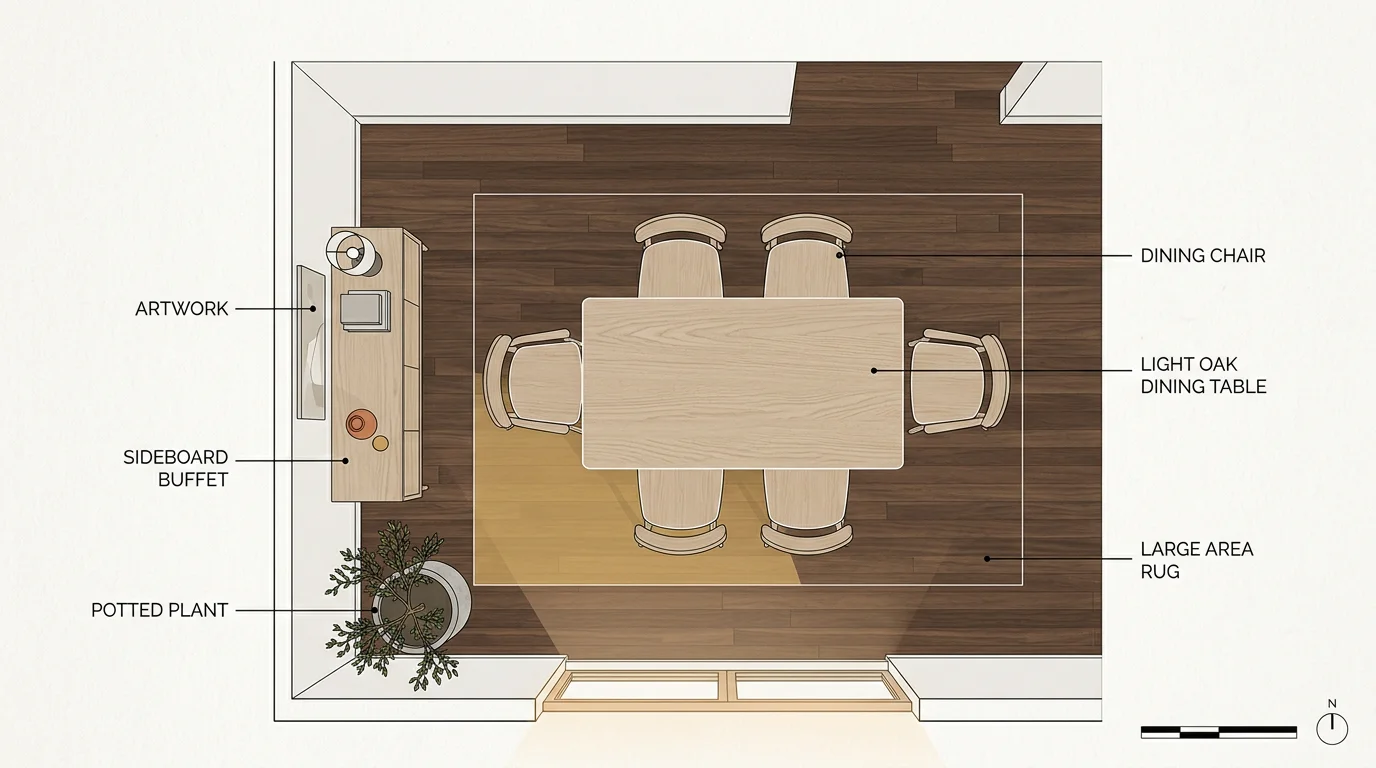
Professional designers use the 60-30-10 rule as their foundational framework for any interior space, and it works beautifully when working with dark floors. Here's how it breaks down in your situation:
The 60% represents your dominant color—in this case, your dark wood flooring. This large percentage grounds the space and sets the overall mood. Your dark floors occupy roughly 60% of the visual weight in most rooms, which is why they're such a powerful design element.
The 30% represents your secondary color—this is where your light wood furniture comes in. Your sofas, dining tables, bedroom sets, and other substantial pieces should occupy this middle ground. Light oak, ash, maple, or whitewashed wood furniture pieces create the transition between the dominant dark floors and accent colors.
The remaining 10% is reserved for accent colors—the details that make a space feel complete. These are your throw pillows, wall art, decorative objects, and lighting fixtures. The 10% rule keeps your room from feeling chaotic while allowing personality to shine through.
To apply this practically: if your bedroom has 100 square feet of dark hardwood flooring, you want roughly 30 square feet of light wood furniture visible. This might be a light wood bed frame, nightstands, and a dresser. The remaining 10 square feet could include a light-colored area rug, wall art, or decorative accessories.
This mathematical approach removes guesswork from design decisions. Rather than randomly placing furniture and hoping it works, you're creating a deliberately balanced composition.
Selecting the Right Light Wood Furniture
Not all light wood is created equal, and the specific shade you choose matters significantly when working with dark flooring. The wood species, finish, and undertones all influence how furniture reads in your space.
Light ash wood offers a cool, contemporary feel with subtle gray undertones. It pairs exceptionally well with dark walnut or espresso floors because the cool tones create visual separation between the two elements. Ash furniture in modern spaces with dark flooring creates that sought-after Scandinavian aesthetic—clean lines, lots of white space, and minimal ornamentation.
Whitewashed or wire-brushed oak provides warmth while maintaining that light, airy quality. The visible wood grain adds texture and visual interest, preventing the space from feeling sterile. This option works particularly well if you want a rustic or farmhouse aesthetic alongside dark modern flooring.
Bleached or limed wood represents another excellent choice. This treatment lightens the wood while preserving grain patterns, creating an almost sculptural quality. It's particularly striking when paired with matte-finish dark floors, as the subtle texture in the light wood becomes a focal point.
When selecting light wood furniture, pay close attention to the undertones. If your dark flooring has warm undertones (coffee, chocolate brown), pair it with warm light woods. If your dark flooring is cooler (greyish walnut, charcoal), choose cool-toned light woods with subtle grey undertones. Matching undertone temperature creates harmony; clashing temperatures create dissonance.
The finish also matters. Matte finishes on light wood furniture create sophistication and visual weight, making the pieces feel more substantial against dark floors. High-gloss finishes bounce light around and can make spaces feel more contemporary, though they show dust more easily. Semi-gloss or satin finishes offer a middle ground.
Consider the scale of your furniture as well. Larger pieces of light wood furniture work better in spacious rooms with dark flooring. In smaller spaces, numerous light wood pieces can feel cluttered. Instead, choose one or two substantial light-colored pieces (a sofa and dining table, for example) and keep other furniture in neutral mid-tones.

Creating Visual Balance and Contrast
Beyond furniture selection, creating visual balance requires strategic thinking about spatial composition. The goal is to distribute light wood furniture throughout the room so the eye travels naturally and nothing feels crowded in one area.
In living rooms, avoid placing all your light furniture against one wall. Instead, arrange pieces to create visual rhythm. For example, position a light wood sofa on one side of the room, a light wood bookshelf on an adjacent wall, and light-toned side tables throughout the space. This distribution prevents the room from looking lopsided.
Height variation matters tremendously. Mixing furniture of different heights—tall bookcases, medium-height sofas, low coffee tables—creates visual interest and prevents the space from feeling monotonous. Dark floors provide a strong visual anchor, so varying furniture heights draws the eye upward and creates movement.
Layering textures alongside color contrast amplifies the effect. A smooth, polished light wood dining table creates different visual impact than a rough, reclaimed light wood console. Combining different textures in light woods prevents the space from feeling flat or one-dimensional.
According to VANTIA Hardwoods, over 50% of US homeowners say they have wood floors at home, cementing hardwood's position as the 3rd-most popular flooring option in the United States after carpeting and tiles. This widespread adoption means countless design solutions exist to inspire your own space.
Negative space is equally important. Don't feel compelled to fill every corner with furniture. Empty floor space showcases your beautiful dark hardwood and prevents the room from feeling cramped. Light furniture should punctuate the dark floor, not overwhelm it.
Wall Colors and Finishes That Complement Dark Floors
Your wall color either enhances or detracts from the dark floor and light furniture combination. The right wall treatment amplifies the intended contrast; the wrong choice muddies the effect.
Neutral tones like natural oak, muted grays, and beige-based whites are leading the way in 2025 flooring trends, according to Functional Floors, offering longevity and design flexibility for homeowners looking to future-proof their aesthetic. These wall colors work because they don't compete with either your dark floor or light furniture.
Soft grey walls create a sophisticated backdrop that lets dark floors and light furniture become the stars. Grey bridges warm and cool tones, making it a universally compatible choice. The key is avoiding greige (grey-beige), which can sometimes look muddy or dated.
White and off-white walls amplify brightness and create maximum contrast with dark flooring. This combination works beautifully in modern spaces and makes light wood furniture pop even more dramatically. However, pure white can feel sterile in some aesthetic contexts, so consider warm whites, cream, or ivory instead.
Warm beige or tan walls create coziness without competing with dark flooring. This approach works particularly well if your furniture pieces have warm undertones. The walls essentially disappear, allowing the flooring and furniture to define the space.
Avoid dark wall colors when pairing dark floors with light furniture. A dark floor + dark walls + light furniture can feel unbalanced, with the light pieces looking scattered against too much darkness. If you love bold wall colors, use them as accent walls only—perhaps behind a bed or above a sofa—rather than throughout the entire room.
Paint finish matters as much as color. Matte finishes create a sophisticated, contemporary feel and minimize glare on dark floors. Eggshell finishes offer slight sheen for easy cleaning without the shine of satin or semi-gloss. High-gloss finishes can feel dated and overly reflective in spaces with dark flooring.
Consider sheen strategically: if you want drama and visual impact, matte walls paired with shiny light wood furniture create stunning contrast. If you prefer subtlety, match finishes across walls and furniture for a more cohesive, understated aesthetic.
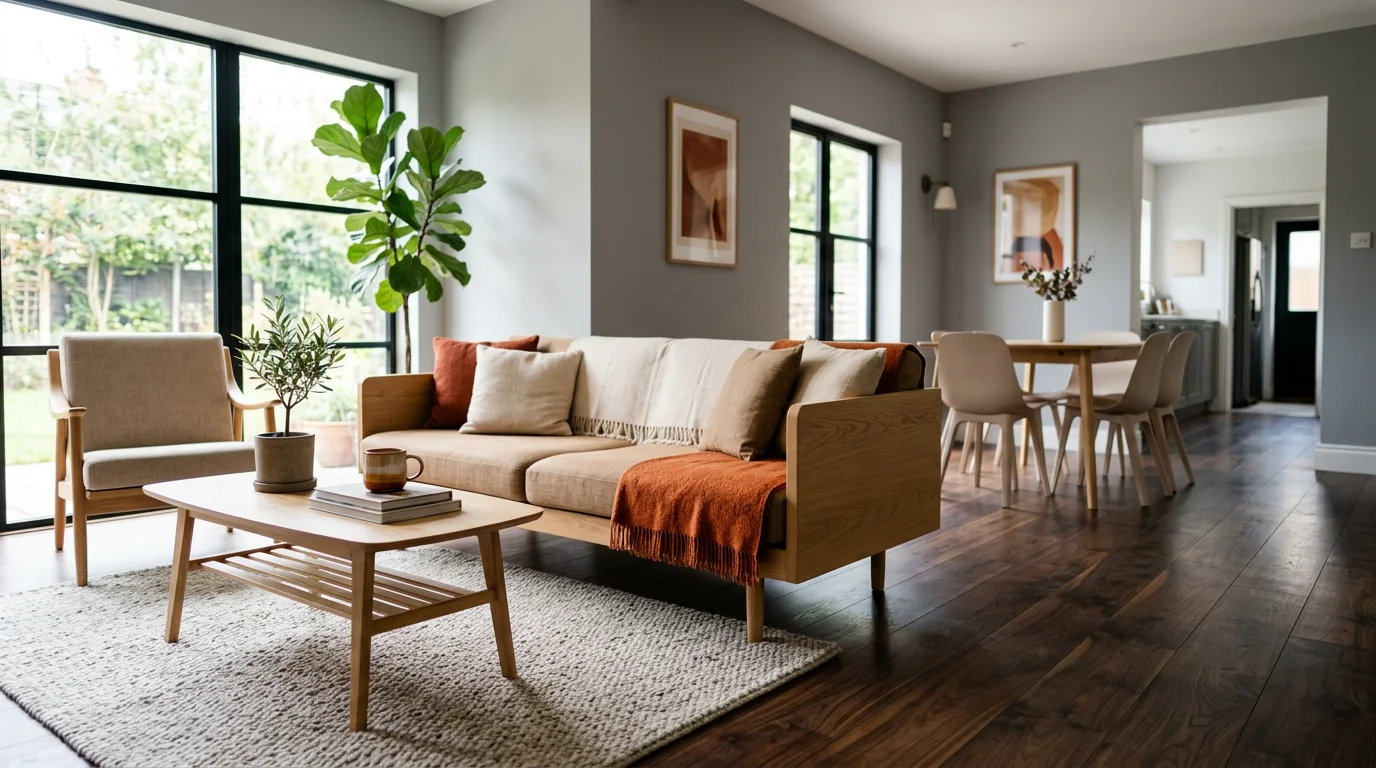
Incorporating Rugs and Textiles
Rugs serve multiple functions when you're working with dark floors and light furniture. They soften the visual impact of large dark floor expanses, add warmth, define spaces, and introduce your accent colors.
Size matters significantly. A rug that's too small (under 5×7 feet in most living rooms) looks like it's floating on dark flooring and creates visual disconnection. A larger rug that anchors furniture groupings creates cohesion. Ideally, a living room rug should extend at least 18 inches beyond your sofa on all sides.
Color choice for your rug depends on your overall vision. Light neutral rugs (cream, ivory, soft grey) amplify brightness and add to your 30% secondary color category. Medium-toned rugs (tan, warm grey) create visual transition between dark and light. Bold accent-colored rugs introduce your 10% accent color palette while breaking up dark floor monotony.
Pattern options range from subtle to dramatic. Geometric patterns create contemporary energy, while traditional patterns add formality. Avoid highly contrasting patterns (like black and white stripes on dark flooring)—they can overwhelm the space. Instead, choose patterns where the lightest color is closer to cream or taupe rather than pure white.
Texture in textiles prevents spaces from feeling flat. Chunky jute rugs, soft wool area rugs, or layered rug combinations add dimension. The tactile quality of textiles also adds warmth to spaces where dark flooring might otherwise feel cold or hard.
Curtains and upholstered furniture represent another opportunity to reinforce your color scheme. Light linen curtains, cream upholstered sofas, and light-colored throw pillows all support the light-against-dark aesthetic. Layer textiles—mix smooth upholstery with chunky knit throws, glossy accent pillows with matte fabric ones—to create visual and tactile interest.
Don't forget layering. A single thick rug works, but layering a smaller patterned rug over a larger neutral one creates designer-level sophistication and defines spaces within open floor plans more effectively.
Common Mistakes When Pairing Dark and Light
Understanding what doesn't work helps you avoid costly design missteps. These are the patterns that professional designers consistently steer clients away from.
The Monochrome Trap: Using only light wood furniture throughout creates visual monotony. Yes, the light pieces contrast with dark floors, but without mid-tone transitions or accent colors, the space feels disjointed. Include some mid-tone furniture pieces or accent furniture in warm greys or taupes to create visual flow.
Insufficient Light: Dark flooring requires adequate lighting to avoid feeling gloomy. Light wood furniture alone can't compensate for poor illumination. Ensure your space includes layered lighting—overhead fixtures, task lighting, and accent lighting—to showcase both your beautiful floors and furniture.
Mismatched Undertones: Pairing warm coffee-brown floors with cool-toned ash furniture creates tension that feels unintentional. Always verify your dark flooring's undertone and match it with light wood furniture possessing compatible undertones. This is non-negotiable for spaces that feel intentional rather than accidental.
Overcrowding: Filling a dark room with numerous light furniture pieces hoping to brighten it typically backfires. Too many light elements against dark floors creates visual chaos. Restraint and strategic placement create sophistication; quantity creates clutter.
Ignoring Proportions: Placing delicate, small-scale light furniture in a large room with dark flooring makes both the furniture and room feel awkward. In spacious rooms, choose substantial light wood pieces with presence. In smaller rooms, scale furniture down accordingly.
Dirty Dark Flooring: The impact of light furniture on dark floors becomes muddy when dark flooring is dusty, streaky, or dull. Dark floors require consistent maintenance and regular cleaning. Establish a cleaning routine that keeps your dark hardwood gleaming—this makes the entire design strategy work better.
Wrong Paint Sheen: Painting dark-floored rooms in high-gloss finish creates excessive glare and makes the space feel industrial rather than residential. Stick with matte or eggshell finishes unless you specifically want contemporary drama.
Real-World Example: Transforming a Space
Let me walk you through how these principles come together in an actual room transformation. A client approached us at WAREMODEL with a 400-square-foot living room featuring newly installed dark walnut hardwood flooring. The original plan involved light-colored everything—walls, furniture, accessories—hoping to brighten the space.
After consultation, we implemented the 60-30-10 rule strategically. The dark walnut floor (60%) already dominated. We selected a substantial light ash wood sofa with warm undertones (part of the 30%) as the focal point. Rather than filling the remaining space with more light furniture, we added a mid-tone warm grey armchair and a natural wood bookcase (mixing in some transition tones).
For the 30% light category, we also incorporated a light oak dining table visible from the living room and light-finished side tables. Together, these pieces occupied roughly 30% of the visual space without overwhelming the room.
Wall color selection made all the difference. Rather than stark white, we chose a warm ivory with eggshell finish. This created subtle contrast with dark flooring while providing a neutral backdrop that didn't compete with our carefully selected furniture.
A 8×10 cream and grey patterned area rug defined the seating area and broke up the dark floor expanses. We layered a smaller cream tribal pattern rug beneath the dining table for additional definition.
The result? A room that felt intentional, balanced, and sophisticated rather than chaotic or cave-like. The light furniture became sculptural against dark flooring, and the space felt simultaneously dramatic and comfortable.
This is exactly the type of transformation that WAREMODEL specializes in. Whether you're installing new dark hardwood floors or working with existing dark flooring, our design consultation service helps you envision and execute comprehensive interior updates that maximize your investment. We handle everything from flooring installation to full-room interior renovation, ensuring your dark floors and light furniture work in perfect harmony.
FAQ
Q: Can I mix different shades of light wood furniture with dark floors?
A: Yes, mixing light wood shades (like combining ash with whitewashed oak) works beautifully as long as undertones are compatible. The variation creates visual interest without clashing. Avoid mixing warm and cool-toned light woods, as that creates confusion.
Q: What's the best light wood for dark ebony or charcoal floors?
A: Ash wood or cool-toned whitewashed woods pair exceptionally well with very dark, cool-toned flooring. The slight grey undertones in ash wood echo the cool tones in your flooring without matching it directly.
Q: Should all my furniture be light wood if I have dark floors?
A: No. Aim for approximately 30% light-toned furniture, with other pieces in neutral mid-tones (warm greys, taupes, naturals). This creates sophistication and prevents the space from feeling one-note.
Q: How do I prevent dark flooring from making my room feel gloomy?
A: Combine dark flooring with light furniture, light-colored walls, excellent lighting, and strategic use of lighter textiles. Each element contributes to balancing the darkness.
Q: What color curtains work best with dark floors and light furniture?
A: Light or neutral curtains (cream, soft grey, ivory) work best. If you want drama, consider a single accent wall with deeper curtains while keeping most window treatments light.
Q: Can I use leather light-colored furniture with dark hardwood floors?
A: Absolutely. Light-coloured leather (cream, tan, light grey) creates a luxurious aesthetic against dark flooring and is practical for maintenance in high-traffic areas.
Q: How often should I clean dark hardwood floors to maintain this design?
A: Clean with a slightly damp microfiber mop weekly and use wood-specific cleaner bi-weekly. Dust shows more readily on dark floors, so regular cleaning keeps your design looking intentional rather than neglected.
Q: Does this design work in kitchens with dark flooring?
A: Yes. Light wood cabinetry or light wood furniture pieces (kitchen islands, dining tables) create beautiful contrast with dark kitchen flooring. This combination is increasingly popular in contemporary kitchen design.
Conclusion
Pairing dark wood floors with light wood furniture isn't a risky design choice—it's a time-tested aesthetic strategy that creates visual sophistication and intentionality. By understanding the 60-30-10 color rule, selecting compatible light wood furniture, and coordinating your wall colors and textiles, you create a space that feels balanced rather than chaotic.
The investment you make in quality dark hardwood flooring deserves furniture and design choices that showcase it. Light wood furniture does exactly that, creating focal points and visual flow while the dark flooring grounds the entire aesthetic. Whether you're starting from scratch with new dark flooring or redesigning around existing dark hardwood, these principles guide you toward a cohesive, sophisticated space.
Ready to transform your space with dark flooring and intentional light furniture pairings? WAREMODEL specializes in complete home remodeling, including professional hardwood flooring installation and interior design consultation services. Our team in Kent, Washington serves homeowners throughout King County and Pierce County, helping them achieve beautiful, functional living spaces that reflect their vision. Contact us for a free in-home consultation to discuss your dark flooring project and discover how expert design planning creates spaces that work for your lifestyle and aesthetic preferences.