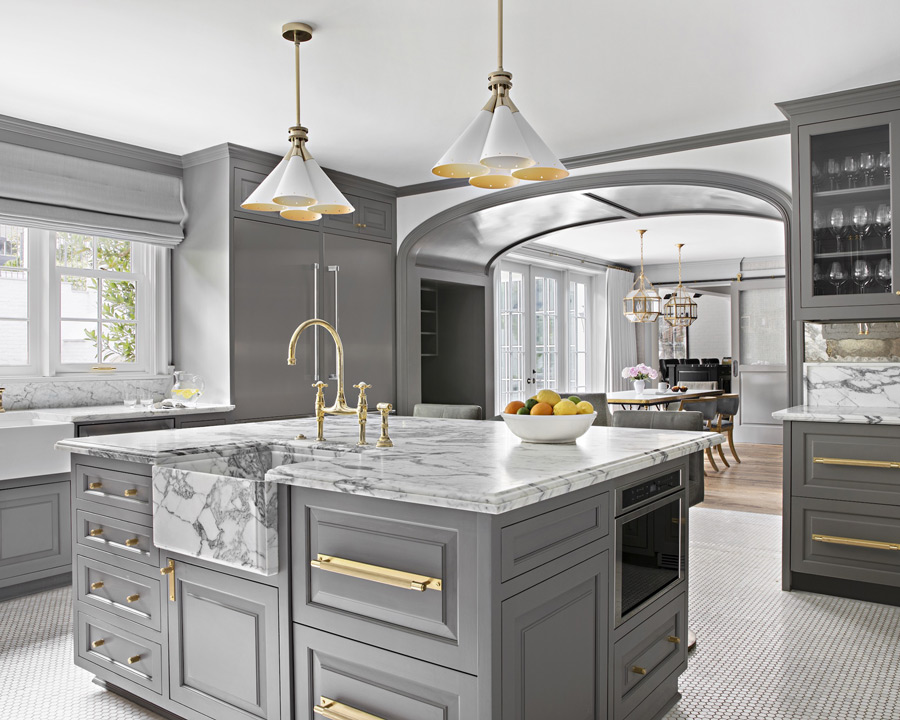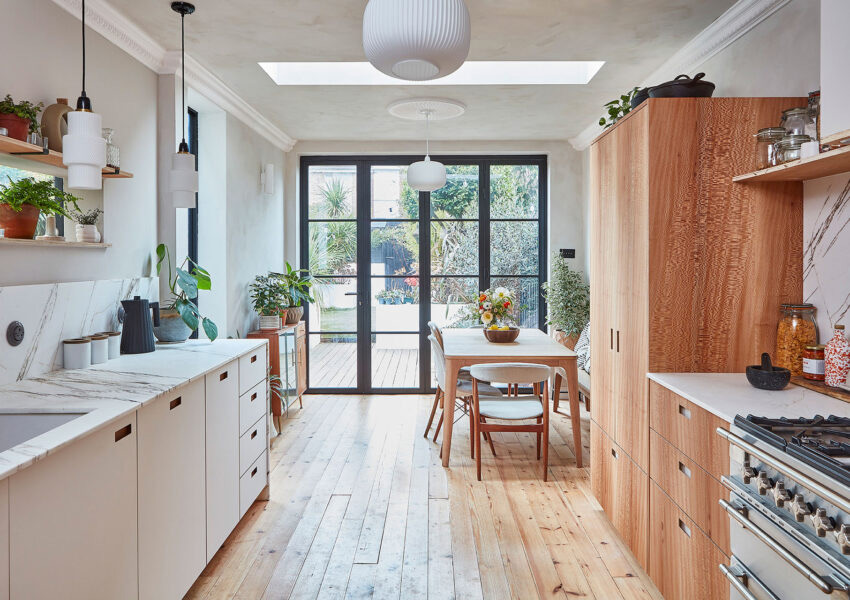

Floating floorboards have become a cornerstone of modern home remodeling, offering homeowners a practical alternative to traditional installation methods. Unlike nailed-down floors, floating systems sit atop a base layer without direct fastening, creating flexibility that adapts to seasonal humidity shifts and temperature changes. This innovation appeals to anyone seeking easier installation, reduced labor costs, and the ability to refresh their space without extensive disruption. For those planning a remodel, understanding the true cost of floating floorboards—from materials to installation—is essential for accurate budgeting and informed decision-making.
Quick Answer: Floating floorboard costs typically range from $3 to $12 per square foot installed, depending on material quality, room size, and regional labor rates. Laminate and vinyl options sit at the lower end, while engineered hardwood and premium materials command higher prices. Factors like subfloor preparation, removal of existing flooring, and complexity of the layout significantly influence your final investment.
This guide breaks down every cost component you'll encounter, from material selection through installation, helping you understand where your remodeling budget goes. We'll explore how different materials impact pricing, what hidden expenses to anticipate, and how professional installation compares to DIY approaches. Whether you're updating a single room or your entire home, knowing these cost drivers empowers you to make choices that align with both your vision and your wallet.
Table of Contents
- Floating Floorboard Price Range: What to Expect in 2024-2025
- Key Factors That Impact Floating Floorboard Pricing
- Floating Floorboards vs. Traditional Installation: Which Offers Better Value?
- Cost-Saving Strategies for Your Floating Floorboard Project
- Getting Accurate Floating Floorboard Quotes: What to Ask Your Contractor
- Quick Checklist: Essential Questions Before Accepting Any Quote
- Complete Contractor Quote Checklist
- Priority Levels: What Matters Most
- Red Flags: What to Watch For
- How to Compare Bids Fairly
- Making Your Floating Floorboard Investment: Final Pricing Considerations
Floating Floorboard Price Range: What to Expect in 2024-2025
Floating floorboard costs in 2024-2025 vary significantly based on material selection, quality tier, and regional labor rates. Understanding this pricing landscape helps you allocate your remodeling budget accurately and avoid sticker shock during the installation phase.
| Material Type | Material Cost/sq ft | Labor Cost/sq ft | Total Installed Cost/sq ft |
|---|---|---|---|
| Laminate (Budget) | $1.00–$2.00 | $1.50–$2.50 | $2.50–$4.50 |
| Laminate (Mid-Range) | $2.00–$3.00 | $2.00–$3.00 | $4.00–$6.00 |
| Vinyl Plank (Budget) | $1.50–$2.50 | $1.50–$2.50 | $3.00–$5.00 |
| Vinyl Plank (Mid-Range) | $2.50–$4.00 | $2.00–$3.50 | $4.50–$7.50 |
| Vinyl Plank (Premium) | $4.00–$6.00 | $2.50–$4.00 | $6.50–$10.00 |
| Engineered Hardwood (Mid-Range) | $5.00–$8.00 | $3.00–$4.00 | $8.00–$12.00 |
| Engineered Hardwood (High-End) | $8.00–$14.00 | $3.50–$5.00 | $11.50–$19.00 |
Material quality drives the largest cost variation. Budget laminate flooring offers affordability but less durability, while premium vinyl plank pricing reflects enhanced wear resistance and realistic wood aesthetics. According to research on LVP installation costs, budget installations run $4–$6 per square foot, mid-range options cost $6–$8, and high-end installations reach $8–$11 or higher.
Labor costs fluctuate dramatically by region. Northeast and West Coast installers typically charge $3.50–$4.50 per square foot, while Midwest and Southern markets range from $2.00–$3.50 for identical work. This 45% regional variance reflects local demand, cost of living, and installer expertise levels.
Hidden expenses amplify your total investment. Subfloor preparation—leveling, moisture barriers, or removing existing flooring—adds $1–$3 per square foot. Complex room layouts with numerous cuts, transitions, or obstacles increase labor time and cost. Disposal of old flooring typically runs $0.50–$1.50 per square foot. When planning your budget, factor these secondary costs into your total estimate to avoid surprises.
Material durability justifies price differences. Laminate suits kitchens with moderate traffic, while luxury vinyl plank withstands moisture and heavy use in bathrooms and entryways. Engineered hardwood provides authentic wood warmth with superior stability compared to solid hardwood, making it ideal for basements or areas with humidity fluctuations. At WAREMODEL, we help homeowners select materials that balance aesthetic vision with long-term value, ensuring your flooring investment aligns with your lifestyle and remodeling goals.
Key Factors That Impact Floating Floorboard Pricing
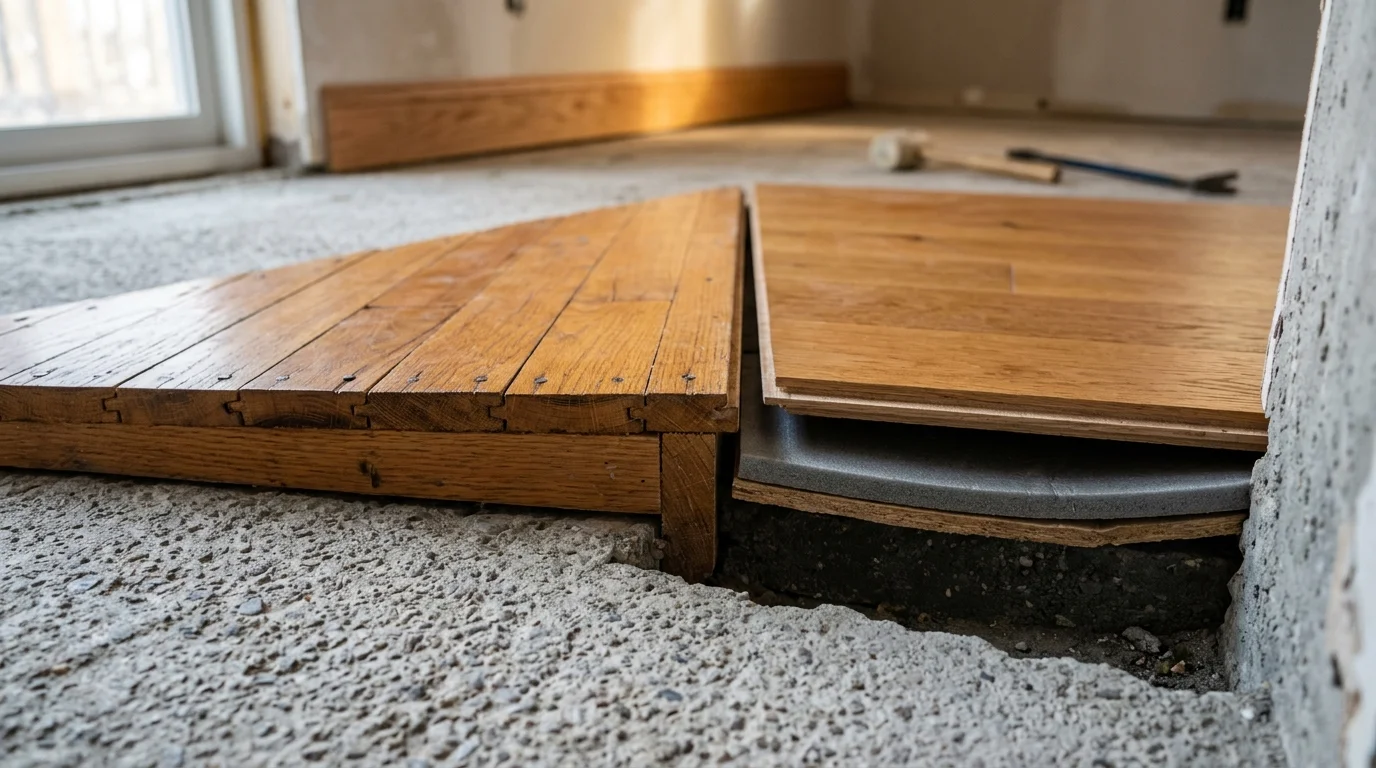
Understanding why floating floorboard quotes vary dramatically requires examining the specific variables that drive installation cost factors. Material quality stands at the forefront—laminate, vinyl plank, and engineered hardwood each occupy different price tiers, with engineered hardwood commanding premium rates due to its authentic wood appearance and superior dimensional stability. Your choice here directly shapes your total investment, making flooring material selection one of the earliest and most consequential decisions in your remodel.
Room dimensions and layout complexity significantly influence labor expenses. A straightforward rectangular kitchen differs vastly from a multi-room installation with doorways, closets, and irregular angles. Each transition, cut, and obstacle extends installation time, pushing costs upward. Installers account for this complexity when quoting—a 500-square-foot open space costs considerably less per square foot than 500 square feet spread across five smaller rooms.
Subfloor condition determines whether your project moves forward smoothly or encounters costly delays. According to This Old House, subfloor preparation and repair costs range from $1.50 to $7.00 per square foot, with self-leveling underlayment adding $1.00 to $3.00 per square foot for uneven surfaces. Moisture issues, structural damage, or extensive leveling requirements escalate expenses rapidly.
Underlayment selection adds another layer to your budget. Standard underlayment runs $0.30 to $1.25 per square foot, while premium acoustic underlayment required in condos or HOAs reaches $1.00 to $3.00+ per square foot. This protective layer prevents moisture damage and sound transmission—essential in multi-unit dwellings but optional in single-family homes.
Geographic location and local installer availability create the 45% regional variance mentioned earlier. Labor rates, material availability, and market demand all fluctuate by region. At WAREMODEL, we help homeowners navigate these variables by connecting them with qualified local installers who understand regional pricing structures, ensuring transparent quotes that reflect actual market conditions rather than inflated estimates.
Floating Floorboards vs. Traditional Installation: Which Offers Better Value?
The choice between floating and traditional installation methods fundamentally shapes your flooring budget and long-term satisfaction. While floating floors often command higher material costs per square foot, the installation economics tell a different story. According to Floor Advisor VA, floating installations complete in 1–2 days per average room, whereas glue-down methods require extended curing time that stretches labor costs and project timelines. This speed advantage translates directly to reduced labor expenses and faster occupancy.
Glue-down and nailed installations demand more intensive labor. Adhesive application requires precision, surface preparation is more demanding, and curing periods extend your project duration—often adding 20–30% to total labor costs. Nailed hardwood flooring demands skilled installation to avoid visible fasteners and structural issues, further elevating professional fees. Floating floors sidestep these complications through mechanical interlocking systems that require less specialized expertise, making them accessible for experienced DIY installers and reducing dependency on premium labor rates.
Durability considerations shift the value equation. Floating floors accommodate natural wood movement through expansion gaps, reducing cupping and buckling in humid climates—a critical advantage in regions with seasonal moisture fluctuations. Traditional glue-down installations bond flooring permanently, which can trap moisture and create costly damage if subfloor issues emerge. Replacement becomes destructive and expensive. Floating floors, conversely, allow non-destructive removal and reinstallation, protecting your investment if future repairs become necessary.
Maintenance costs favor floating installations. The absence of adhesive residue and easier access to underlayment simplifies repairs and replacements of individual planks. Traditional installations often require full-section removal to address localized damage, multiplying repair expenses significantly.
| Factor | Floating Floors | Glue-Down Installation | Nailed Hardwood |
|---|---|---|---|
| Material Cost | $2–$8/sq ft | $1.50–$6/sq ft | $3–$12/sq ft |
| Installation Time | 1–2 days | 3–5 days | 2–4 days |
| Labor Cost | $3–$8/sq ft | $5–$12/sq ft | $8–$15/sq ft |
| Lifespan | 20–30 years | 15–25 years | 25–40 years |
| Maintenance | Low | Moderate | High |
| Repair Cost | $200–$500 per plank | $1,500–$5,000+ per section | $2,000–$8,000+ |
At WAREMODEL, we help homeowners evaluate these trade-offs by connecting you with local installers who provide transparent comparisons. Floating floors deliver superior value for most remodels—lower total installation costs, faster completion, and reduced long-term maintenance expenses. However, if permanence and maximum lifespan matter most, traditional hardwood justifies its premium investment. Your choice depends on budget constraints, climate conditions, and how long you plan to occupy the home.
Cost-Saving Strategies for Your Floating Floorboard Project
Reducing floating floorboard expenses doesn't require compromising quality—it demands strategic planning and informed decision-making. The following actionable approaches help homeowners capture meaningful savings while maintaining durability and aesthetic appeal.
Quick Checklist: Top Cost-Saving Tactics
- Select budget flooring options strategically — Laminate and vinyl planks deliver 40–60% savings versus engineered hardwood
- Remove old flooring yourself — Save $1–$3.50 per square foot on demolition labor
- Prepare the subfloor independently — Leveling and cleaning reduce contractor prep time
- Purchase materials during seasonal sales — Q4 and early Q1 typically offer 15–25% discounts
- Negotiate labor rates — Request quotes from 3–5 installers and leverage competitive bids
- Rent tools rather than buy — DIY installation saves 40–60% on labor if you're comfortable with the work
Material Selection Strategy
Choosing the right material tier delivers the largest savings opportunity. Laminate floating floors cost $2–$4 per square foot installed, compared to $8–$12 for engineered hardwood. Luxury vinyl planks (LVP) occupy the middle ground at $3–$6 per square foot, offering water resistance and authentic wood aesthetics at a fraction of hardwood pricing. For a 500-square-foot room, material selection alone can mean $2,000–$3,000 in differences.
Labor and Timing Optimization
According to research on flooring installation costs, DIY installation can save 40–60% on labor costs, though you'll need to budget $50–$150 daily for tool rentals and account for 10–15% additional material waste. Alternatively, scheduling installation during contractor off-seasons (late fall, winter) often yields 10–20% labor discounts. Removing old flooring yourself saves $1–$3.50 per square foot compared to professional demolition services.
Bulk Purchasing and Contractor Negotiation
Buying materials directly from distributors rather than retail outlets typically reduces costs by 15–20%. When requesting contractor quotes, provide detailed measurements and material specifications upfront—this eliminates estimation uncertainty and allows installers to offer competitive pricing. At WAREMODEL, we connect homeowners with vetted local installers who provide transparent comparisons, ensuring you receive fair pricing without sacrificing installation quality.
Getting Accurate Floating Floorboard Quotes: What to Ask Your Contractor
Quick Checklist: Essential Questions Before Accepting Any Quote
- Materials breakdown — Confirm exact product names, grades, and square footage pricing
- Labor costs itemized — Separate installation, underlayment, and old flooring removal
- Preparation work included — Subfloor inspection, leveling, moisture barriers, and disposal
- Warranty coverage — Material and labor guarantees, what's excluded, duration
- Timeline and payment schedule — Start date, completion estimate, deposit and final payment terms
- References and licensing — Contractor credentials, insurance, and recent project examples
- Hidden cost clarifications — Trim work, transitions, furniture moving, and unexpected repairs
Complete Contractor Quote Checklist
Materials & Specifications
- Product selection details — Brand, thickness, finish type, and quality grade (e.g., engineered hardwood vs. laminate vs. vinyl)
- Per-square-foot pricing — Confirm unit cost and total material cost for your exact space
- Underlayment type and cost — Moisture barrier, acoustic padding, or vapor-retarding membrane (critical for floating installations)
- Trim and transitions — Quarter-round, T-molding, or reducer strips for doorways and room edges
- Waste factor — Confirm 10% material overage is included for cuts and fitting
Labor & Installation
- Installation labor rate — Per-square-foot or flat-fee pricing; clarify what's included
- Subfloor preparation — Inspection, leveling compounds, moisture testing, and repairs
- Old flooring removal — Whether demolition and disposal are separate line items or bundled
- Furniture moving — Confirm if contractor moves items or you must clear the space
- Installation timeline — Expected start date, daily schedule, and completion deadline
- Cleanup and final inspection — Dust containment, debris removal, and walk-through verification
Warranty & Protection
- Material warranty duration — Manufacturer coverage (typically 5–25 years depending on product)
- Labor warranty period — Contractor's guarantee against installation defects (usually 1–2 years)
- Exclusions in writing — What voids warranty (water damage, improper maintenance, structural movement)
- Moisture guarantee — Confirmation that underlayment and vapor barriers protect against subfloor moisture
Payment & Contract Terms
- Total project cost breakdown — Materials, labor, taxes, and any additional fees itemized
- Payment schedule — Deposit amount (typically 25–50%), milestone payments, and final balance due date
- Change order process — How unexpected repairs or upgrades are documented and priced
- Cancellation policy — Refund terms if you need to postpone or cancel
Priority Levels: What Matters Most
Critical (Non-Negotiable)
- Itemized labor and material costs — Prevents surprise invoices and allows fair comparison between contractors
- Subfloor inspection and moisture testing — Floating floors fail without proper preparation; this protects your investment
- Written warranty with exclusions — Protects you if defects emerge after installation
- Contractor licensing and insurance — Ensures liability coverage if damage occurs during work
Important (Strongly Recommended)
- Detailed timeline with completion date — Keeps project on schedule and clarifies contractor availability
- References from recent projects — Verify quality and professionalism before signing
- Underlayment specifications — Different products suit different subfloor conditions; confirm the right choice for your home
- Old flooring removal pricing — Can range $1–$3.50 per square foot; clarifying upfront prevents disputes
Nice-to-Have (Adds Convenience)
- Furniture moving service — Saves you time but often adds $200–$500 to the quote
- Extended warranty options — Useful if you want coverage beyond standard terms
- Flexible payment schedules — Helpful for larger projects but shouldn't override cost transparency
Red Flags: What to Watch For
Vague or Incomplete Quotes
If a contractor provides only a total price without breaking down materials, labor, and preparation, request itemization immediately. Vague quotes hide cost inflation and make it impossible to compare fairly against other bids. Reputable installers provide detailed estimates that show exactly where your money goes.
Unusually Low Pricing
Quotes significantly below market rates (typically $3–$8 per square foot installed for mid-range floating floors) often signal corner-cutting—skipped moisture barriers, rushed installation, or low-quality materials. Labor typically accounts for 30–50% of total flooring installation costs, while materials comprise 50–70%; if a quote seems too cheap, ask specifically what's being omitted.
No Warranty or Vague Guarantees
Contractors unwilling to provide written warranty terms or who dismiss warranty questions lack accountability. Legitimate professionals stand behind their work with documented coverage.
Pressure to Decide Immediately
Reputable contractors understand you're comparing quotes. Anyone pressuring you to sign same-day or threatening price increases is using high-pressure sales tactics rather than earning your trust.
How to Compare Bids Fairly
Request quotes from at least three contractors using identical specifications: same flooring product, underlayment type, subfloor preparation scope, and timeline. When bids arrive, align them side-by-side and confirm each includes the same scope of work. A quote $1,000 lower might exclude old flooring removal or moisture barriers—clarify these differences before deciding.
At WAREMODEL, we help homeowners connect with vetted local installers who provide transparent, comparable quotes. Our network of trusted contractors ensures you receive fair pricing without sacrificing installation quality, and we guide you through evaluating bids so you understand exactly what you're paying for.
Document all agreements in writing—including materials, labor costs, timeline, warranty terms, and payment schedule—before work begins. This protects both you and the contractor by eliminating misunderstandings and ensuring accountability throughout the project.
Making Your Floating Floorboard Investment: Final Pricing Considerations
Floating floorboards represent a significant investment in your home's functionality and aesthetics, but the decision shouldn't rest solely on the lowest bid. Throughout this guide, you've learned that material quality, labor expertise, regional factors, and project scope create legitimate price variation—not all differences signal poor value. A contractor quoting $2,000 more than another may be including superior underlayment, extended warranties, or proven expertise that protects your investment for decades.
The key to confident purchasing lies in systematic evaluation. Gather quotes using identical specifications, document everything in writing, and verify that each bid includes the same scope of work. When you compare apples to apples, pricing differences become transparent, and you can confidently select the contractor who offers the best combination of quality, timeline, and cost for your specific needs.
At WAREMODEL, we understand that floating floorboards create more usable space in your home—eliminating the visual bulk of traditional transitions while providing flexibility for future design changes. This innovative approach aligns with modern remodeling that maximizes both function and aesthetics. When you're ready to move forward, use the evaluation framework from this guide to ensure you're investing wisely.
Your floating floorboard project deserves careful planning, but not endless deliberation. Armed with the pricing insights, cost-saving strategies, and comparison methods outlined here, you're equipped to make a decision that delivers genuine value—not just the lowest price, but the right installation at the right cost for your home's unique needs.