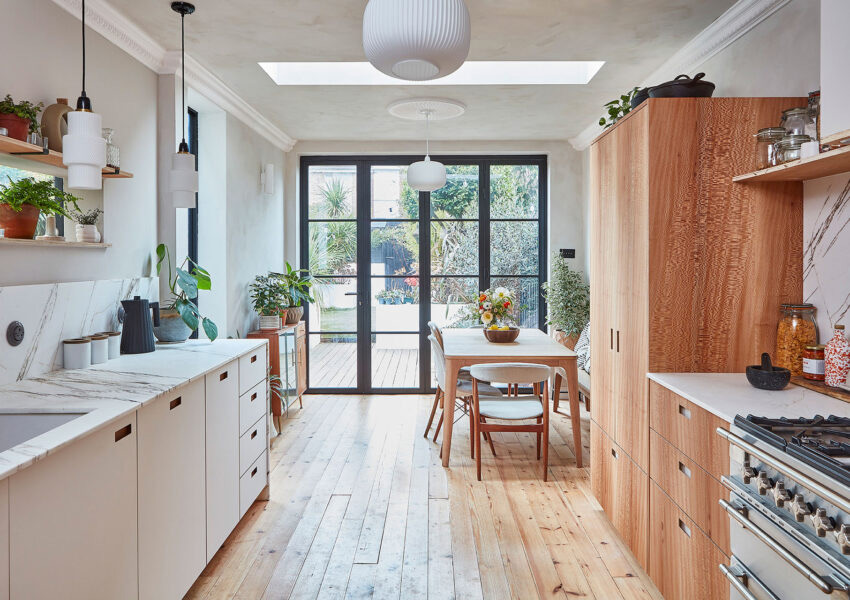
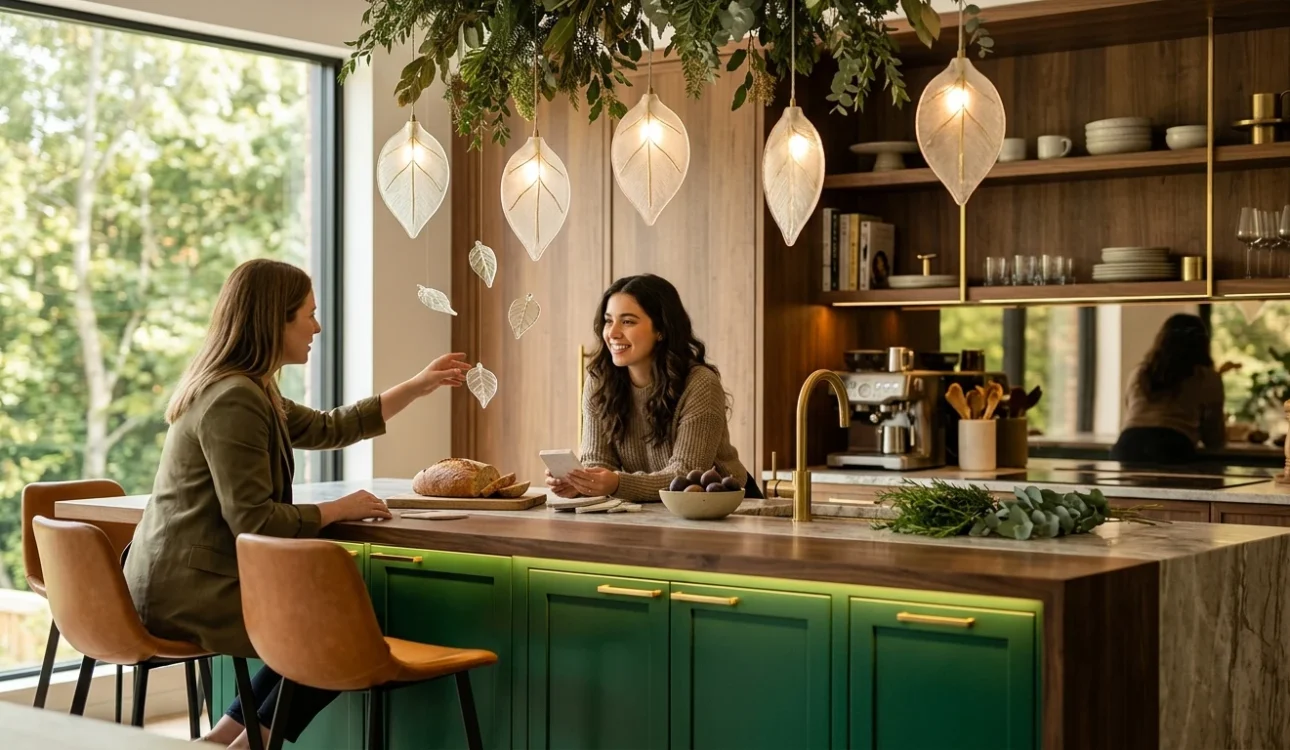
Deep green cabinets have emerged as the defining color choice for contemporary kitchen remodels, offering a sophisticated alternative to the ubiquitous whites and grays that dominated design trends for the past decade. This rich, jewel-tone hue bridges the gap between classic elegance and modern minimalism, creating spaces that feel both timeless and thoroughly current. Homeowners and designers increasingly recognize that the right cabinet color can fundamentally transform not just the visual character of a kitchen, but also its perceived functionality and spaciousness.
Quick Answer: Deep green cabinets are rich, saturated cabinet finishes ranging from forest to emerald tones that add depth and personality to modern kitchens. They're popular because they pair beautifully with natural materials, complement various countertop styles, and create a premium aesthetic that feels neither trendy nor dated. This article covers design pairing options, implementation strategies, and how thoughtful color selection maximizes visual space in your remodel.
The appeal of deep green kitchen cabinet colors extends beyond pure aesthetics. When paired strategically with complementary materials—natural wood accents, brass hardware, or light countertops—these cabinets create visual contrast that actually enhances perception of space rather than diminishing it. Whether you're working with a compact galley kitchen or an expansive open-concept layout, understanding how to implement deep green successfully requires knowledge of color theory, material compatibility, and spatial design principles. This guide explores the style options available, demonstrates effective design pairings with flooring and countertops, provides practical installation and maintenance guidance, and shows how WAREMODEL's innovative remodeling approach helps you maximize every square inch while achieving the sophisticated look you envision.
Table of Contents
- Popular Shades of Deep Green for Kitchen Cabinets
- Pairing Deep Green Cabinets with Countertops, Hardware, and Finishes
- Countertop Materials and Color Pairings
- Cabinet Hardware: The Jewelry of Your Kitchen
- Finish Selection: Matte vs. Satin
- Design Styles That Shine with Deep Green Cabinetry
- Lighting and Space Optimization with Deep Green Cabinets
- Planning Your Deep Green Cabinet Remodel: From Selection to Installation
- Creating Your Dream Kitchen with Deep Green Cabinetry
Popular Shades of Deep Green for Kitchen Cabinets
The spectrum of deep green cabinet shades available today offers remarkable versatility, each creating distinctly different moods and design narratives. Understanding these variations—and how natural and artificial lighting transforms their appearance—is essential for selecting the shade that aligns with your kitchen's architecture and your personal aesthetic.
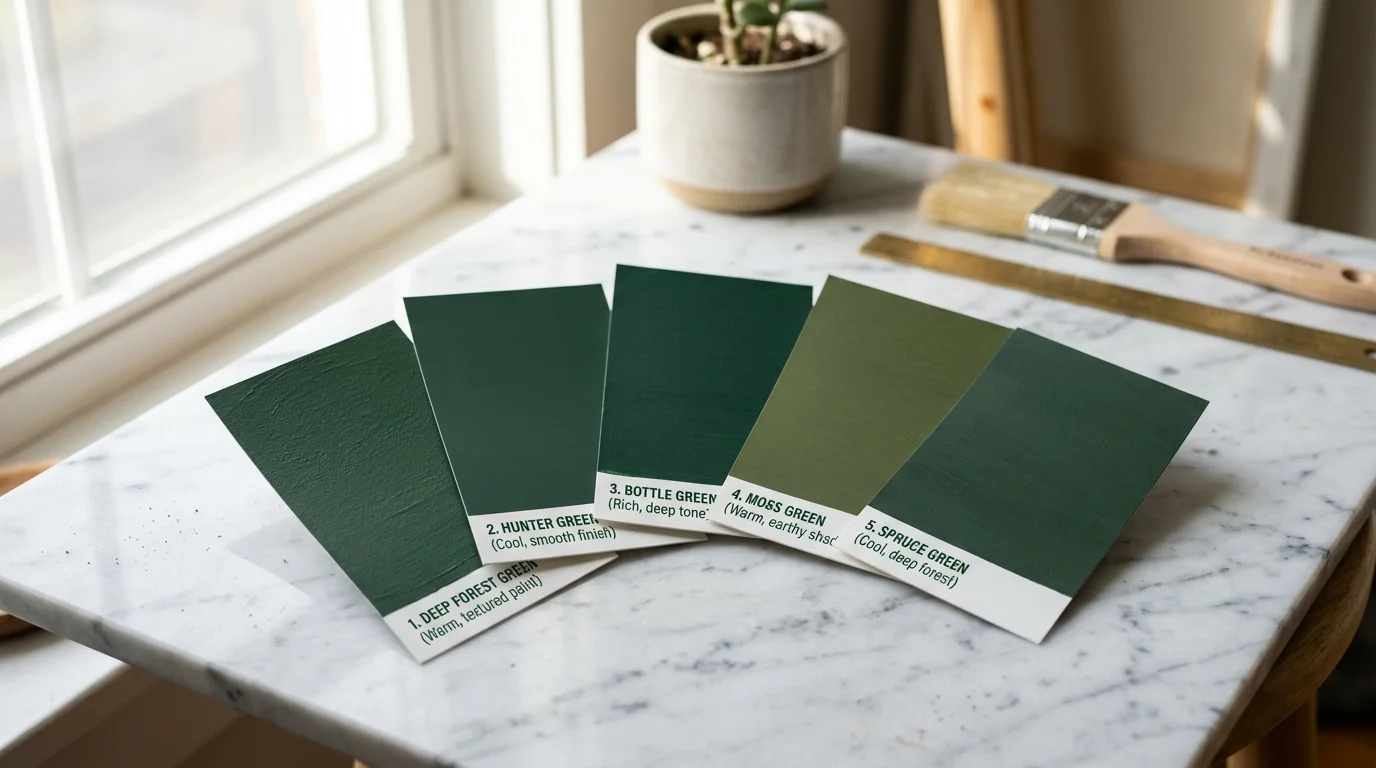
Forest Green represents the richest, most saturated option in the deep green family. This shade evokes woodland depth and pairs exceptionally well with warm brass hardware, natural wood open shelving, and cream or white countertops. It commands attention without overwhelming, making it ideal for kitchens with ample natural light. In dimmer spaces, forest green can read as heavy, so strategic under-cabinet lighting becomes crucial.
Hunter Green leans slightly cooler and more muted than forest green, offering a sophisticated, almost jewel-like quality. This shade works beautifully in transitional and traditional kitchens, particularly when paired with dark hardwood floors and marble or granite countertops. Hunter green maintains visual presence while feeling less dominant in compact kitchens.
Sage Green introduces earthiness and restraint—a softer, grayed-down deep green that feels calming rather than dramatic. This shade suits farmhouse, cottage, and contemporary designs equally well. It pairs naturally with light wood tones and works exceptionally well in kitchens with limited natural light, as it won't appear cave-like.
Dark Olive blends green with subtle brown undertones, creating an organic, nature-inspired aesthetic. This shade bridges the gap between pure green and neutral territory, making it forgiving for design transitions. It complements stainless steel appliances and concrete or terrazzo countertops beautifully.
Teal-Green introduces blue undertones, offering a more modern, slightly cooler interpretation of deep green. This shade energizes contemporary and transitional spaces and pairs striking with metallic accents and sleek, minimalist hardware.
| Shade | Mood | Best Lighting | Ideal Countertop Pairing | Design Style |
|---|---|---|---|---|
| Forest Green | Rich, dramatic | Bright natural | Cream, white, marble | Traditional, transitional |
| Hunter Green | Sophisticated, jewel-like | Moderate to bright | Marble, granite | Transitional, traditional |
| Sage Green | Calm, earthy | Low to moderate | Light wood, white | Farmhouse, contemporary |
| Dark Olive | Organic, grounded | Moderate | Concrete, terrazzo | Contemporary, rustic |
| Teal-Green | Modern, energetic | Bright | Metallic, minimalist | Contemporary, modern |
Lighting profoundly affects how each shade reads. Natural north-facing light cools greens and can make them appear slightly muted; south-facing light warms them and enhances saturation. Warm LED bulbs (2700K) soften intensity, while cooler bulbs (4000K+) emphasize green's true undertones. At WAREMODEL, we recommend viewing samples in your actual kitchen at different times of day before committing—a practice that prevents costly color regrets and ensures your cabinet shade performs as intended within your specific spatial context.
Pairing Deep Green Cabinets with Countertops, Hardware, and Finishes
The true power of deep green cabinetry emerges when paired thoughtfully with complementary materials and finishes. Each choice—from countertop surface to cabinet hardware—either amplifies the sophistication of your green or diminishes it. Understanding these relationships ensures your remodel achieves the cohesive, polished aesthetic that transforms a kitchen from functional to exceptional.
Countertop Materials and Color Pairings
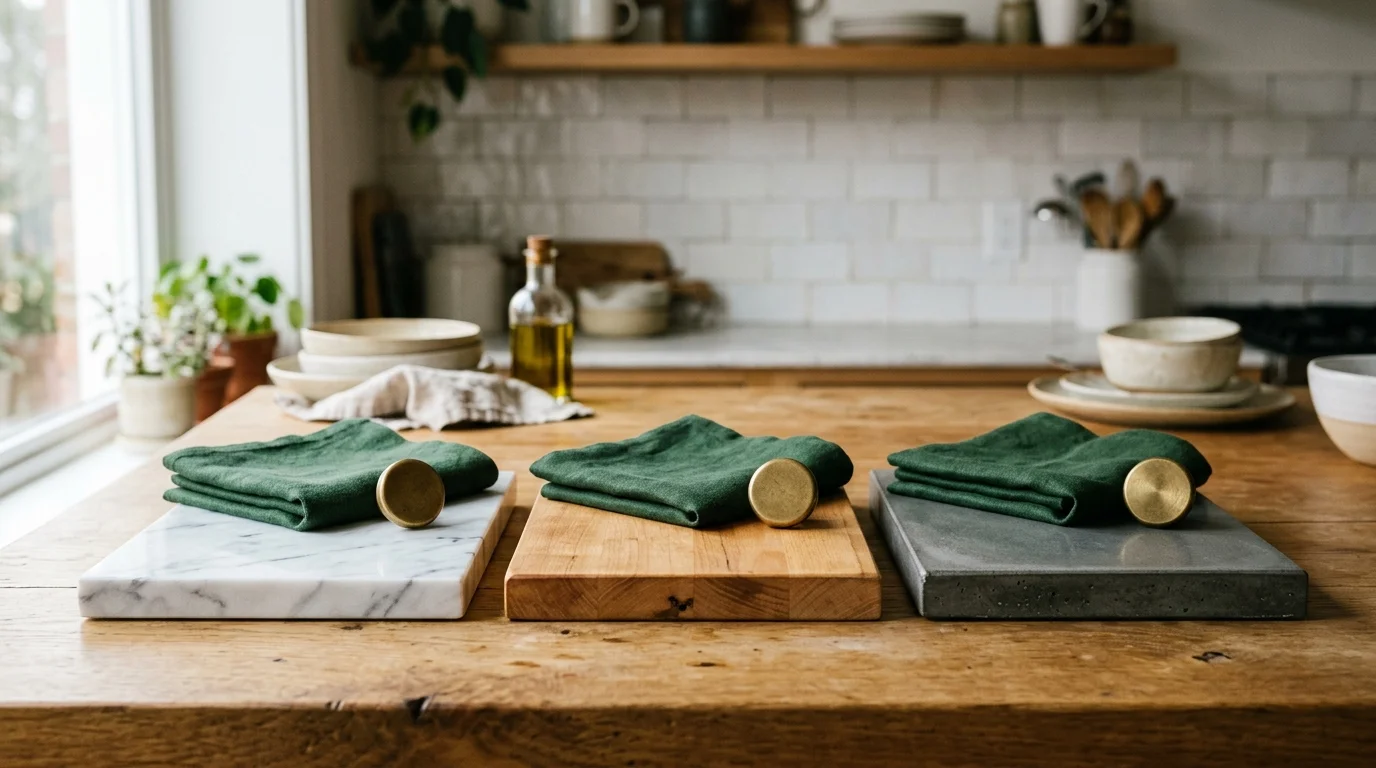
Marble remains the gold standard for deep green cabinets. Its cool undertones and veining create visual movement that prevents the space from feeling heavy, while white or cream marble provides luminous contrast. Quartz offers similar elegance with superior durability; opt for varieties with subtle gray or white flecking rather than busy patterns that compete with cabinet depth. Concrete countertops—polished or matte—pair beautifully with darker greens like forest or hunter, grounding the space with an industrial-contemporary edge. Light wood countertops (oak, maple) warm the palette and work exceptionally well with sage or olive greens, creating an organic, farmhouse-inspired aesthetic. Avoid pairing deep greens with dark countertops; the result reads as visually monotonous and can make the kitchen feel smaller.
Cabinet Hardware: The Jewelry of Your Kitchen
Hardware finishes carry disproportionate visual weight. Brass and gold hardware, as noted in design literature, pairs exquisitely with all green shades to add timeless elegance and sophistication. These warm metallics echo natural undertones in green and create an inviting, refined impression. Bronze and oil-rubbed bronze work similarly well, particularly with forest and hunter greens, lending a transitional or traditional character. Stainless steel offers a cleaner, contemporary feel—ideal for teal-green or modern sage applications—while matte black hardware delivers dramatic contrast and suits minimalist or contemporary schemes. At WAREMODEL, we recommend selecting hardware scale proportional to your cabinet door size; oversized pulls on smaller doors can overwhelm the green, while undersized hardware on large panels appears insubstantial.
Finish Selection: Matte vs. Satin
Cabinet finish profoundly affects how green reads in varying light. Matte finishes absorb light, deepening the color and creating a sophisticated, velvety appearance—ideal for formal or traditional kitchens. Satin finishes offer a subtle sheen that reflects light gently, making greens appear slightly brighter and more dynamic without the glossiness of semi-gloss. Satin also masks fingerprints better than matte, a practical advantage in high-traffic kitchens. The choice depends on your lighting conditions and desired mood; north-facing kitchens benefit from satin's reflective properties, while south-facing spaces with abundant natural light suit matte's depth.
| Countertop Material | Best Green Shade | Hardware Finish | Cabinet Finish | Overall Effect |
|---|---|---|---|---|
| Marble (white/cream) | Forest, hunter | Brass, bronze | Matte or satin | Timeless elegance |
| Quartz (gray/white) | Any deep green | Stainless steel | Satin | Contemporary polish |
| Concrete | Olive, forest | Matte black | Matte | Industrial sophistication |
| Light wood | Sage, olive | Brass, bronze | Satin | Organic warmth |
| Terrazzo | Teal-green | Stainless steel | Satin | Modern energy |
Successful pairings share one principle: restraint. Let deep green cabinets anchor the design, then select supporting materials that enhance rather than compete. This disciplined approach creates kitchens that feel intentional and enduring.
Design Styles That Shine with Deep Green Cabinetry
Deep green cabinetry transcends a single aesthetic—it adapts and elevates across diverse kitchen design styles. The key lies in understanding how this anchor color interacts with each style's defining characteristics, allowing you to create cohesive spaces that feel intentional rather than trendy.
Modern Minimalist kitchens benefit from deep green's sophisticated restraint. Pair forest or hunter green with clean-lined cabinetry, matte hardware, and uncluttered countertops. The color becomes the focal point while everything else recedes into functional simplicity. Stainless steel or matte black hardware reinforces the contemporary edge, and quartz or concrete countertops maintain the minimalist ethos without visual competition.
Classic Traditional designs embrace deep green's historical roots. Sage and olive tones work beautifully with ornate hardware, raised-panel cabinet doors, and marble or light wood countertops. This pairing evokes timeless elegance—think English country estates and heritage homes. Brass or bronze hardware adds warmth, while satin finishes soften the formality without compromising sophistication.
Mid-Century Modern aesthetics thrive with deep green cabinetry. Forest green paired with tapered legs, geometric hardware, and warm wood accents captures the era's optimistic geometry. Light wood countertops or terrazzo surfaces echo the period's playful material mixing, while satin cabinet finishes provide subtle luster that complements the style's balanced approach to shine and matte surfaces.
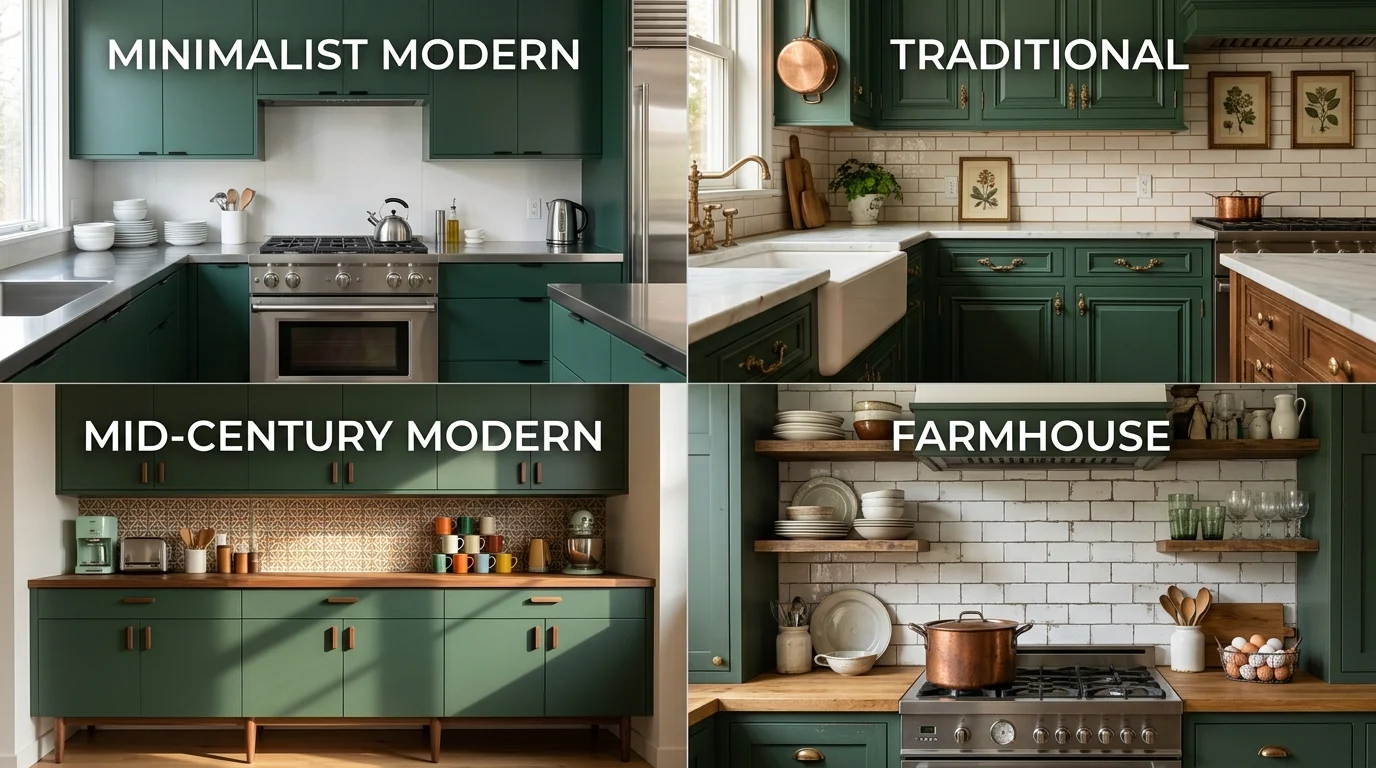
Transitional kitchens—the bridge between traditional and contemporary—leverage deep green's versatility perfectly. Any deep green shade works here, allowing you to blend ornamental hardware with streamlined cabinet profiles. This style accommodates both brass and stainless steel finishes, making deep green cabinetry the unifying element that ties disparate influences into coherent design.
Farmhouse and cottage styles embrace olive and sage greens with authentic warmth. Pair these softer deep tones with open shelving, vintage-inspired hardware, and light wood or butcher-block countertops. The result feels lived-in and inviting—a kitchen designed for gathering rather than display. Matte finishes enhance the understated, approachable character this style demands.
When planning your kitchen remodel, let your chosen style guide which green shade and supporting materials you select. At WAREMODEL, we help you translate these design principles into functional spaces that maximize both aesthetics and usability—ensuring your deep green cabinets anchor a kitchen that works as beautifully as it looks.
Lighting and Space Optimization with Deep Green Cabinets
Deep green cabinets command visual presence, but they also absorb light—a reality that demands thoughtful illumination planning. Without proper lighting strategy, even the most beautifully designed kitchen can feel confined and uninviting. The solution lies not in avoiding deep green, but in understanding how to illuminate it effectively so your kitchen feels expansive and welcoming.
According to the NKBA 2025 Kitchen Trends Report, 88% of industry professionals agree that lighting design creates different moods within the kitchen, from brightness during morning routines to softer atmospheres for evening entertaining. This flexibility becomes especially valuable with deep green cabinetry, which responds dramatically to how light interacts with its surface.
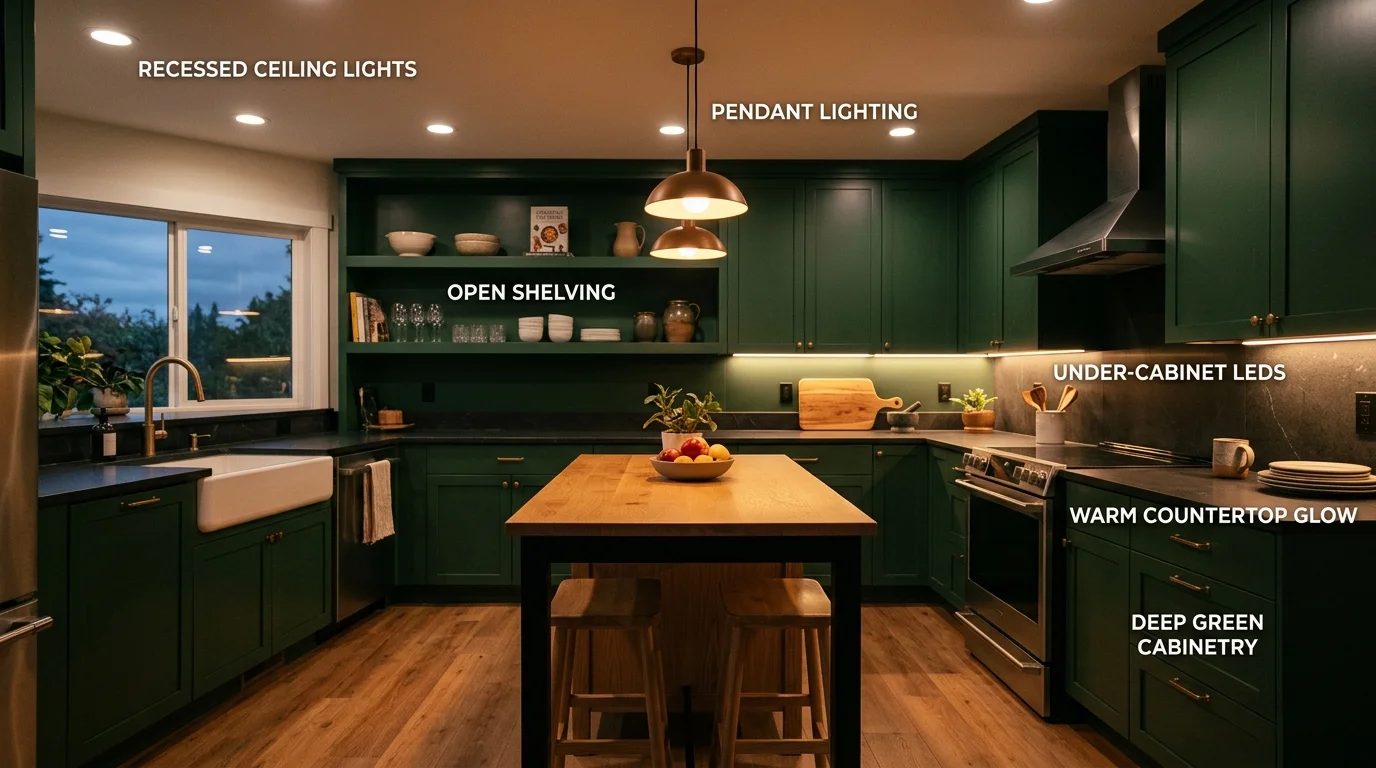
Task lighting is non-negotiable. Under-cabinet LED strips illuminate countertop work surfaces where precision matters most—food preparation, reading recipes, and detailed tasks. Pendant lights suspended above islands or breakfast bars provide focused illumination while adding design interest. These layered approaches ensure your kitchen functions brilliantly regardless of cabinet color.
Ambient lighting establishes the foundation. Recessed ceiling fixtures distribute even illumination throughout the space, preventing shadowy corners that amplify the visual weight of dark cabinetry. When properly spaced and dimmable, these fixtures allow you to adjust brightness for different occasions and times of day.
Accent lighting transforms perception. Strategic spotlighting on open shelving, glass-front cabinet displays, or architectural details draws the eye upward and outward, creating visual depth that counteracts any sense of enclosure. This technique is particularly effective with deep green—the color's richness becomes a design feature rather than a spatial limitation.
At WAREMODEL, we recognize that superior kitchen design balances aesthetics with functionality. Proper lighting transforms deep green cabinets from a bold choice into the sophisticated anchor of a space that feels both intimate and expansive—exactly the kind of thoughtfully designed environment that creates room for the moments that matter most.
Planning Your Deep Green Cabinet Remodel: From Selection to Installation
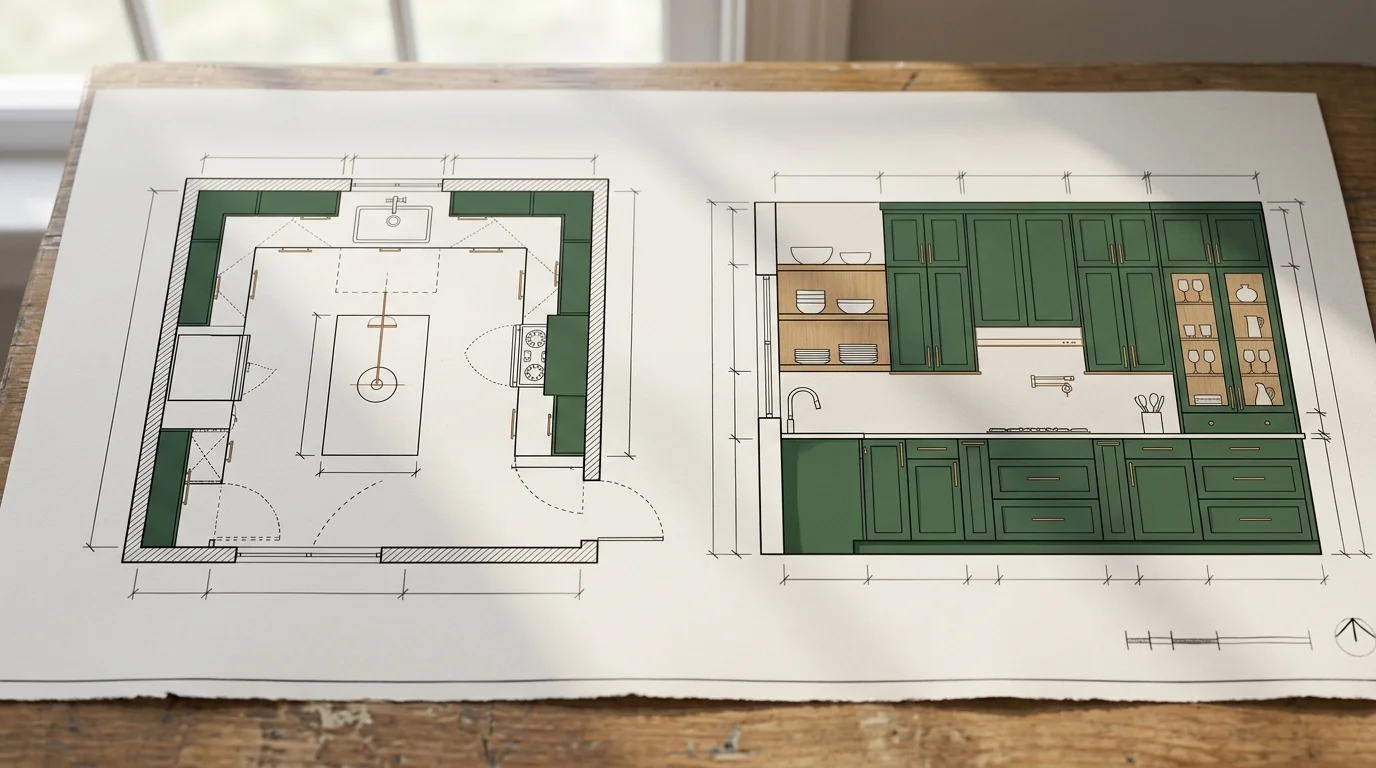
Transforming your kitchen with deep green cabinets requires thoughtful strategy at every stage. Rather than viewing this as a single decision, approach it as a sequential planning process that ensures your final result aligns with both your vision and your home's structural reality.
Assess Your Kitchen's Existing Conditions
Begin by evaluating your current kitchen layout, natural light sources, and existing finishes. Deep green's richness demands adequate illumination—kitchens with limited windows benefit from strategic lighting upgrades before cabinet installation. Measure your space precisely, noting ceiling height, window placement, and any architectural constraints. Document your current countertops, flooring, and backsplash materials, as these will inform your shade selection. Understanding how light moves through your kitchen at different times of day prevents selecting a shade that feels oppressive rather than sophisticated.
Select Your Specific Shade and Finish
The deep green spectrum spans from forest and hunter tones to more muted sage-leaning variants. Order physical samples from cabinet manufacturers and observe them in your actual kitchen lighting for several days. Consider how the shade interacts with your flooring—particularly if you're working with dark hardwood floors that require careful color balance. Decide between matte, satin, or semi-gloss finishes; matte conveys understated elegance but shows fingerprints more readily, while semi-gloss offers durability and subtle sheen.
Determine Cabinet Placement and Configuration
Map which cabinets will be deep green and which might remain neutral or contrast. Many designers reserve deep green for base cabinets and upper perimeter cabinets, using lighter tones for open shelving or glass-front displays. This approach maximizes visual impact while maintaining breathing room. At WAREMODEL, we've found that strategic placement of deep green cabinetry creates focal points that make kitchens feel intentionally designed rather than uniformly colored.
Plan Your Hardware and Complementary Materials
Select hardware finishes—brushed brass, matte black, or stainless steel each create distinct moods with deep green. Coordinate with your countertop choice, backsplash, and any tile selections. If incorporating mosaic glass tiles, ensure the color palette harmonizes rather than competes.
Budget and Timeline Preparation
Kitchen cabinet costs typically range from $3,000 to $25,000 depending on project scope, with cabinets representing approximately 25% to 35% of total remodel expenses. A 10 x 10 kitchen averages $2,800 to $6,500 for installation alone. Cabinet upgrades deliver 65% to 75% return on investment, making them among the highest-value home improvements. Establish your budget early, then schedule your installation during a time when kitchen disruption is manageable for your household.
Creating Your Dream Kitchen with Deep Green Cabinetry
Deep green cabinetry represents far more than a color choice—it's a commitment to creating a kitchen that reflects your personal aesthetic while delivering lasting functionality. Throughout this kitchen design journey, we've explored the remarkable versatility of deep green: from forest and hunter shades to sophisticated olive undertones, each offers distinct character. The true power emerges when you thoughtfully pair these cabinets with complementary countertops, hardware finishes, and lighting solutions that amplify their depth rather than diminish it.
The beauty of a thoughtfully executed cabinet remodel lies in its transformative impact. Deep green adapts seamlessly across contemporary, transitional, farmhouse, and traditional styles—proving that this sophisticated hue transcends aesthetic boundaries. Strategic lighting, whether through under-cabinet LED systems or pendant fixtures, ensures your cabinetry commands presence without overwhelming the space. When combined with proper ventilation and material selection, deep green cabinets create kitchens where important moments naturally unfold.
At WAREMODEL, we understand that successful kitchen renovation requires more than aesthetic vision—it demands careful planning around budget, timeline, and professional execution. Your cabinet investment, representing 25–35% of total remodel costs, deserves expert guidance to maximize both beauty and return on investment.
Ready to transform your kitchen with deep green cabinetry? Consult with experienced remodeling professionals who can assess your space, lighting conditions, and lifestyle needs. They'll help you navigate shade selection, material durability, and installation timelines—ensuring your dream kitchen becomes a functional reality that enhances your home for years to come.