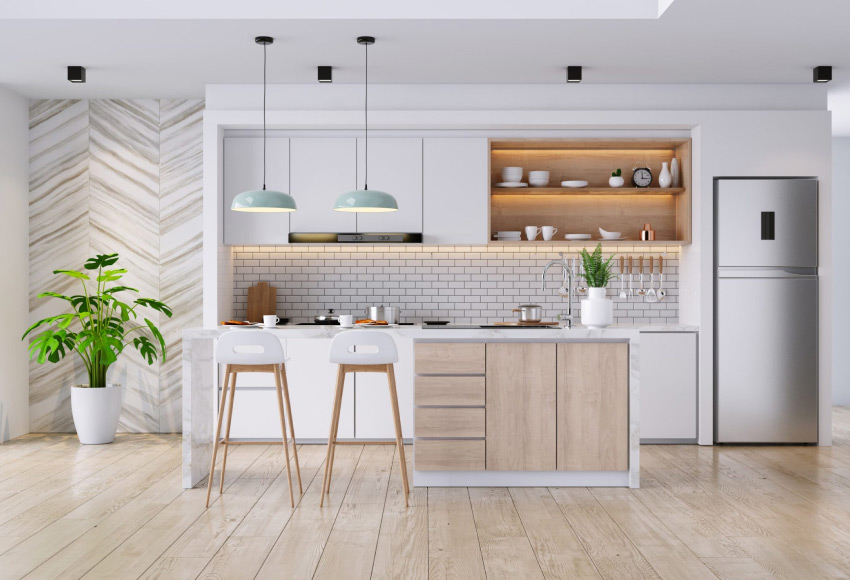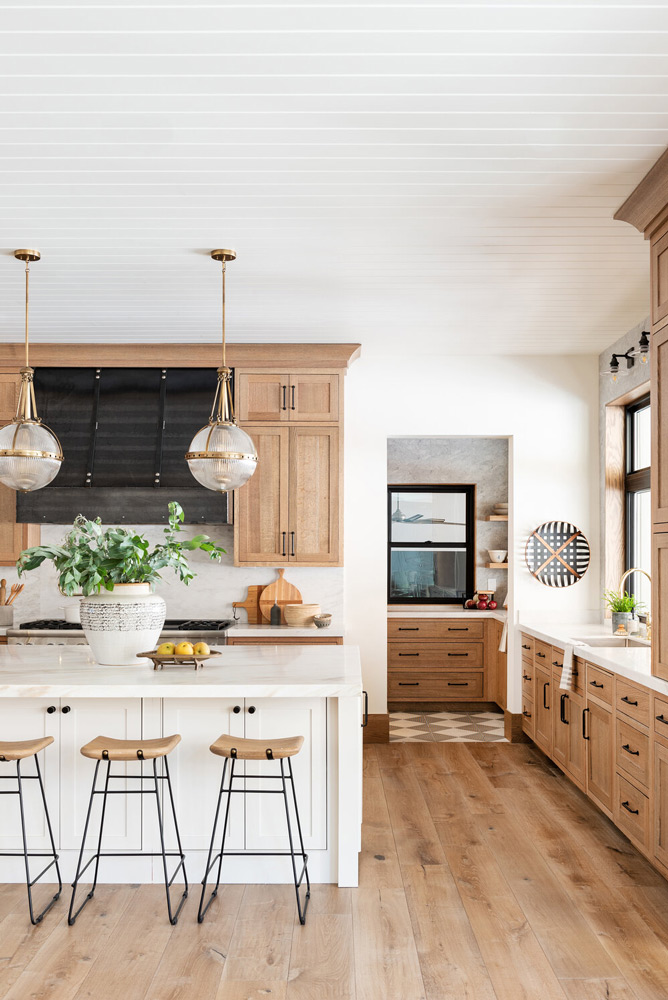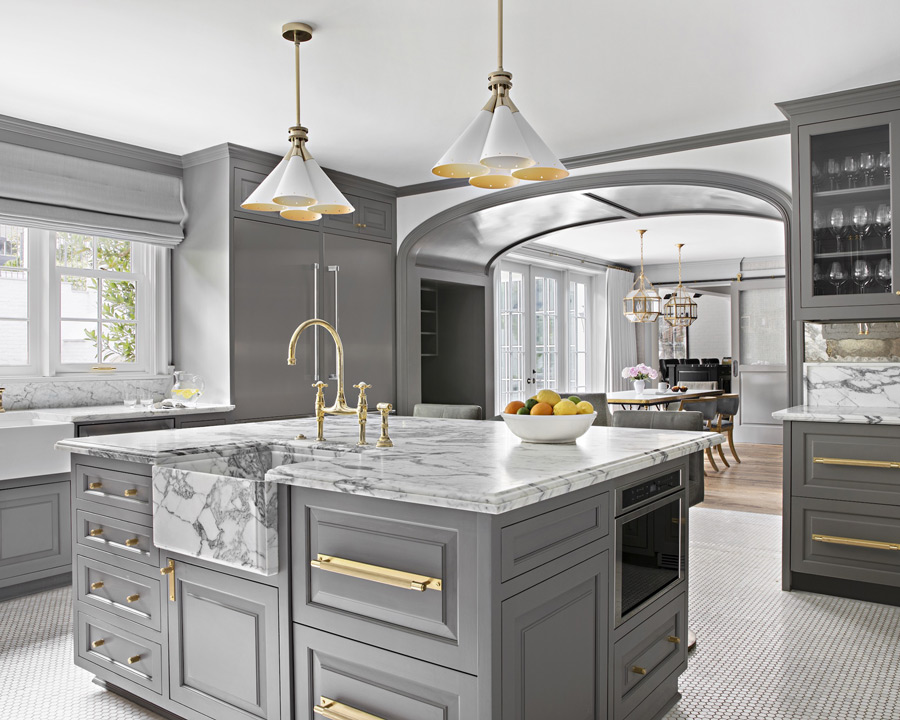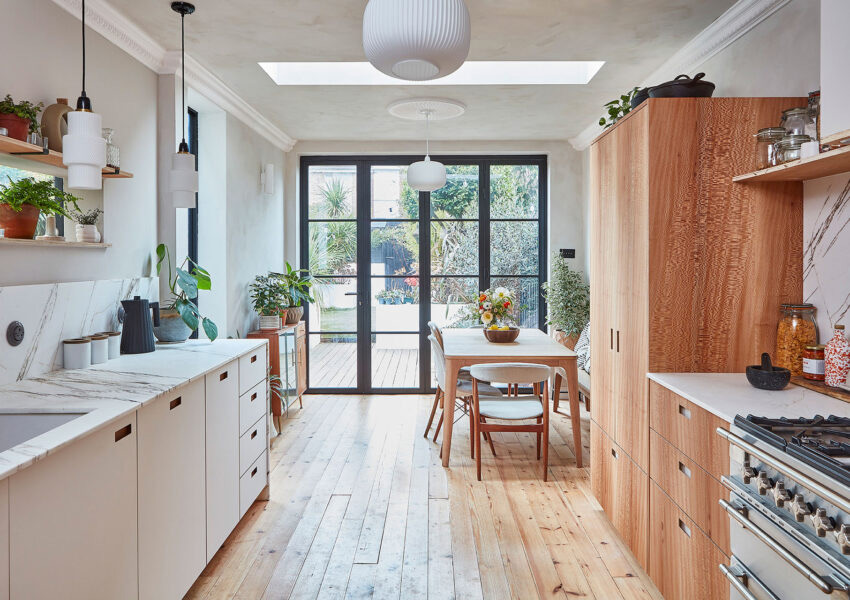
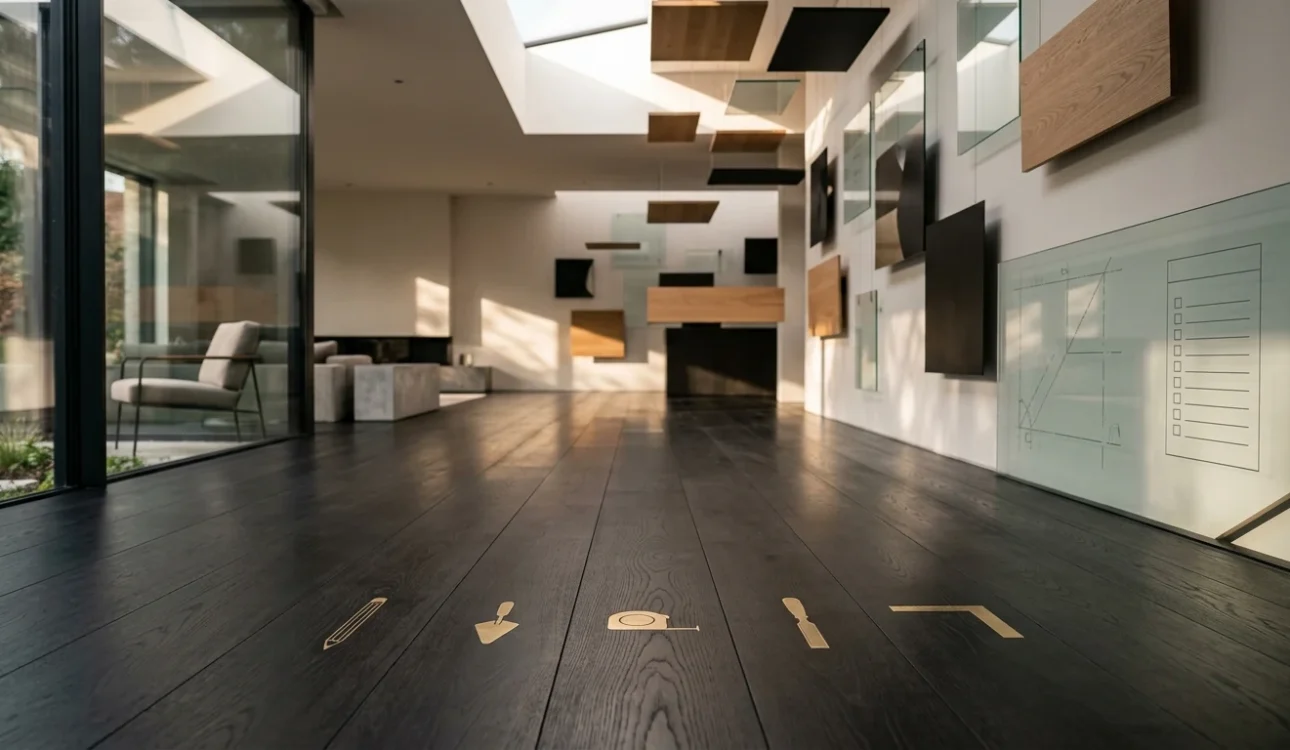
Black hardwood floors command attention the moment you step into a room. Their deep, rich tones create an instant sense of sophistication and drama that lighter woods simply cannot match. Whether you're drawn to the ebony intensity of true black finishes or the warm chocolate undertones of heavily stained dark hardwoods, these floors become the visual anchor for your entire home's design narrative. They absorb light differently than traditional golden or honey-toned woods, creating depth and contrast that modern design celebrates. For homeowners seeking to make a bold statement while maintaining timeless elegance, black hardwood flooring delivers both impact and versatility.
Quick Answer: Black hardwood floors are either naturally dark wood species (like wenge or ebony) or traditionally lighter woods stained to deep black or charcoal tones. Homeowners choose them for their dramatic visual appeal, ability to hide dust and footprints, and modern aesthetic that works across contemporary, transitional, and even traditional interiors.
This guide walks you through everything you need to know: the wood species that deliver authentic dark tones, installation methods that ensure durability, design strategies for pairing these floors with your existing décor, and real-world examples that show how black hardwood floors transform living spaces. You'll discover how to balance their boldness with lighting and furnishings, explore maintenance requirements, and learn whether this investment aligns with your home's needs and your lifestyle. Whether you're renovating a single room or reimagining your entire home, understanding black hardwood flooring options—from species selection to finishing techniques—ensures you make a confident choice that enhances both beauty and function.
Table of Contents
- Top Wood Species for Black Hardwood Floor Designs
- Engineered vs. Solid Black Hardwood: Choosing the Right Construction
- Finish Options: Gloss, Matte, and Textured Black Floors
- Design Pairings: Creating Cohesive Spaces with Black Hardwood
- Installation, Maintenance, and Long-Term Care for Black Hardwood Floors
- Making Your Black Hardwood Floor Vision a Reality
Top Wood Species for Black Hardwood Floor Designs
Selecting the right wood species forms the foundation of a successful black hardwood floor installation. Each species brings distinct visual character, durability profiles, and price points that influence both aesthetics and long-term performance. Understanding these differences ensures your choice aligns with your home's design vision and practical demands.
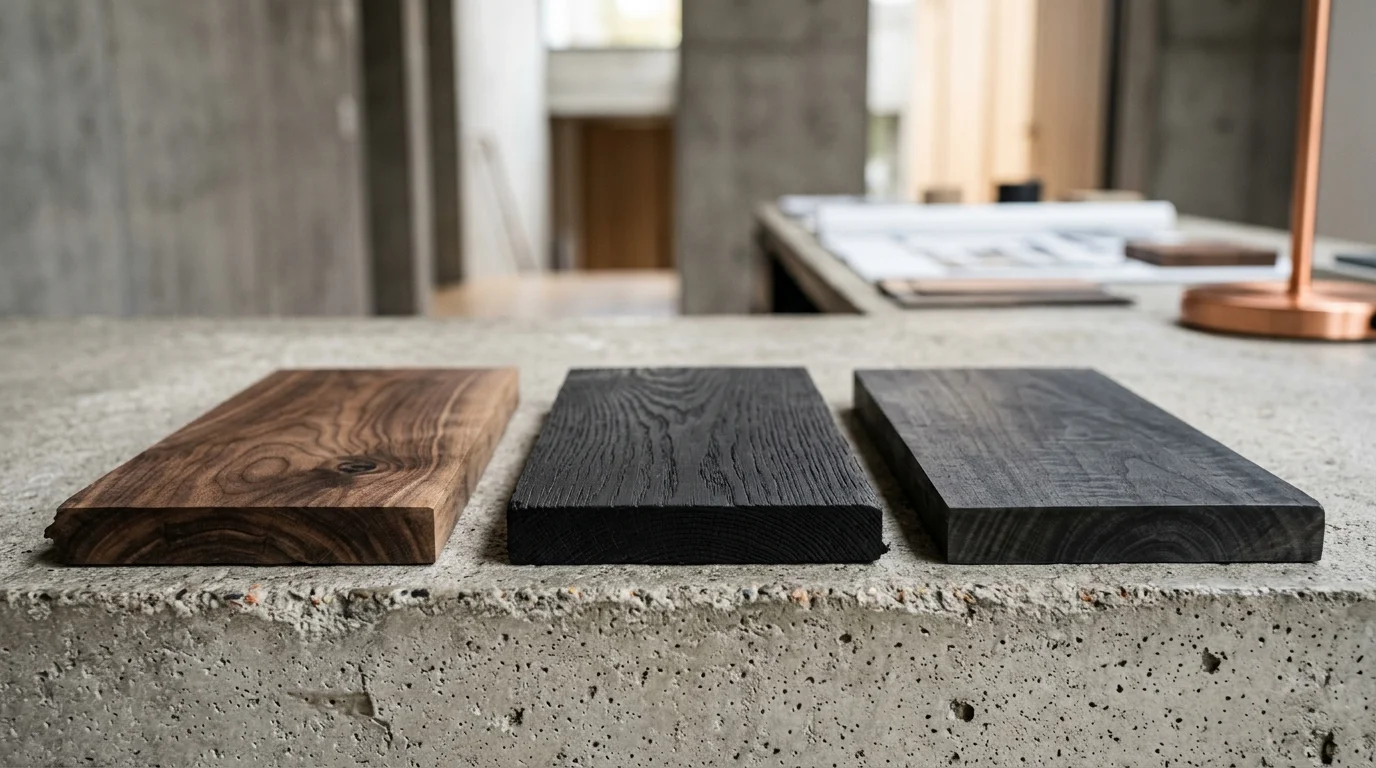
Black Walnut stands as the premier naturally dark domestic hardwood. Its rich chocolate-brown heartwood requires minimal staining to achieve authentic black tones, and its straight grain pattern creates a refined, sophisticated appearance. According to Arizona Hardwood Floor Supply, black walnut has a Janka hardness rating of 1,010, making it approximately 78 percent as hard as red oak—adequate for residential use but requiring careful maintenance in high-traffic areas. Unfinished black walnut planks typically range from $14 to $32 per square foot, positioning it as a premium investment that delivers timeless elegance and natural depth without additional staining.
Black Cherry offers warm undertones beneath its dark surface, creating visual warmth that pure black lacks. Its fine, even grain accepts stain uniformly, and the wood naturally darkens over time when exposed to sunlight. This species works exceptionally well in spaces where you want black hardwood floors that feel inviting rather than austere—living rooms and bedrooms particularly benefit from cherry's subtle richness.
Ebonized Oak represents the staining approach to achieving black tones. Oak's prominent grain structure accepts black stains exceptionally well when properly prepared. Professionals sand the floor, apply moisture with damp cloths to open the grain, then apply multiple coats of stain and finish to build the desired depth. This method delivers dramatic visual impact at a lower cost than naturally dark species, making it accessible for budget-conscious renovations.
Black Maple provides another naturally dark option with exceptional hardness—significantly harder than walnut—making it ideal for kitchens and entryways. Its subtle grain pattern complements minimalist and contemporary interiors, aligning perfectly with WAREMODEL's philosophy of creating sophisticated spaces that maximize both visual impact and functional durability.
Each species contributes differently to room perception. Naturally dark woods like walnut and maple create intimate, grounded spaces that make rooms feel cozier, while ebonized oak delivers bold contrast that energizes open-concept layouts. Consider your room's natural light, existing furnishings, and traffic patterns when weighing these options. For detailed guidance on pairing dark floors with your existing décor, explore our complete guide to dark hardwood floor types and installation methods.
Engineered vs. Solid Black Hardwood: Choosing the Right Construction
The visual distinction between engineered and solid black hardwood floors is virtually nonexistent—both deliver the same dramatic aesthetic that transforms a room. However, the construction method fundamentally shapes installation flexibility, moisture resistance, and long-term durability. Understanding these differences ensures you select the option that aligns with your home's specific conditions and WAREMODEL's approach to creating resilient, functional spaces.
Solid hardwood consists of a single piece of wood milled to finished dimensions, typically ¾ inch thick. Engineered hardwood features a real hardwood veneer (usually ⅛ to ¼ inch thick) bonded to a plywood or high-density fiberboard core. This layered construction makes engineered wood significantly more stable in humid environments—basements, kitchens, and bathrooms where moisture fluctuates. The cross-grain core resists cupping and warping that solid wood may experience, making engineered black flooring the practical choice for below-grade installations or regions with seasonal humidity shifts.
Installation methods differ substantially. Solid hardwood typically requires nailing to a wooden subfloor, demanding professional expertise and longer project timelines. Engineered hardwood accommodates multiple installation approaches: floating (glued or unglued), glue-down, or nail-down, offering faster installation and greater adaptability to concrete subfloors. This flexibility aligns with WAREMODEL's innovative remodeling philosophy—engineered options maximize usable space by reducing installation complexity and timeline disruption.
Longevity presents a critical trade-off. According to HomeGuide's cost analysis, solid hardwood can last 100 years or more with proper care, while engineered hardwood typically lasts 20 to 30 years. However, engineered wood's superior moisture resistance often prevents the premature failure that solid wood experiences in challenging environments. In stable, climate-controlled spaces, solid black hardwood justifies the premium investment through unmatched longevity. In moisture-prone areas, engineered construction prevents costly replacement cycles.
Cost reflects these structural differences. Solid hardwood ranges from $11 to $25 per square foot installed, while engineered options span $9 to $20 per square foot installed. For large remodeling projects, engineered black flooring reduces both material and labor expenses while delivering identical visual impact. When paired with proper subfloor preparation and finishing, engineered construction proves the practical investment for maximizing value without compromising the sophisticated aesthetic black floors provide.
Finish Options: Gloss, Matte, and Textured Black Floors
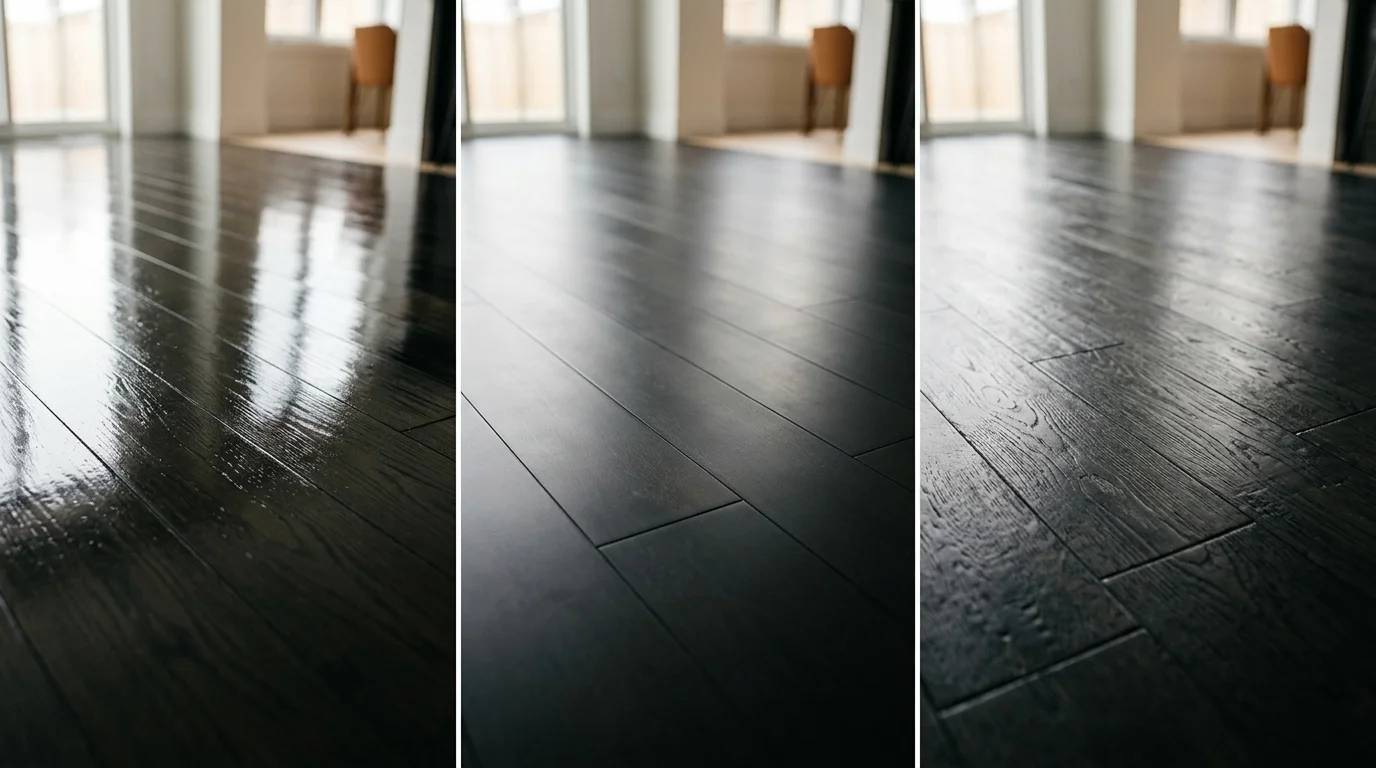
The finish you select transforms black hardwood floors from a design choice into a statement about your home's personality and practical needs. Three primary finish categories dominate the market, each delivering distinctly different visual and functional outcomes that dramatically affect how your floors appear in photographs, natural light, and daily use.
High-gloss finishes create a mirror-like surface that reflects light and amplifies the depth of black tones, producing that dramatic, almost liquid appearance seen in luxury design inspiration photos. This reflective quality makes rooms feel larger and more luminous, but it demands perfection—every footprint, dust particle, and smudge becomes immediately visible. High-gloss floors require frequent cleaning and careful maintenance, making them ideal for formal spaces with controlled foot traffic rather than family kitchens or active living areas.
Matte finishes represent the opposite extreme, offering approximately 25% luster compared to high-gloss's 70%. This subdued sheen hides dust, footprints, and minor imperfections while delivering a sophisticated, contemporary aesthetic that has become increasingly popular in modern design. According to Artisan Flooring of North Carolina, satin finishes account for roughly 70% of hardwood installations across North America, though matte options continue gaining traction among homeowners prioritizing low-maintenance elegance. Matte hardwood finishes work exceptionally well in high-traffic areas because they conceal wear patterns and require less frequent polishing.
Textured and hand-scraped black flooring adds character through intentional surface variation—distressing, wire brushing, or hand-scraping creates visual depth that photographs beautifully while simultaneously hiding minor scratches and dust. This approach suits rustic, transitional, and eclectic design schemes, transforming black floors from sleek to warm and lived-in. The texture also provides subtle slip resistance, a practical advantage in kitchens and bathrooms where safety matters.
When planning your remodel, consider how natural and artificial lighting interacts with each finish type. North-facing rooms benefit from gloss's light-amplifying properties, while south-facing spaces suit matte finishes that prevent glare. Your lifestyle determines maintenance reality—busy households thrive with matte or textured options, while formal entertaining spaces justify high-gloss's demanding upkeep.
Design Pairings: Creating Cohesive Spaces with Black Hardwood
Black hardwood floors function as a visual anchor—a grounding element that allows you to build an entire room's aesthetic around their dramatic presence. Rather than competing with other design elements, black floors create a foundation that either recedes into sophistication or commands attention depending on what surrounds them. Understanding how to pair black hardwood with wall colors, cabinetry, countertops, and furnishings determines whether your space feels intimate and luxurious or cold and disconnected.
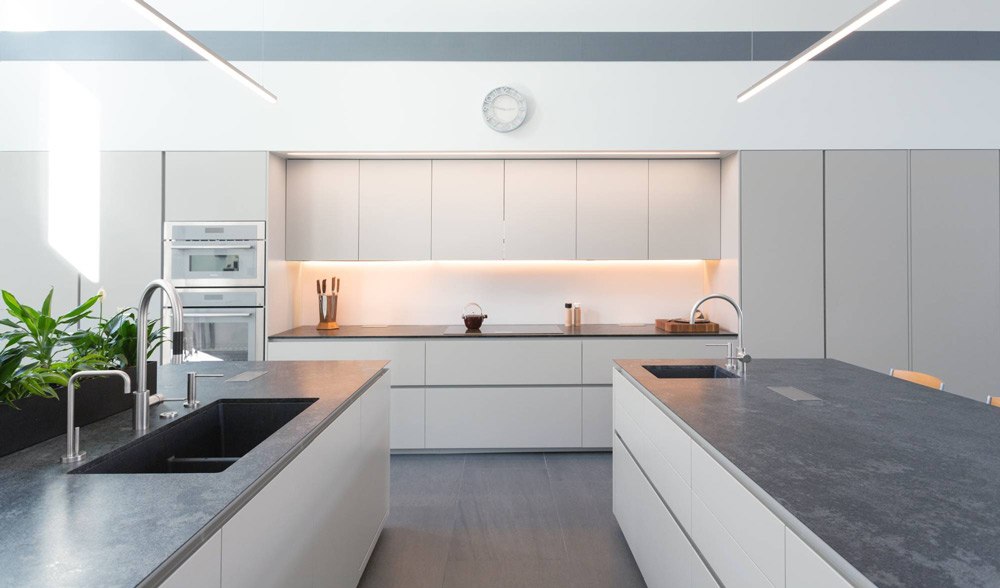
Modern Minimalist Approach strips away visual noise, allowing black floors to shine as the primary design statement. Pair them with white or soft gray walls, stainless steel fixtures, and clean-lined furniture to create an uncluttered aesthetic that feels intentional rather than sparse. This combination works exceptionally well in kitchens and bathrooms, where the contrast between dark floors and light cabinetry emphasizes architectural clarity. The black floors ground the space while pale surfaces reflect light, preventing the room from feeling cave-like.
Industrial and Contemporary Luxury designs embrace black hardwood's inherent drama by introducing exposed brick, concrete accents, or metal elements. Charcoal or deep gray walls complement rather than compete with the flooring, while brass or matte black hardware reinforces the cohesive palette. Leather seating, metal shelving, and statement lighting fixtures transform black floors from merely dark to intentionally sophisticated. This approach suits lofts, open-concept kitchens, and master bedrooms where you want to signal confidence and refinement.
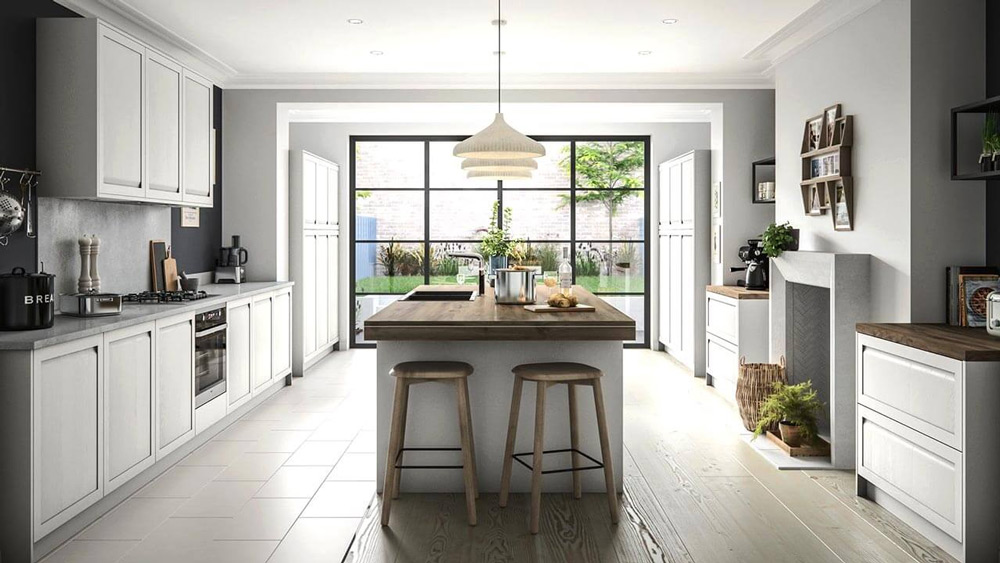
Transitional Design balances warmth with contemporary edge by pairing black hardwood with warm neutrals—cream, taupe, or soft beige walls. Wood cabinetry in medium to light tones creates visual relief without jarring contrast. Layered textures through area rugs, upholstered furniture, and natural wood accents prevent the space from feeling too formal. This middle-ground approach appeals to homeowners who want black floors' visual impact without committing to stark minimalism.
Black floors also create perceived spatial effects: in smaller rooms, they can make spaces feel larger when paired with light walls and strategic lighting, while in expansive areas, they add intimacy and definition. When planning your remodel, consider how each design pairing affects both the flooring's visual presence and your home's overall flow. The key is intentionality—every color and material choice should either echo or deliberately contrast with your black hardwood to create a cohesive, functional environment that reflects your lifestyle and aesthetic vision.
Installation, Maintenance, and Long-Term Care for Black Hardwood Floors
Black hardwood floors demand respect during installation and throughout their lifespan. The visual drama they create depends entirely on proper execution—shortcuts during installation or neglect in maintenance will compromise both appearance and durability, leaving you with floors that disappoint rather than inspire.
Professional Installation and Subfloor Preparation
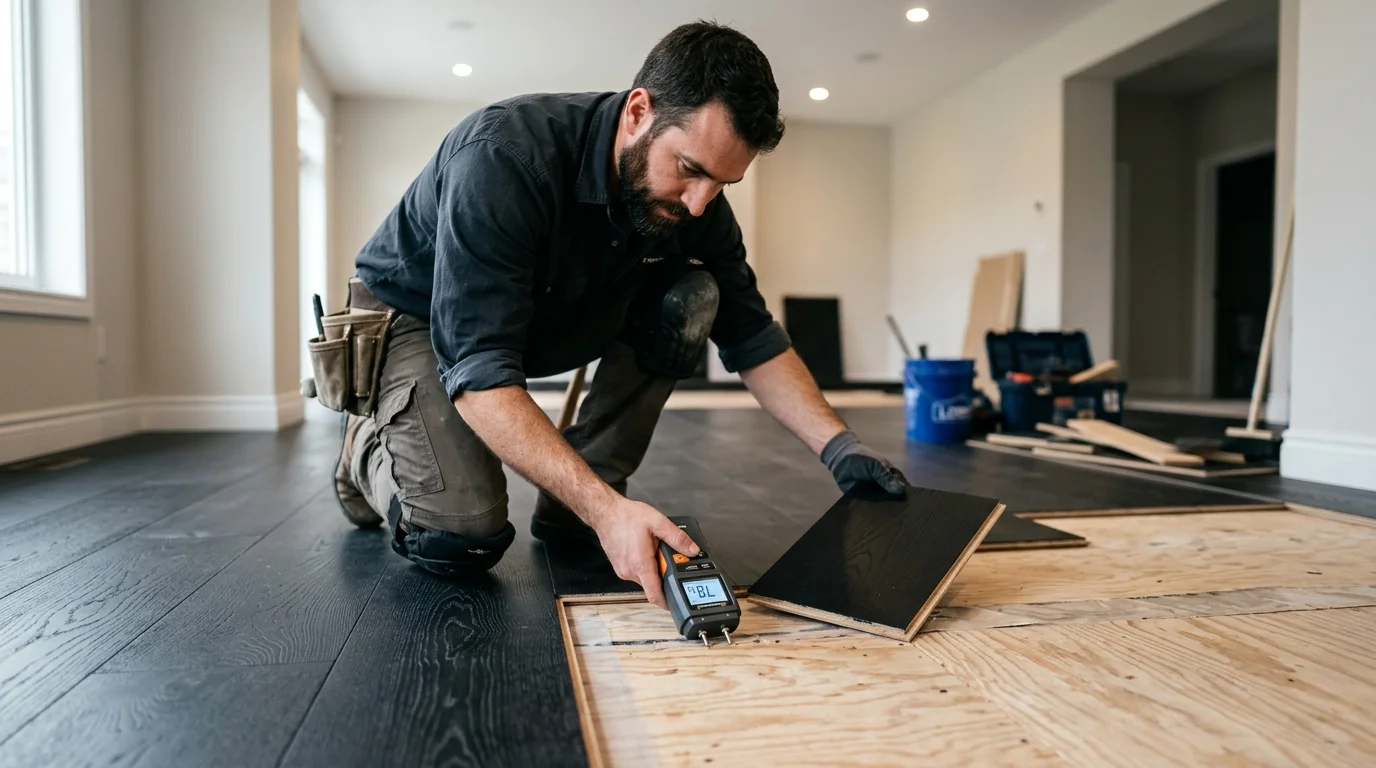
The foundation determines everything. Before a single plank touches your home, your subfloor must be assessed for moisture, levelness, and structural integrity. Black floors magnify imperfections—uneven surfaces create visible gaps and shadows that make the floor appear unstable, while moisture problems lead to cupping, warping, and finish failure. Professional installers use moisture meters to verify that subfloor moisture content falls between 6–9%, a critical threshold that prevents wood movement after installation. They also sand the subfloor to ensure a perfectly level surface, typically within 3/16 inch over 10 feet.
Acclimation is equally essential. Black hardwood must sit in your home for 7–14 days before installation, allowing the wood to adjust to your local humidity and temperature. Skipping this step invites expansion and contraction that creates gaps and buckling. Professional installation also ensures proper nailing patterns, adequate spacing at walls for expansion, and correct application of underlayment when using engineered black hardwood.
Daily and Weekly Maintenance Routines
The best way to maintain black hardwood floors is to establish consistent cleaning habits. Sweep or dry mop daily to remove dust and debris—this prevents scratching and keeps the floor's finish looking pristine. Weekly vacuuming with a soft-bristle attachment captures particles that settle into grain patterns. For heavy-traffic areas, use a damp mop twice monthly with a pH-neutral hardwood cleaner diluted according to manufacturer instructions. Avoid excess water, which penetrates the finish and damages the wood beneath.
Black floors reveal dust and footprints more readily than lighter woods, a reality worth accepting before installation. This visibility isn't a flaw; it's simply the nature of the aesthetic you've chosen. Many homeowners embrace this as motivation to maintain cleaner homes overall.
Refinishing and Long-Term Investment
Most homeowners refinish their wood floors every 7 to 15 years, depending on traffic patterns and wear. Light-use bedrooms might extend to 15 years, while kitchens and entryways typically need attention around 7–10 years. According to Fabulous Floors USA, refinishing costs range from $3 to $8 per square foot in 2026, with most projects falling between $3.50 and $6.50 per square foot for a full sand and refinish.
This investment restores the floor's finish, removes surface scratches, and revitalizes the black color. When planning your remodel with WAREMODEL, factor refinishing into your long-term budget—it's not an unexpected expense but a predictable maintenance cycle that extends your floor's life to 30+ years. Proper care between refinishing sessions—immediate spill cleanup, protective pads under furniture, and consistent cleaning—maximizes the interval between refinishes and protects your investment in this dramatic design choice.
Making Your Black Hardwood Floor Vision a Reality
Black hardwood floors represent far more than a design trend—they embody a deliberate choice to anchor your home in sophistication and timeless elegance. As you've moved through selecting your wood species, deciding between engineered and solid construction, and choosing your finish, you've built a foundation for spaces that feel intentional and refined. The key now is translating these decisions into action.
Your selection process hinges on three critical pillars: the wood species that suits your climate and aesthetic, the construction type that aligns with your installation environment, and the finish that balances visual impact with practical maintenance. When you reference black hardwood floors pictures during your planning phase, you're not simply admiring surfaces—you're visualizing how these choices will anchor your entire room's design narrative. Each decision compounds, creating spaces where black floors don't compete with your décor but rather elevate it.
At WAREMODEL, we understand that transforming your home requires more than selecting materials; it demands a comprehensive remodeling vision that maximizes your space's potential. Our innovative remodeling approach ensures that your black hardwood flooring integrates seamlessly with your overall design strategy, creating cohesive environments where every element serves both aesthetic and functional purposes. Whether you're refinishing existing floors or installing new ones, partnering with remodeling experts who understand how flooring anchors an entire space ensures your investment delivers lasting satisfaction.
Black hardwood floors are a commitment to quality and character. Embrace the decision with confidence—this choice will serve your home beautifully for decades to come.