Dark hardwood floors have become a hallmark of sophisticated home design, bringing timeless elegance and dramatic visual impact to modern living spaces. Whether you're renovating a single room or reimagining your entire home, the choice of dark hardwood species and finishes fundamentally shapes both the aesthetic character and practical durability of your flooring investment. Beyond their undeniable beauty, dark floors serve a strategic function in contemporary remodeling projects—they anchor spaces, hide wear patterns, and create the foundation for countless design directions, from minimalist Scandinavian interiors to warm, traditional settings.
Quick Answer: Dark hardwood floors fall into two primary categories: naturally dark wood species (such as wenge, ebony, and Brazilian walnut) and lighter woods enhanced through staining and finishing processes. Understanding these distinctions, alongside innovative laminate and engineered alternatives, ensures you select flooring that aligns with your budget, lifestyle, and design vision while maximizing durability and ease of maintenance.
Selecting the right type of dark hardwood flooring requires balancing multiple factors—species characteristics, finish durability, installation method, and long-term maintenance demands. This guide walks you through each category with practical clarity, helping you understand not just what options exist, but why each matters for your specific project. Whether you're drawn to the authentic grain of genuine hardwoods or the practical advantages of engineered alternatives, the decisions you make now will influence your home's functionality and visual appeal for decades to come.
Table of Contents
- Natural Dark Hardwood Species: Premium Options for Lasting Beauty
- Achieving Dark Tones: Stained Hardwood vs. Natural Species
- Finish Types for Dark Hardwood Floors: Gloss, Matte, and Hybrid Options
- Engineered vs. Solid Dark Hardwood: Choosing the Right Construction Type
- Selecting Dark Hardwood Floors for Your Space: Practical Considerations
- Making Your Dark Hardwood Flooring Decision: Final Recommendations
Natural Dark Hardwood Species: Premium Options for Lasting Beauty
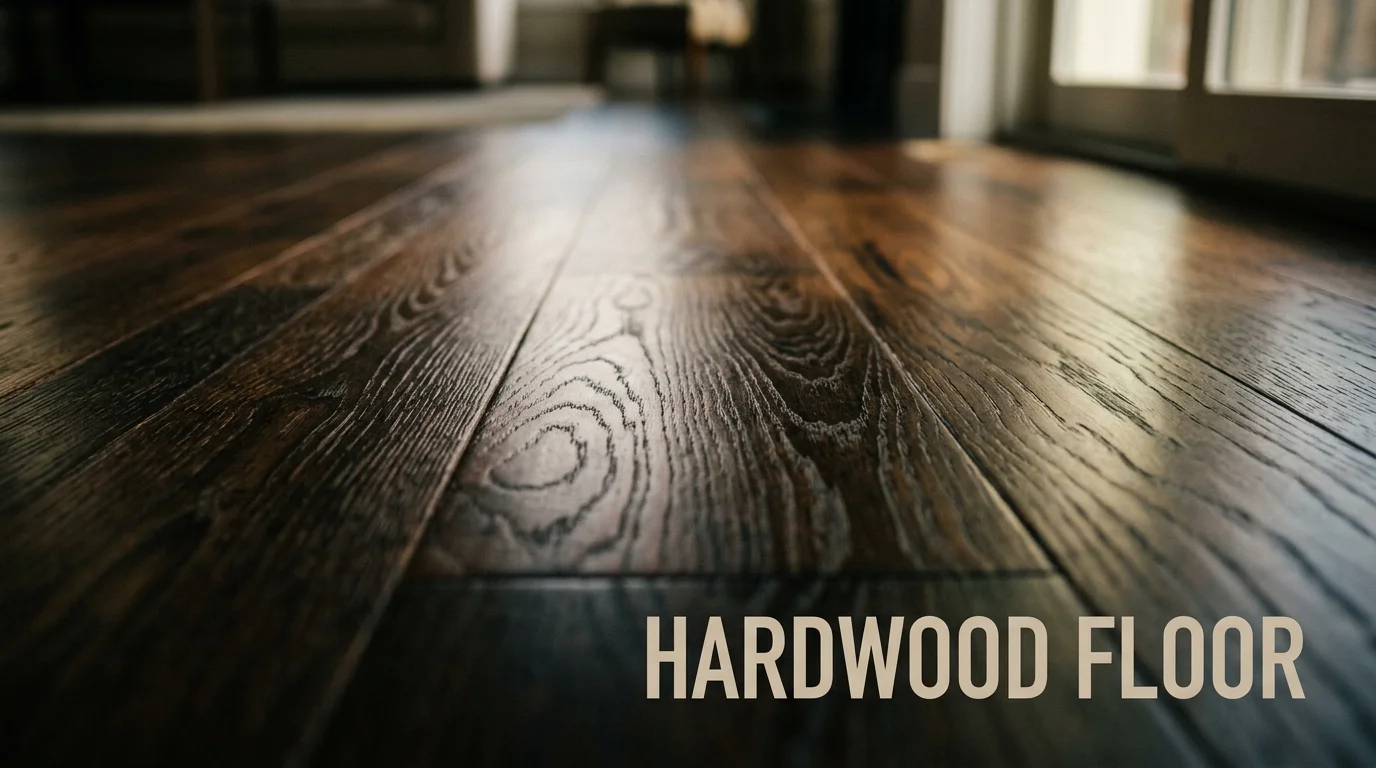
Naturally dark wood species represent the pinnacle of authentic hardwood flooring, offering rich color depth and distinctive grain patterns that engineered alternatives cannot replicate. These woods develop their characteristic darkness through natural mineral content and growth conditions, creating variations that make each plank genuinely unique. Understanding the performance characteristics and cost implications of each species ensures you select flooring suited to your home's traffic patterns and maintenance capacity.
| Species | Janka Hardness | Color Depth | Grain Pattern | Maintenance Level | Typical Cost/sq ft |
|---|---|---|---|---|---|
| American Walnut | 1,010 lbf | Medium-dark brown | Straight to wavy | Moderate | $8.25–$10.50 |
| Mahogany | 800 lbf | Rich reddish-brown | Interlocked, pronounced | Low | $6–$9 |
| Brazilian Cherry (Jatoba) | 2,350 lbf | Deep amber to burgundy | Fine, uniform | Low | $10–$12 |
| Wenge | 1,630 lbf | Nearly black | Straight, minimal variation | Moderate | $12–$15 |
| Ebony | 3,220+ lbf | Jet black | Very fine, subtle | High | $15–$20+ |
| Cumaru | 2,150 lbf | Dark golden-brown | Straight to slightly wavy | Low | $9–$11 |
American Walnut delivers sophisticated medium-dark tones with warm undertones, making it exceptionally versatile for both traditional and contemporary interiors. Its moderate hardness suits moderate-traffic areas like bedrooms and dining rooms, though it requires more careful maintenance than harder species. The straight to wavy grain creates visual interest without overwhelming a space.
Mahogany offers a timeless reddish-brown aesthetic with pronounced interlocked grain that adds movement and character. Despite its lower Janka rating of 800 lbf, mahogany's tight cellular structure provides respectable durability for residential use. Its lower cost point and minimal maintenance demands make it ideal for homeowners prioritizing elegance without intensive upkeep.
Brazilian Cherry (Jatoba) ranks among the hardest domestic options at 2,350 lbf, making it exceptional for high-traffic kitchens and living areas. Its deep amber-to-burgundy coloration intensifies over time as UV exposure develops the wood's natural patina. The fine, uniform grain pattern creates a polished appearance that complements both modern and traditional design schemes.
Wenge delivers near-black coloration with minimal grain variation, creating a dramatic, contemporary aesthetic. At 1,630 lbf hardness, it performs well in moderate-to-high-traffic spaces. However, wenge's density and tight grain structure demand professional installation and careful acclimation to prevent cupping or warping in humid climates.
Ebony represents the ultimate in hardness and visual drama, with jet-black coloring and exceptional durability exceeding 3,200 lbf. Its premium cost reflects scarcity and sustainability concerns; sourcing certified, responsibly harvested ebony is essential. Reserve ebony for statement spaces where its luxurious appearance justifies the investment and maintenance commitment.
For high-traffic areas like kitchens and entryways, Brazilian Cherry and Cumaru deliver superior wear resistance. Bedrooms and formal dining rooms benefit from the softer elegance of American Walnut or Mahogany. When designing your space, consider how dark hardwood floors integrate with your overall design vision, particularly regarding lighting and furniture selection, to maximize both aesthetic impact and functional longevity.
Achieving Dark Tones: Stained Hardwood vs. Natural Species
The path to dark hardwood floors splits into two distinct approaches: purchasing naturally dark wood species or staining lighter hardwoods to achieve the desired aesthetic. Each strategy carries different cost implications, longevity profiles, and visual outcomes—and the right choice depends on your budget, timeline, and existing floor conditions.
Natural dark species like Brazilian Cherry, Wenge, and Ebony arrive with their rich coloring inherent to the wood itself. This permanence means the dark tone runs throughout the grain and won't fade or wear away with traffic. However, naturally dark hardwoods command premium prices and may require specialized sourcing. Staining existing or lighter hardwoods offers flexibility and cost savings, particularly if you're refinishing floors already in place. According to Angi's 2026 data, staining costs between $1 and $3 per square foot, with dark stains requiring careful application that may add $1–$2 per square foot to the total refinishing price. The complete refinishing process—sanding, staining, and finishing—typically ranges from $3 to $8 per square foot for residential projects.
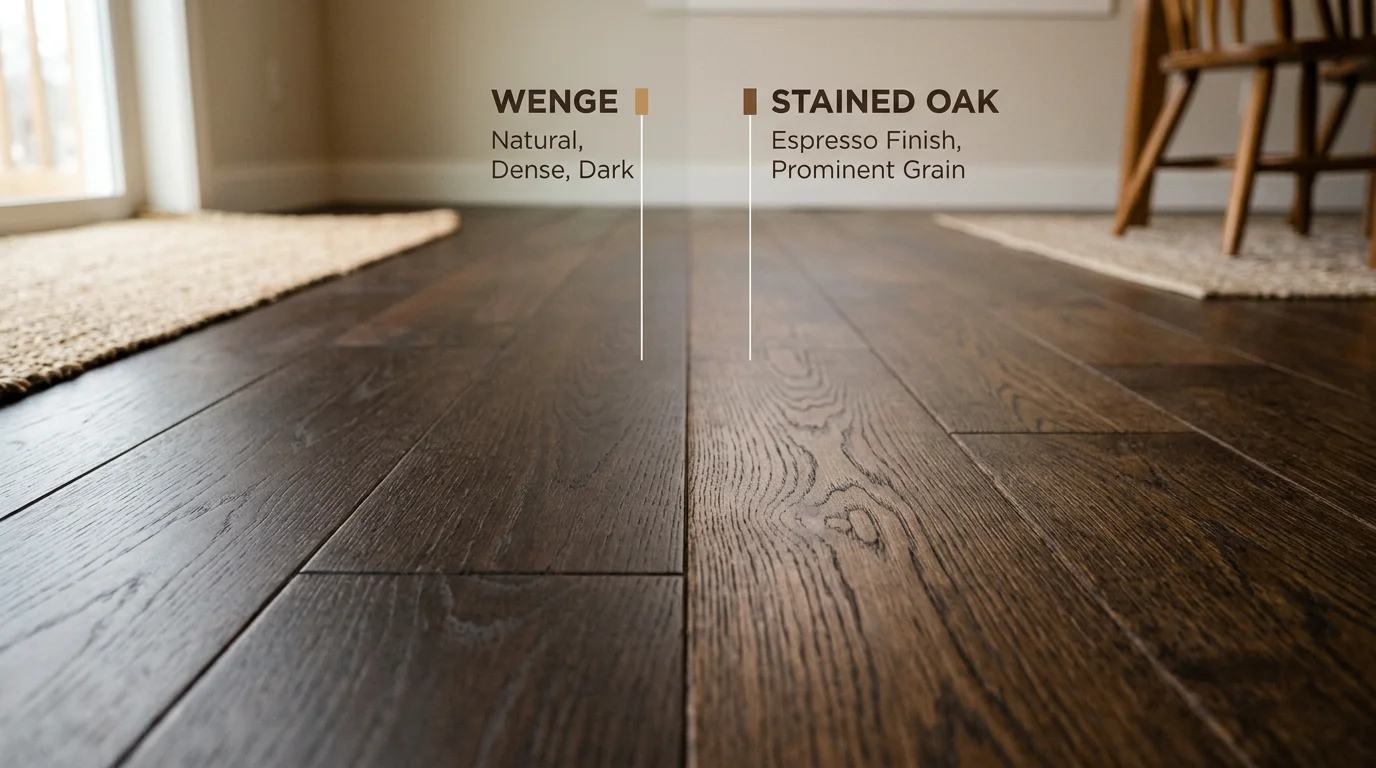
Stain types vary significantly in durability and appearance. Oil-based stains penetrate deeply, enhancing wood grain character and developing rich patina over time, though they require longer drying periods and emit stronger odors. Water-based stains dry faster and produce lower VOC emissions, making them environmentally friendlier, but may not achieve the same depth of color in a single coat. Polyurethane-integrated stains combine stain and protective finish in one product, streamlining application but offering less customization. Dark stains—particularly espresso, ebony, and charcoal tones—demand meticulous surface preparation and even application to avoid blotchiness or color inconsistency.
| Factor | Natural Dark Species | Stained Hardwood |
|---|---|---|
| Initial Cost | $8–$15+ per sq ft installed | $3–$8 per sq ft (refinishing) |
| Color Permanence | Permanent throughout wood | Surface-level; fades with wear |
| Maintenance | Standard hardwood care | Periodic resealing every 3–5 years |
| Lifespan | 25–50+ years | 10–15 years before restaining |
| Installation Complexity | Professional installation required | Can refinish existing floors |
| Design Flexibility | Limited to available species | Unlimited color customization |
Stained floors excel when you're refreshing existing hardwood or working within tight budgets. They also allow precise color matching to your design vision—something naturally dark species cannot guarantee. However, stain sits atop the wood surface and gradually wears in high-traffic zones, requiring periodic resealing every three to five years to maintain color depth and protection. Natural dark species, by contrast, demand less frequent maintenance but represent a larger upfront investment.
Consider your space's function when deciding. Kitchens and entryways with heavy foot traffic benefit from naturally dark hardwoods' durability and resistance to color fading. Bedrooms and formal dining rooms, where traffic remains moderate, work beautifully with stained lighter woods—delivering the aesthetic impact at lower cost. The choice ultimately reflects your priorities: invest now for permanence, or refinish strategically over time for flexibility and budget control.
Finish Types for Dark Hardwood Floors: Gloss, Matte, and Hybrid Options
The finish you select transforms not only how your dark hardwood floors look, but how they perform and feel underfoot. Three primary finish categories dominate the market, each delivering distinct visual and practical outcomes. Understanding their trade-offs ensures your choice aligns with your home's traffic patterns, aesthetic vision, and maintenance tolerance.
High-gloss finishes create a mirror-like reflective surface that amplifies light and adds formal elegance to dark hardwoods. This lustrous appearance makes spaces feel larger and more sophisticated—ideal for formal dining rooms or entryways where you want maximum visual drama. The downside is substantial: glossy surfaces show every footprint, dust particle, and water spot. They demand weekly cleaning and frequent buffing to maintain that showroom shine. Additionally, high-gloss floors present slip hazards, particularly in kitchens or bathrooms where moisture is present. This finish works best in low-traffic, climate-controlled rooms where aesthetics outweigh practicality.
Matte finishes sit at the opposite end of the spectrum, offering a soft, non-reflective appearance that feels contemporary and forgiving. Matte surfaces excel at concealing dust, dirt, and fingerprints—a genuine advantage in households with children or pets. The modern aesthetic pairs beautifully with minimalist and industrial design schemes. However, matte finishes can appear flat or dull in poorly lit spaces, and they're more prone to visible wear patterns in high-traffic zones. They also require careful product selection during cleaning, as some conventional floor cleaners can leave streaks.
Satin and hybrid finishes represent the balanced middle ground. According to research from Panel Town, satin finishes account for approximately 70% of all hardwood floor installations in North America—a clear market preference. Satin delivers subtle sheen (around 40% luster) that enhances dark wood's grain without the maintenance burden of gloss. These finishes hide imperfections better than high-gloss while maintaining enough reflectivity to brighten rooms. They're easier to clean and more forgiving in high-traffic areas, making them ideal for kitchens, living rooms, and hallways.
| Finish Type | Appearance | Durability | Maintenance | Best For |
|---|---|---|---|---|
| High-Gloss | Reflective, formal, dramatic | Moderate (scratches visible) | Weekly cleaning, frequent buffing | Formal dining, low-traffic entryways |
| Matte | Soft, modern, understated | Good (hides wear patterns) | Low maintenance, dust-hiding | Bedrooms, minimalist spaces, pet homes |
| Satin | Subtle sheen, balanced | Excellent (most popular choice) | Moderate cleaning, forgiving | Kitchens, living rooms, hallways |
When planning your remodel, consider room function first. Kitchens and entryways benefit from satin's durability and easy maintenance. Bedrooms and formal spaces work beautifully with matte for a sophisticated, low-maintenance aesthetic. High-gloss should be reserved for statement spaces where you're willing to commit to regular upkeep.
Engineered vs. Solid Dark Hardwood: Choosing the Right Construction Type
The choice between engineered and solid hardwood fundamentally shapes your dark flooring project—affecting installation flexibility, longevity, cost, and refinishing potential. Understanding these construction differences is essential for making decisions that align with your home's specific needs and your remodeling timeline.
Solid hardwood consists of 100% wood throughout the plank, typically 3/4 inch thick. Engineered hardwood features a real hardwood veneer bonded to a plywood or high-density fiberboard base with a criss-cross grain pattern. This layered construction isn't a compromise—it's a strategic design that solves real problems. Engineered hardwood handles moisture fluctuations significantly better than solid hardwood and can be installed in kitchens, basements, and over radiant heating systems where solid wood would expand, contract, and potentially cup or warp.
Cost and Lifespan Considerations
According to HomeGuide's 2026 pricing data, engineered hardwood flooring costs $9 to $20 per square foot installed, while solid hardwood ranges from $11 to $25 per square foot installed. However, longevity tells a different story. Solid hardwood can be refinished 4 to 6 times over its lifetime and lasts up to 100 years with proper care. Engineered hardwood can typically be refinished only 1 to 2 times and has a lifespan of 20 to 40 years, depending on wear layer thickness (which must be at least 2.5mm for refinishing capability).

Installation Flexibility and Modern Applications
Engineered hardwood's dimensional stability makes it the practical choice for moisture-prone environments. Modern innovative laminate technologies have dramatically improved engineered options, with premium products now offering visual depth and grain authenticity that rival solid wood. Installation methods differ too: engineered flooring can be glued, nailed, or floated, while solid hardwood typically requires nailing to a subfloor.
When planning your remodel, consider room function and climate. Kitchens, bathrooms, and basements benefit from engineered hardwood's moisture resistance and installation flexibility. Formal living spaces and bedrooms—where you want maximum refinishing potential and aren't concerned about humidity—suit solid hardwood better. For homes with radiant heating systems, engineered is the only practical option.
| Factor | Solid Hardwood | Engineered Hardwood |
|---|---|---|
| Construction | 100% wood, 3/4" thick | Veneer + plywood base |
| Moisture Tolerance | Low (expands/contracts) | Excellent (stable) |
| Installation Methods | Nailing to subfloor | Nail, glue, or float |
| Refinishing Potential | 4-6 times, 100-year lifespan | 1-2 times, 20-40 year lifespan |
| Cost (Installed) | $11-$25/sq ft | $9-$20/sq ft |
| Best Locations | Living rooms, bedrooms, formal spaces | Kitchens, basements, over radiant heat |
For innovative remodeling projects that prioritize adaptability and moisture management, engineered dark hardwood often delivers superior performance without sacrificing aesthetic impact. The decision ultimately depends on your project's environmental demands and your long-term refinishing expectations.
Selecting Dark Hardwood Floors for Your Space: Practical Considerations
Choosing the right dark hardwood floor requires balancing aesthetic ambition with practical reality. The most beautiful floor fails if it doesn't suit your lifestyle, climate, or room dimensions. This section walks you through the decision-making framework that separates inspired choices from costly mistakes.
Room Function and Traffic Patterns
High-traffic kitchens and entryways demand engineered dark hardwood or heavily finished solid options. These spaces endure moisture from cooking, spills, and foot traffic that would compromise lighter finishes or less stable constructions. Bedrooms and formal living rooms tolerate solid hardwood more comfortably since foot traffic remains moderate and humidity fluctuates less dramatically. Bathrooms present the greatest challenge—moisture exposure makes engineered hardwood the safer choice, though some homeowners successfully install solid dark hardwood with meticulous sealing and ventilation.
Climate and Moisture Considerations
Your regional humidity profile determines whether solid or engineered hardwood performs better. In humid climates (Southeast, Gulf Coast) or homes with basements prone to moisture, engineered dark hardwood resists cupping and warping far more effectively than solid construction. Conversely, dry climates (Southwest, Mountain West) favor solid hardwood, which expands and contracts minimally. If your home sits over radiant heating systems, engineered flooring's plywood base prevents the movement that solid hardwood experiences when heat cycles occur.
Room Size and Visual Perception
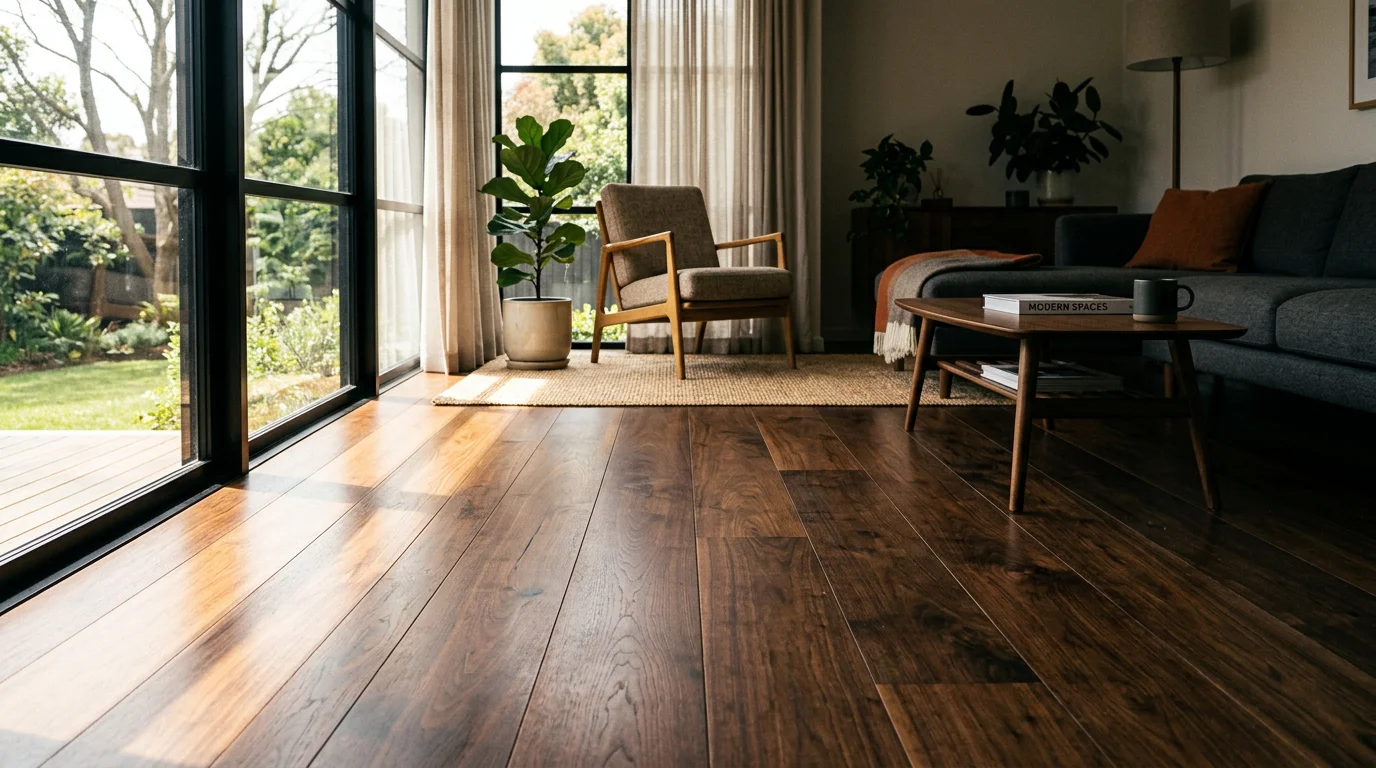
Dark hardwood floors create dramatic visual weight. In smaller bedrooms or compact living spaces, expansive dark flooring can feel heavy and confining. Pairing dark hardwood with light wall colors, abundant natural light, and strategic furniture placement counteracts this effect. Larger rooms—great rooms, open-concept kitchens—showcase dark hardwood's sophistication without overwhelming the space. Consider how windows and light sources interact with your floor choice throughout the day.
Coordinating with Existing Design
Traditional and transitional interiors embrace dark hardwood naturally, particularly when paired with warm wall tones (creams, soft grays, warm whites) and furniture in medium to light finishes. Modern minimalist spaces benefit from the contrast dark floors provide against clean-lined, light-colored furnishings. When designing a cohesive aesthetic, view your dark hardwood as an anchor—it sets the room's warmth and formality level, so wall colors and décor should complement rather than compete.
Budget Framework
Solid dark hardwood costs $11–$25 per square foot installed, while engineered options range from $9–$20. Factor in finishing costs if you select unfinished hardwood, plus underlayment, removal of existing flooring, and any subfloor repairs. At WAREMODEL, we help homeowners maximize their remodeling budget by matching flooring choices to actual usage patterns—avoiding overspending on premium solid hardwood for moisture-prone spaces where engineered alternatives deliver superior performance at lower cost.
Decision Checklist
Before committing, confirm: Does your room experience high moisture or temperature fluctuation? Will you refinish this floor in 10–15 years? Does your décor lean traditional, modern, or transitional? Is natural light abundant, or do you rely on artificial lighting? Does the room feel spacious or compact? These answers clarify whether solid or engineered dark hardwood serves you best, and whether your chosen finish (gloss, matte, or hybrid) aligns with your maintenance tolerance and design vision.
Making Your Dark Hardwood Flooring Decision: Final Recommendations
Selecting dark hardwood flooring requires balancing aesthetics, performance, and budget across three interconnected variables: species choice, finish type, and construction method. Naturally dark woods like walnut, mahogany, and Brazilian cherry deliver authentic character and depth, while stained lighter species offer cost savings and design flexibility. Your finish—whether gloss, matte, or satin—shapes both visual warmth and maintenance demands, with glossy surfaces amplifying light and matte options concealing footprints in high-traffic zones.
The engineered versus solid decision hinges on your room's environment and timeline. Solid hardwood suits stable, dry spaces where you plan long-term ownership and potential refinishing. Engineered construction excels in moisture-prone areas, basements, and homes requiring flexible installation methods while maintaining the authentic dark wood appearance you desire.
At WAREMODEL, we recognize that innovative remodeling solutions maximize your space's potential—dark hardwood floors anchor a room's character while creating the sophisticated foundation your design deserves. Before committing, consult with remodeling professionals who can assess your specific climate, usage patterns, and design goals. They'll help you avoid costly mistakes and ensure your dark hardwood investment aligns with both your immediate vision and long-term lifestyle needs. The right choice transforms not just how your floor looks, but how your entire home functions and feels.