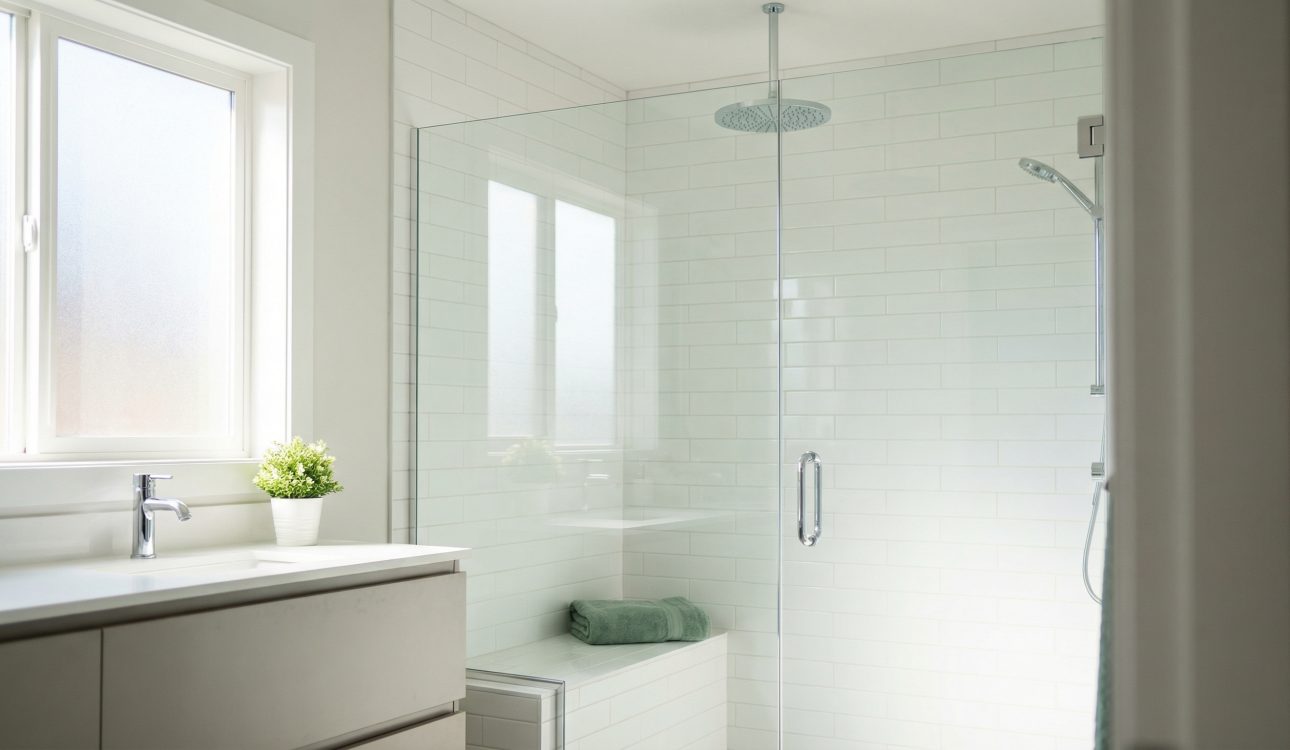
A professionally completed bathroom tub to shower conversion featuring a spacious walk-in design with accessibility features
Are you staring at that old bathtub taking up valuable space in your bathroom and wondering if it's time for a change? You're not alone. According to the American Institute of Architects, 58% of homeowners prefer a walk-in shower instead of a bathtub, making bathroom tub to shower conversion one of the most popular remodeling projects in 2025.
Whether you rarely use your tub, need improved accessibility, or simply want a more modern bathroom, converting your bathtub to a shower can transform both the functionality and appearance of your space. But before you grab a sledgehammer, there's a lot you need to know about costs, timelines, design options, and potential pitfalls.
Quick Answer:
A bathroom tub to shower conversion typically costs between $2,000 and $12,000, with most homeowners spending around $3,000-$5,000 for a standard conversion. The project takes 3-7 days when done by professionals, and involves removing your existing tub, updating plumbing, installing a new shower base and walls, and adding fixtures. The conversion can increase home value, improve accessibility, and create a more spacious, modern bathroom.Key Takeaways:
- Cost Range: Expect to budget $2,000-$12,000 depending on materials and complexity
- Timeline: Professional installations typically take 3-7 days to complete
- ROI: Converting a tub to a shower has an average ROI of 60% if your home has another bathtub
- Accessibility: Walk-in showers reduce fall risks and improve aging-in-place capabilities
Table of Contents
- Why Consider a Bathroom Tub to Shower Conversion?
- Understanding the True Cost of Tub to Shower Conversion
- How Long Does a Bathroom Tub to Shower Conversion Take?
- Step-by-Step: The Conversion Process Explained
- Choosing the Right Shower Design for Your Space
- Common Mistakes to Avoid During Your Conversion
- Permits and Building Code Requirements
- DIY vs. Professional Installation: What You Need to Know
- Will a Tub to Shower Conversion Affect Your Home's Resale Value?
- Accessibility Features for Aging in Place
Why Consider a Bathroom Tub to Shower Conversion?
Before diving into the details of costs and logistics, let's explore why so many homeowners are choosing to make this change in 2025.
Space Efficiency and Modern Aesthetics
A square shower unit can be installed in a space as small as 30 inches by 30 inches, while your current tub might be 6 or more feet in length. This freed-up space can make your bathroom feel significantly larger and allow for additional storage, a larger vanity, or simply more breathing room.
Walk-in showers with clear glass doors create an open, airy feeling that makes even small bathrooms appear more spacious. The clean lines and contemporary design of modern showers align perfectly with current bathroom remodel trends, which emphasize minimalism and functionality.
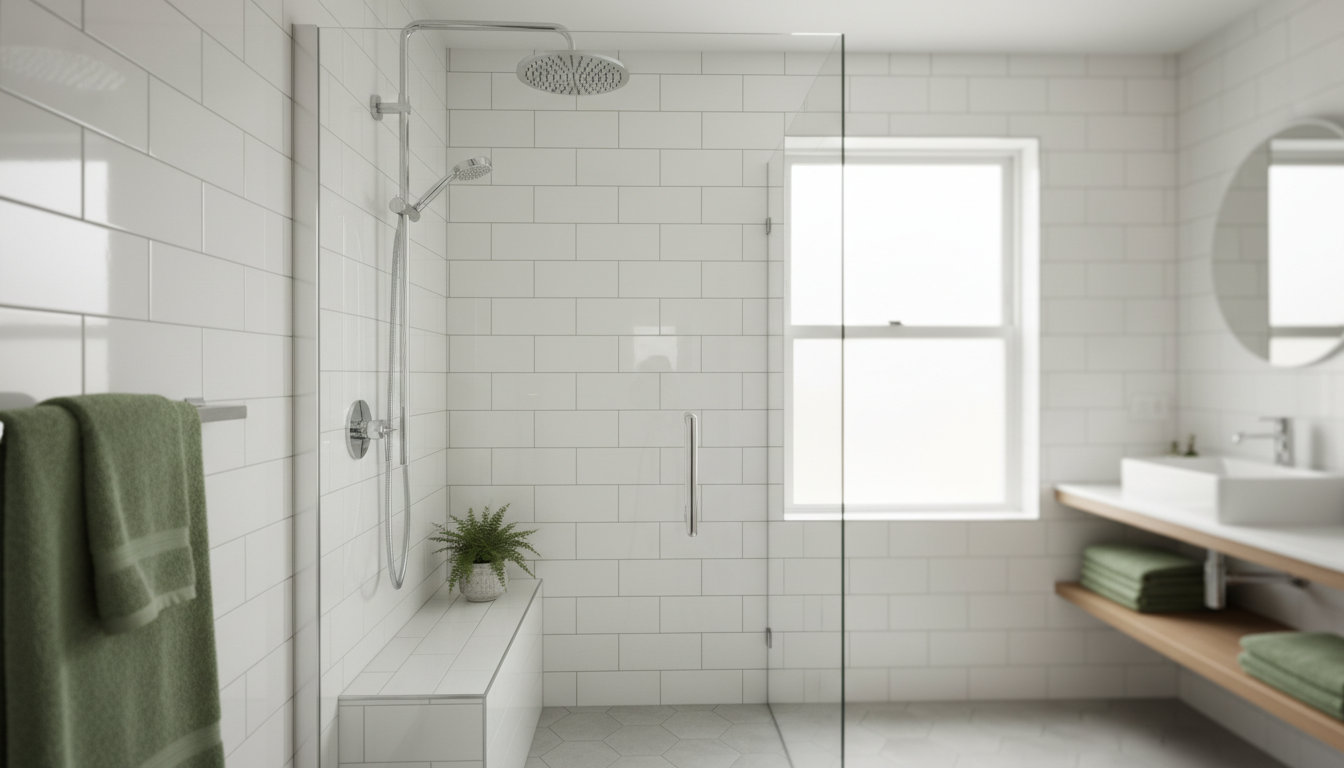
Converting a bathtub to a walk-in shower can make your bathroom feel significantly more spacious while adding modern appeal
Safety and Accessibility
The CDC says more than 20 million people over the age of 18 sustain a bathroom injury every year in the US. Bathtubs require stepping over a high ledge, which becomes increasingly difficult and dangerous as we age. Walk-in showers eliminate the need to navigate over a bathtub ledge, significantly reducing the risk of slips and falls—one of the leading causes of injury among seniors.
For families planning to age in place, a bathroom tub to shower conversion isn't just about convenience—it's about safety and maintaining independence. Features like grab bars, built-in benches, and non-slip flooring can be seamlessly integrated into the design.
Water Conservation and Efficiency
A standard bathtub holds approximately 80 gallons of water, whereas the average shower uses only about 30 gallons. If you rarely take baths, you're essentially wasting space that could be put to better use while also having the option to conserve water with every shower.
Maintenance and Cleaning
Showers are generally easier to maintain than bathtub-shower combinations. Walk-in showers are usually easier to clean than traditional bathtubs, especially with low-maintenance options that require as little maintenance as possible. Without the curves and crevices of a bathtub, cleaning becomes a quicker, less tedious task.
Understanding the True Cost of Tub to Shower Conversion
One of the first questions homeowners ask is: "How much will this cost?" The answer depends on several factors, but let's break down the numbers based on 2025 pricing.
Average Cost Ranges
A tub to shower conversion in the U.S. costs between $4,000 and $12,000 as of 2025, with the wide range reflecting factors like design complexity, local labor rates, and material quality. Here's how costs typically break down:
| Conversion Type | Cost Range | Best For |
|---|---|---|
| Prefabricated Shower Kit | $1,500 – $3,500 | Budget-conscious homeowners, quick installations |
| Standard Shower Stall | $2,000 – $5,000 | Most homeowners seeking quality and value |
| Custom Tile Shower | $5,000 – $10,000 | Luxury designs, unique layouts |
| Walk-in Shower with Accessibility Features | $6,000 – $12,000 | Aging-in-place, barrier-free access |
| High-End Custom Design | $10,000 – $15,000+ | Premium materials, complex installations |
Cost Factors That Impact Your Budget
Labor is often the single biggest expense in a tub to shower conversion, typically accounting for 40–60% of the total budget. Beyond labor, several other factors influence the final price:
Materials Selection: Prefabricated shower stall kits typically cost $350–$2,300, depending on the shape and size, while building a custom shower from scratch can cost around $1,800–$4,000.
Plumbing Modifications: If you need to move drain or water lines, budget for another $500–$2,000. Keeping plumbing in its existing location is one of the best ways to control costs.
Permits: Most cities require permits for bathroom remodels involving plumbing or layout changes, with costs ranging from $200–$2,000.
Hidden Issues: When removing an old tub, it's common to find rotted subfloors, deteriorated, or moldy drywall, with repairs costing $1,500–$9,000.
Shower Doors: Shower doors generally cost $600 to $1,350, depending on the style you choose.
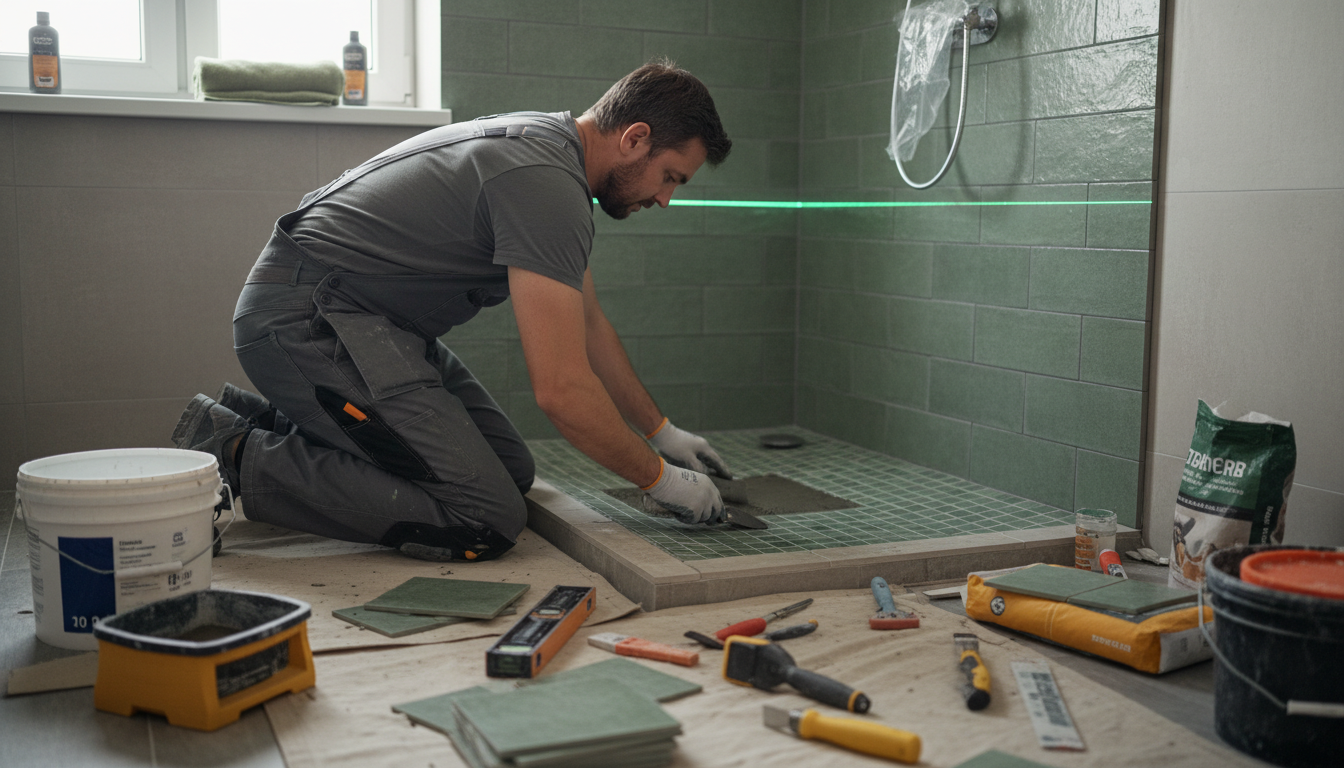
Hiring experienced professionals ensures your bathroom tub to shower conversion is completed correctly and meets all building codes
Ways to Save Money on Your Conversion
Looking to reduce costs without sacrificing quality? Consider these strategies:
- Choose prefabricated systems over custom tile to save 20-30% on materials and labor
- Keep existing plumbing locations to avoid expensive rerouting
- Select standard sizes rather than custom dimensions
- Choose mid-range fixtures instead of luxury brands
- Do your own demolition if you have DIY skills (but leave plumbing and installation to pros)
- Bundle with other bathroom updates to reduce overall labor costs
For more detailed pricing information specific to the Seattle area, check out our guide on bathroom remodel costs in Bellevue.
How Long Does a Bathroom Tub to Shower Conversion Take?
Timeline is another crucial consideration, especially if you're working with a single-bathroom home.
Professional Installation Timeline
Most tub-to-shower conversions take between three and seven days when done by a professional, with basic prefab kits being quicker, while custom tiled or curbless showers may take a week or more.
Here's a typical timeline breakdown:
Days 1-2: Demolition and Preparation
- Remove existing tub and surrounding materials
- Inspect for water damage or structural issues
- Make necessary repairs to subfloor and walls
- Update plumbing as needed
Days 3-4: Installation
- Install shower pan or base
- Set up waterproofing systems
- Install shower walls (tile or panels)
- Connect plumbing fixtures
Days 5-6: Finishing Touches
- Install shower door or curtain
- Grout and seal (if applicable)
- Add fixtures and accessories
- Final inspections and testing
Day 7: Final Details
- Touch-up work
- Cleaning and debris removal
- Final walkthrough
Some professional installers can complete the entire installation process in as little as one to two days, allowing you to use your new shower almost immediately, though this typically applies to prefabricated systems rather than custom installations.
Factors That Can Extend Your Timeline
Several issues can add time to your project:
- Hidden water damage requiring extensive repairs
- Plumbing code violations that must be corrected
- Custom tile work requiring longer curing times
- Material delays or back-ordered fixtures
- Permit approval processes in your jurisdiction
Step-by-Step: The Conversion Process Explained
Understanding what happens during a bathroom tub to shower conversion helps you prepare and know what to expect.
Prerequisites: What You Need Before Starting
Before any work begins, gather these essentials:
Measurements: Most building codes say the floor of a shower stall should be at least 30 inches by 30 inches, though a 36-inch-by-36-inch-wide stall is recommended by the National Kitchen and Bath Association.
Design Decisions:
- Shower type (prefab vs. custom tile)
- Door style (sliding, hinged, or frameless)
- Fixtures and finishes
- Accessibility features needed
Budget and Timeline: Have a clear budget with 10-15% contingency for unexpected issues.
Permits: Check with your local building department about required permits.
Step 1: Demolition and Tub Removal
The first step is removal of the tub valve trim, spout, and drain plumbing, then removing the walls around the tub before pulling it out, with fiberglass tubs requiring cutting into sections for easier removal.
Critical Safety Note: Turn off water supply to the bathroom before starting any work. The cost of removing an old bathtub and disposing of it is about $150 to $300, though it may cost more if you have a heavy claw-foot tub.
Step 2: Inspection and Repairs
You should inspect the tub area for leaks or damage to the walls or floor and perform repairs before moving forward. This is when you'll discover if there are any hidden problems that need addressing.
Common issues include:
- Rotted subfloor from water damage
- Mold growth behind walls
- Outdated plumbing that doesn't meet current codes
- Structural deficiencies
Step 3: Plumbing Modifications
Converting a tub to a shower requires replacing the 1 ½" tub drain line with a 2" shower drain line from the shower to the main line. This is a critical step that must be done correctly to prevent future drainage issues.
The plumbing is then roughed into the open walls, including installing the shower valve, any mixing valves, and the showerhead.
Step 4: Waterproofing and Shower Pan Installation
When constructing a shower, whether using a pre-formed pan or a mortar bed, ensure your subfloor is free of defects and meets all TCNA standards, as any movement in the shower system because of an unstable substrate will most likely cause failure.
Waterproofing is Critical: It is important to follow the manufacturer's installation instructions for all waterproofing products to ensure you have proper water-tight coverage, with the use of a Wet MIL thickness gauge recommended to ensure correct dry coverage.
The shower pan needs to slope toward the drain so water flows downhill naturally, with the standard slope being 1/8 inch of drop for every 12 inches of distance from the edge to the drain.
Step 5: Wall Installation
You have two main options:
Tile Walls: Custom, beautiful, but more expensive and time-consuming. Requires proper substrate, waterproofing membrane, and skilled installation.
Prefabricated Panels: Faster installation, lower cost, easy maintenance, but fewer design options.
Step 6: Fixtures and Finishing
Install your chosen fixtures, including:
- Shower valve and trim
- Showerhead (standard, rainfall, or handheld)
- Grab bars and safety features
- Built-in shelving or niches
- Shower door or curtain
Step 7: Testing and Final Inspection
Another critically required step to avoid issues with shower installation is flood testing, done by inserting a test plug in the drain and filling the shower to just below the flood level, with Oatey recommending a minimum testing time of four hours.
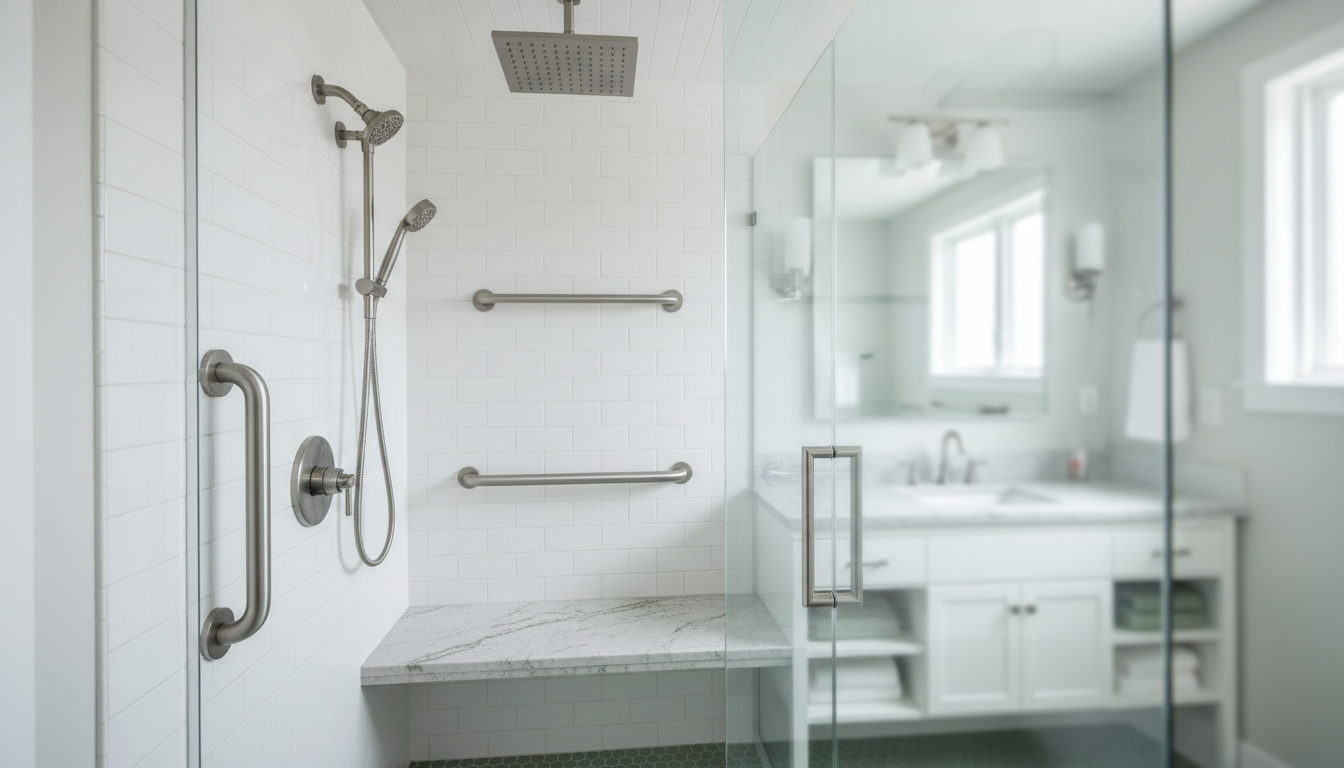
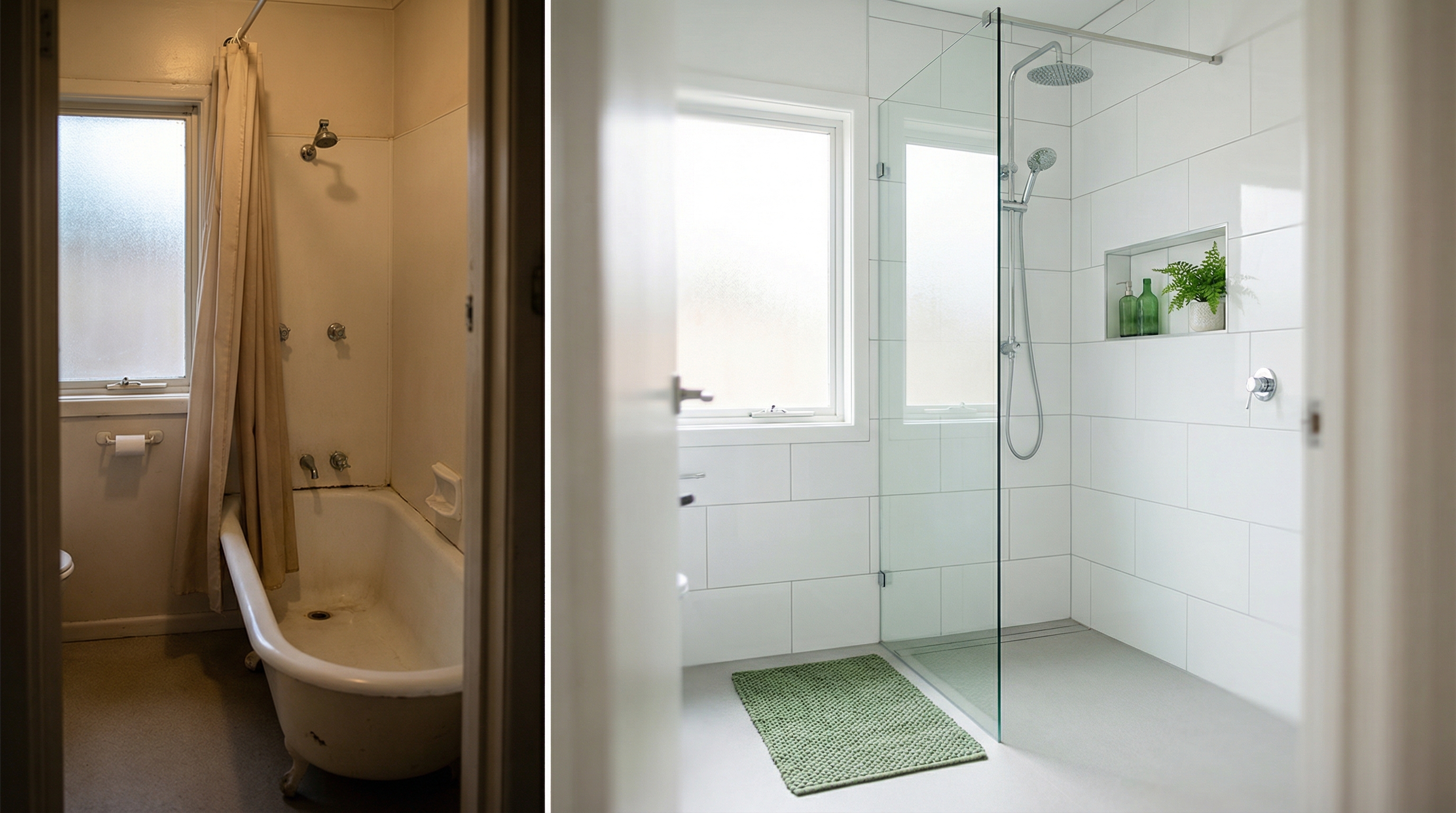
A completed bathroom tub to shower conversion showcasing both style and safety with grab bars, built-in seating, and quality fixtures
Choosing the Right Shower Design for Your Space
The design you choose significantly impacts both cost and functionality. Let's explore your options.
Prefabricated Shower Kits
Pros:
- Lower cost ($1,500-$3,500)
- Faster installation (1-3 days)
- Easy to clean and maintain
- Consistent quality
Cons:
- Limited customization
- Standard sizes may not fit all spaces
- Less luxurious appearance
Best For: Budget-conscious homeowners, rental properties, quick turnaround projects
Custom Tile Showers
Pros:
- Unlimited design possibilities
- Premium, custom look
- Can accommodate any space
- Higher perceived value
Cons:
- More expensive ($5,000-$10,000+)
- Longer installation time
- Requires more maintenance (grout cleaning)
- More opportunities for installation errors
Best For: Homeowners prioritizing aesthetics, unique spaces, long-term investment
Walk-in and Curbless Showers
Walk-in showers have no barriers, curtains, or steps, offering an accessible and easy bathing experience, though the convenience costs more at $6,000–$12,000.
Key Considerations:
- Requires proper floor slope for drainage
- May need floor height adjustments
- Excellent for accessibility
- Modern, spa-like appearance
- May allow some water onto bathroom floor
Shower Door Options
Your door choice affects both function and aesthetics:
| Door Type | Cost Range | Pros | Cons |
|---|---|---|---|
| Curtain | $20-$100 | Inexpensive, easy to replace | Less elegant, requires frequent cleaning |
| Sliding Glass | $400-$800 | Space-efficient, classic look | Track can collect debris |
| Hinged Glass | $600-$1,200 | Easy to clean, wide opening | Requires clearance space |
| Frameless Glass | $1,000-$2,000 | Modern, luxurious appearance | Most expensive, requires precise installation |
Common Mistakes to Avoid During Your Conversion
Learning from others' mistakes can save you thousands of dollars and significant headaches.
Mistake #1: Ignoring Existing Structural Issues
Ignoring existing structural issues in your bathroom before starting a tub-to-shower conversion can lead to disastrous consequences, as structural problems like weakened subfloor, compromised studs, or outdated plumbing can affect your new shower installation's integrity, resulting in water damage, mold growth, and even structural failure.
Solution: Always have a thorough inspection before beginning work. Address any foundation issues, water damage, or structural concerns before installing new fixtures.
Mistake #2: Improper Drain Placement
Proper drain placement is crucial for your new shower's functionality and longevity, as neglecting this aspect can lead to improper water drainage, resulting in standing water that promotes mold and mildew growth.
Solution: Ensure the drain is at the lowest point of the shower base with proper slope (1/4" per foot) toward the drain.
Mistake #3: Cutting Corners on Waterproofing
Improper waterproofing during a DIY tub-to-shower conversion can create perfect conditions for mold growth, as water can seep behind tiles and into wall cavities without proper moisture barriers and sealing techniques.
Solution: Follow the manufacturer's installation instructions for all waterproofing products to ensure proper water-tight coverage. Don't skip the waterproofing membrane, and consider hiring a professional for this critical step.
Mistake #4: Inadequate Ventilation
Showers generate a lot more steam than tubs, and without good ventilation, all that moisture can lead to mold and mildew, which aren't just ugly but can also pose serious health risks like allergic reactions and respiratory issues.
Solution: Install or upgrade your bathroom exhaust fan to handle the increased moisture from shower use. Position it close to the shower area for maximum effectiveness.
Mistake #5: Choosing Slippery Materials
A large percentage of tub to shower conversions are done because people want to age in place, but your goal to stay in your home can be as secure as a banana peel if your shower pan is slippery.
Solution: Choose textured, slip-resistant flooring. Smaller tiles with more grout lines provide better traction than large, smooth tiles.
Mistake #6: Not Planning for Future Needs
If you or someone in your home has limited mobility, adding accessibility features like grab bars, a low-threshold entry, or a shower seat can make a big difference in both comfort and safety, and since a tub-to-shower conversion is a long-term investment, you can think of it as future-proofing your space.
Solution: Even if you don't need accessibility features now, consider installing blocking in walls for future grab bar installation and choosing a design that can accommodate a bench.
Permits and Building Code Requirements
Don't skip this step—unpermitted work can cause serious problems when selling your home or filing insurance claims.
When Do You Need a Permit?
You will need a permit to convert a tub to a shower in NYC, as the Department of Buildings issues permits. While requirements vary by location, most jurisdictions require permits for:
- Plumbing modifications
- Electrical work
- Structural changes
- Moving fixtures from their original locations
Simple repairs or direct replacement of existing faucets or fixtures such as toilets, shower fixtures, and sinks are considered cosmetic work and do not require a permit, and a direct bathroom vanity swap with no plumbing being relocated will not require a permit.
Typical Permit Costs
Most municipalities require building or plumbing permits, usually between $100–$500. While this might seem like an unnecessary expense, permits ensure:
- Work meets current building codes
- Proper inspections are conducted
- Your home's value is protected
- Insurance claims won't be denied
- Future buyers won't face issues
Working with Your Building Department
- Research requirements on your local building department website
- Submit detailed plans showing the scope of work
- Schedule inspections at required stages
- Keep documentation of all permits and approvals
- Request final sign-off when work is complete
DIY vs. Professional Installation: What You Need to Know
The question of whether to tackle this as a DIY project or hire professionals is common, but the answer isn't simple.
Why Most Experts Recommend Professional Installation
For this reason, we don't recommend a do-it-yourself (DIY) approach for a tub-to-shower conversion, as hiring professional contractors can help ensure proper installation and facilitate necessary structural repairs.
A bathroom tub to shower conversion touches multiple trades:
- Plumbing: Drain modifications, valve installation, water supply lines
- Carpentry: Framing, subfloor repair, blocking installation
- Tile work: Waterproofing, setting tile, grouting
- Glass installation: Measuring and installing shower doors
Without proper experience, you could face serious complications that compromise your bathroom's functionality and value.
When DIY Might Be Appropriate
You might consider DIY for:
- Demolition work (with proper safety precautions)
- Painting and finishing touches
- Installing accessories like towel bars and shelving
- Simple upgrades to existing showers
However, leave these tasks to licensed professionals:
- All plumbing work
- Electrical modifications
- Waterproofing systems
- Structural repairs
- Gas line work (if applicable)
Cost of Professional Installation
Labor accounts for around 40% to 60% of the total bathroom remodel cost, or $500 to $5,000 on average. While this might seem expensive, professional installation provides:
- Warranty protection on workmanship
- Code compliance and proper permits
- Insurance coverage during installation
- Experience handling unexpected issues
- Time savings (days vs. weeks)
- Quality results that last for decades
Will a Tub to Shower Conversion Affect Your Home’s Resale Value?
This is one of the most common concerns homeowners have when considering a bathroom tub to shower conversion.
The ROI Reality
Converting a tub to a shower has an average ROI of 60%, but only if your home has another bathroom with a tub. A tub to shower conversion provides 60–70% return on investment (ROI) at resale, according to remodeling industry reports, making them financially savvy home improvement projects.
The “At Least One Tub” Rule
Most real estate agents are adamant about having at least one bathtub in your house to preserve marketability, as a recent study by the National Association of Home Builders found that more than 50% of home buyers prefer a master bath with a bathtub and a shower, with the reason being many home buyers need a tub for small children.
The Bottom Line: If you're converting your only tub, you may limit your pool of potential buyers. However, if you have multiple bathrooms with at least one tub remaining, a shower conversion can actually increase appeal.
Market Preferences in 2025
Walk-in showers are the most popular shower design trend, with 45% of experts agreeing. A trend favoring large, spa-like showers is on the rise, with 91% of buyers in a 2019 survey preferring them in a master bath.
Regional Variations: In larger metros like Los Angeles, Seattle, or New York, homeowners can expect 20–30% higher labor rates over a smaller town anywhere in the Midwest or South, and buyer preferences may also vary by region.
Maximizing Resale Value
To ensure your bathroom tub to shower conversion adds value:
- Keep at least one tub in the home
- Choose quality materials that will last
- Include modern features buyers expect
- Ensure professional installation with proper permits
- Add accessibility features that appeal to aging buyers
- Maintain cohesive design with the rest of your home
For more insights on bathroom remodeling that adds value, visit our Seattle bathroom remodel guide.
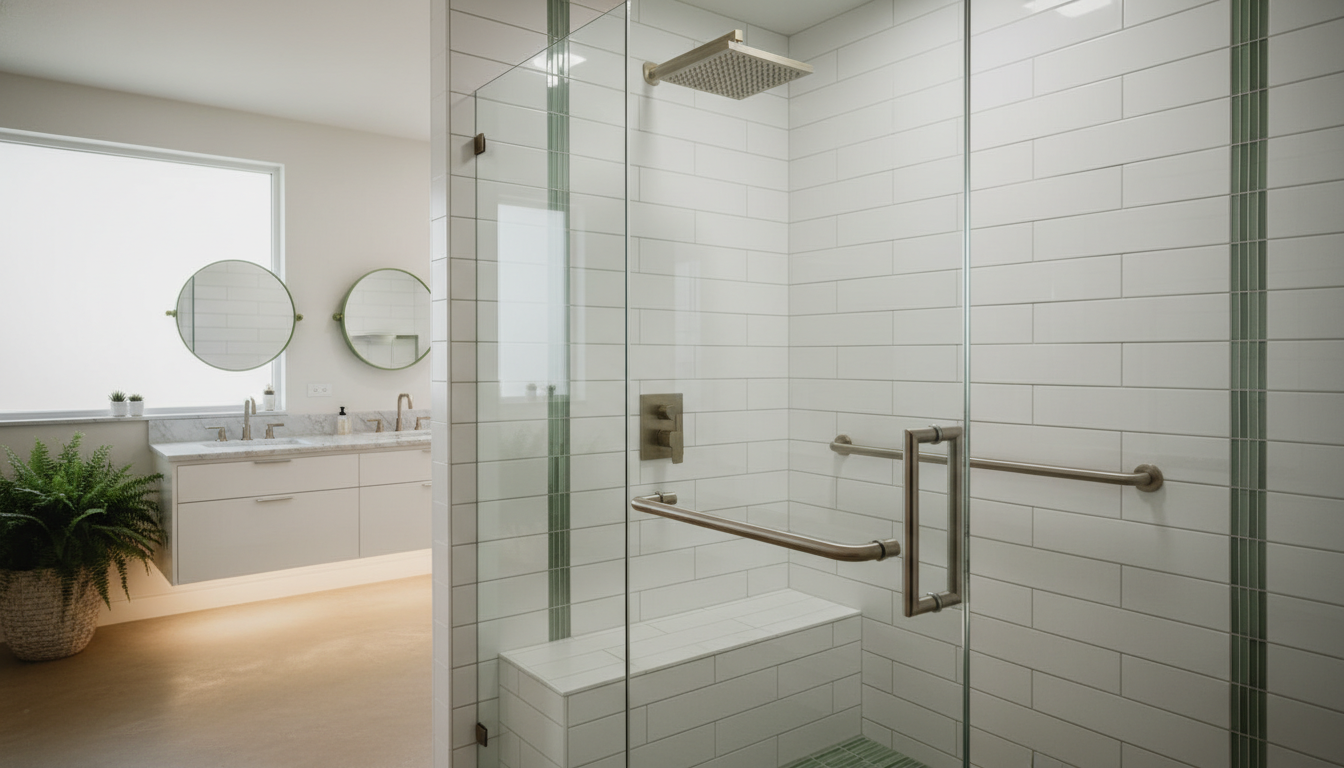
A well-designed bathroom tub to shower conversion can increase home value while providing improved functionality and modern appeal
Accessibility Features for Aging in Place
One of the most compelling reasons for a bathroom tub to shower conversion is improved accessibility. Let's explore how to design a shower that supports aging in place.
Essential Accessibility Features
Grab Bars: Installing grab bars throughout the bathroom can offer enhanced support for older adults with mobility issues, and it's recommended to place a grab bar around the toilet and in the shower/bathtub.
Curbless Entry: Barrier-free showers eliminate the need to step over a ledge, reducing the risk of trips and falls, and are wheelchair-friendly, offering easy access for individuals with mobility challenges.
Built-in Seating: Decrease your odds of a slip-and-fall mishap by installing a shower bench, as sitting in the shower reduces the amount of standing and the risk of slipping on a wet floor.
Handheld Showerhead: Install a handheld showerhead next to your shower bench, as they come in an array of styles, features, and the ability to adjust the height, with other options including massage features, water efficiency and temperature control.
Non-Slip Flooring: Prevent falls by placing slip-resistant textured tile flooring in your shower, as smaller textured tiles with more grout lines provide better slip-resistance than large tiles.
Universal Design Principles
Universal design principles aim to create spaces that are accessible and usable for people of all ages and abilities, and when designing an accessible bathroom for aging in place, incorporating these principles ensures inclusivity and functionality.
Key principles include:
- Adaptable spaces that accommodate changing needs
- Multi-functional areas serving various purposes
- Accessible controls within easy reach
- Clear instructions for feature use
- User-friendly fixtures that are intuitive to operate
Aging in Place Without Sacrificing Style
Aging in place isn't about making a home look "senior-friendly"—it's about creating a space that feels right for everyone, today and in the years to come, with a well-designed bathroom that feels calm, secure, and timeless, where accessibility is built into the foundation of the design and enhances comfort for every age and ability.
Modern grab bars come in stylish finishes that complement your décor. Curbless showers look sleek and contemporary. Built-in benches can double as design features. The key is working with experienced designers who understand both accessibility and aesthetics.
Conclusion: Is a Bathroom Tub to Shower Conversion Right for You?
A bathroom tub to shower conversion can transform your space, improve safety, increase efficiency, and modernize your home. With costs ranging from $2,000 to $12,000 and timelines of 3-7 days for professional installation, it's a manageable project that delivers significant benefits.
The key to success is:
- Planning thoroughly and setting a realistic budget
- Hiring experienced professionals for quality installation
- Choosing materials that balance cost and durability
- Considering future needs including accessibility
- Obtaining proper permits to protect your investment
- Thinking about resale value if you plan to sell
At WAREMODEL, we specialize in complete bathroom tub to shower conversions throughout King County and Pierce County, Washington. Our design-build approach means you work with one team from initial 3D design through final installation, ensuring a seamless experience and beautiful results.
Whether you're looking to improve accessibility, modernize your bathroom, or simply make better use of your space, we're here to help you create the perfect shower for your needs and budget.
Ready to transform your bathroom? Contact WAREMODEL today for a free consultation and 3D design visualization of your new walk-in shower. We'll help you navigate every decision, from design to installation, ensuring your bathroom tub to shower conversion exceeds your expectations.
Frequently Asked Questions
How much does a typical bathroom tub to shower conversion cost in 2025?
A tub-to-shower conversion costs between $1,500 and $8,000, with most homeowners spending around $3,000 on average, with prices varying based on whether you choose a budget-friendly prefab shower unit or go for custom tile, premium fixtures, and frameless glass. The final cost depends on your material choices, labor rates in your area, and whether any unexpected repairs are needed.
Will removing my only bathtub hurt my home's resale value?
Removing your only tub to install a walk-in shower can make your home's value take a hit because most prospective homebuyers, especially families with small kids, want at least one bathtub. However, if you have multiple bathrooms with at least one tub remaining, converting another tub to a shower typically won't negatively impact value and may even increase appeal to certain buyers.
How long does a professional bathroom tub to shower conversion take?
Most tub-to-shower conversions take between three and seven days when done by a professional. Simple prefabricated installations can be completed in 1-3 days, while custom tile showers with complex features may take a full week or longer. The timeline also depends on whether hidden damage is discovered that requires additional repairs.
Can I do a tub to shower conversion myself to save money?
While DIY is possible, we don't recommend a do-it-yourself approach for a tub-to-shower conversion, as hiring professional contractors can help ensure proper installation and facilitate necessary structural repairs. The project requires expertise in plumbing, waterproofing, and tile work. Mistakes can lead to leaks, mold, and costly repairs that far exceed what you'd save on labor.
Do I need a permit for a bathroom tub to shower conversion?
Most cities require permits for bathroom remodels involving plumbing or layout changes, with permit costs varying widely by region. Requirements vary by location, but generally, any project involving plumbing modifications, electrical work, or structural changes requires a permit. Check with your local building department before starting work.
What's the difference between a walk-in shower and a curbless shower?
A walk-in shower typically has a low curb (2-6 inches) that contains water while being easy to step over. Curbless showers sit flush with the floor, making installation more difficult and typically more expensive, but eliminating the need to step over anything when entering. Curbless showers are ideal for wheelchair accessibility but require careful floor slope design to prevent water from escaping.
How can I make my shower conversion more accessible for aging in place?
Key accessibility features include: grab bars for peace of mind and safety, barrier-free showers that eliminate the need to step over a ledge, reducing the risk of trips and falls, built-in seating, handheld showerheads, non-slip flooring, and adequate lighting. These features can be incorporated without sacrificing style when working with experienced designers.
What's the best type of shower door for a tub to shower conversion?
The best door depends on your space and budget. Frameless glass doors ($1,000-$2,000) offer a modern, luxurious look but cost more. Sliding doors ($400-$800) save space and are budget-friendly. Hinged doors ($600-$1,200) provide easy cleaning but require clearance space. Consider your bathroom layout, cleaning preferences, and budget when choosing.
Will a walk-in shower use less water than my bathtub?
Yes, significantly less. A standard bathtub holds approximately 80 gallons of water, whereas the average shower uses only about 30 gallons. Even long showers typically use less water than filling a tub, making a shower conversion an environmentally friendly choice that can also reduce your water bills.